Environment
118 mature Gapas-gapas mangrove trees found in Ivisan, student researchers led geospatial mapping

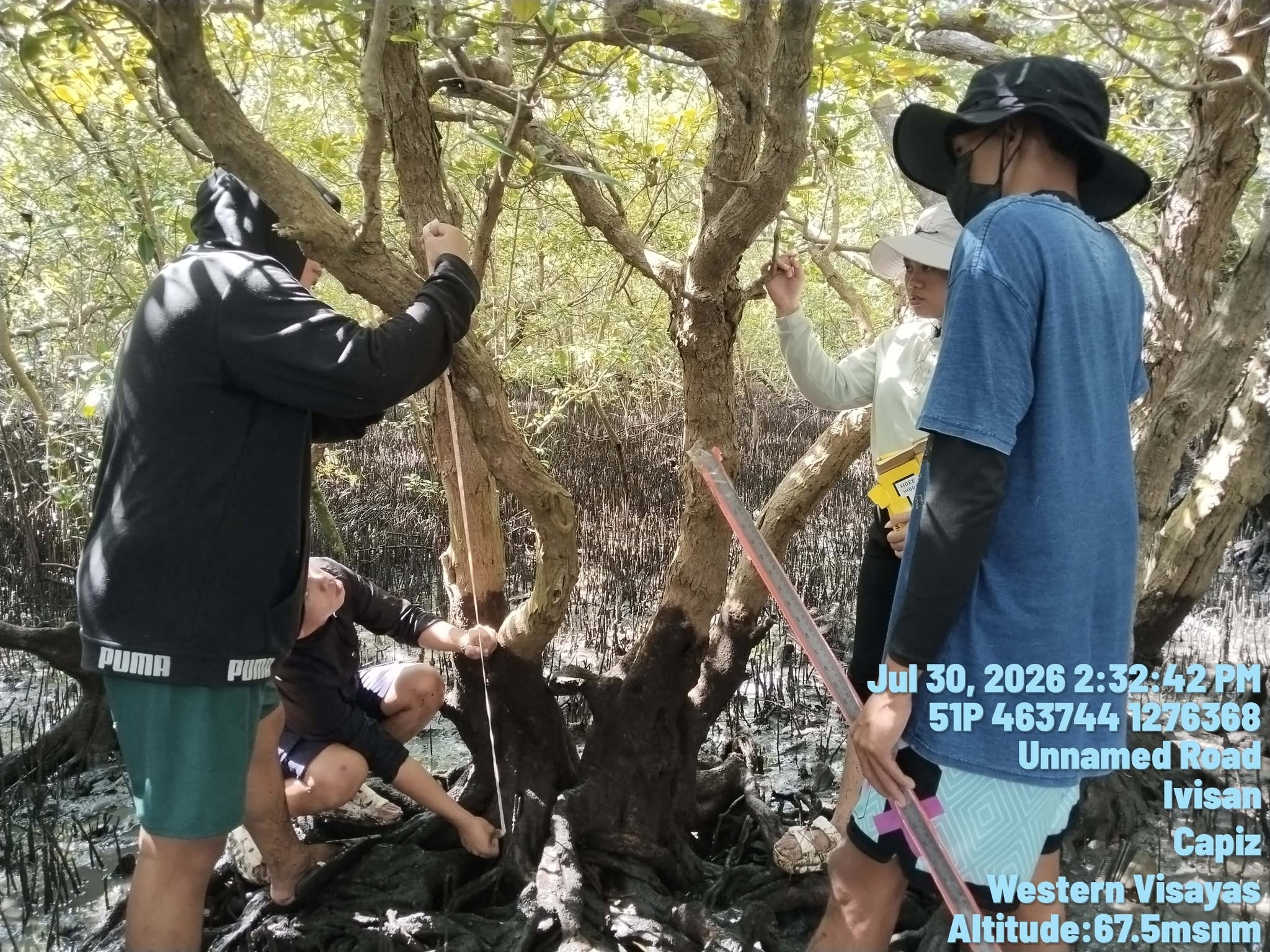
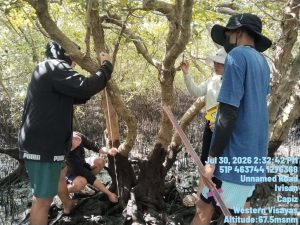
Ivisan, Capiz — An initial count of 118 mature endangered Gapas-gapas (Camptostemon philippinensis) mangrove trees was found at Brgy. Agustin Navara, Ivisan, Capiz after student researchers run a geospatial mapping of the mangrove species in the area.
Gapas-gapas or kapas-kapas is an archaic Hiligaynon word for cotton. The endangered Gapas-gapas mangrove is called as such because its seeds are covered in soft, white, and cotton-like fibers.
Both the International Union for Conservation of Nature (IUCN) Red List and the DENR’s Department Administrative Order No. 2017-11 (Updated National List of Threatened Philippine Plants and Their Categories) listed Gapas-gapas’ conservation status as Endangered (EN).
It is native to the Philippines, and also found in Indonesia and Malaysia (extremely scarce). It is widely recognized as the Philippines’ rarest mangrove species with conservation assessment estimated to be fewer than 1,200 to 2,500 mature stands remaining in its global range.
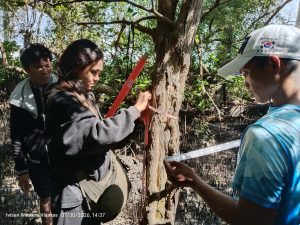
The discovery of 118 mature Gapas-gapas mangrove trees in 0.82 hectares (8,200 sq. meters)in Brgy. Agustin Navara, Ivisan, Capiz was made after seven student researchers from Roxas City School for Philippine Craftsmen (RCSPC), assisted by the team of PENRO Capiz’ Conservation and Development Section (CDS), barangay LGU and Bachelor of Science in Fisheries On-the-Job Trainees (OJTs) from Northern Iloilo State University (NISU), conducted the geospatial mapping onJuly 30, 2026. The activity was also made part of PENRO Capiz’ International Day for the Conservation of the Mangrove Ecosystem (IDCME) celebration.
Initially, the seven Grade 12 STEM students of RCSPC sought the assistance of DENR PENRO Capiz in identifying an appropriate plant or animal species to be the subject of their research, particularly for geospatial mapping and documentation. EMS II Jean Carla B. Ibañez, Officer-in- Charge of the Conservation and Development Section (CDS) of DENR PENRO Capiz, recommended the mapping of the Gapas-gapas mangrove species found in Brgy. Agustin Navara. The species was considered a suitable subject for the students’ research because of its ecological importance, local occurrence, and conservation significance. The activity aimed to use geospatial mapping techniques
to document the location and spatial distribution of the species within the study area, generating baseline information that may support its monitoring, conservation and management.
On July 27, 2026, Ibañez led an orientation detailing the mangrove species assessment process and demonstrating the equipment required for field mapping. The students were also taught by Forest Technician II Rollen Francisco how to use a mapping app called AlpineQuest, which offers an exceptionally functional experience for technical and outdoor users. Once the app is configured, its offline map caching and reliable background tracking operate seamlessly in the field. 4Moreover, Ibañez and her CDS team personally guided the Grade 12 STEM student researchers along with NISU trainees during the actual geospatial mapping activity.
Although the team initially targeted to map the 2.92-hectare mangrove area, time constraints and tides limited coverage to only 0.82 hectare, requiring a follow-up schedule. Ibañez disclosed the many Gapas-gapas trees situated landward are still unaccounted for. The student researchers and the team also took note of the other mangrove species that thrive in the area with Gapas-gapas, namely: “Bungalon” (Avicennia marina), “Api-api/Piapi” (Avicennia officinalis), “Bakauan babae” (Rhizophora mucronata), “Bakauan lalaki” (Rhizophora apiculata), and, “Pagatpat” (Sonneratia alba).
“This is not just another mapping activity. The fact that Ivisan, Capiz hosts this endangered Gapas-gapas mangrove species highlights the rich biodiversity of our province. As we continue tomentor the students, we also bear in mind that we have this dual responsibility: assisting these youngminds while safeguarding our natural treasures,” said Provincial Environment and Natural Resources Officer (PENRO) Ernest C. Federiso of DENR Capiz.
The study is expected to provide baseline scientific data that can help identify priority conservation areas, guide habitat restoration and management, and support future biodiversity monitoring./DENR 6