Lifestyle
The Story Behind iReport

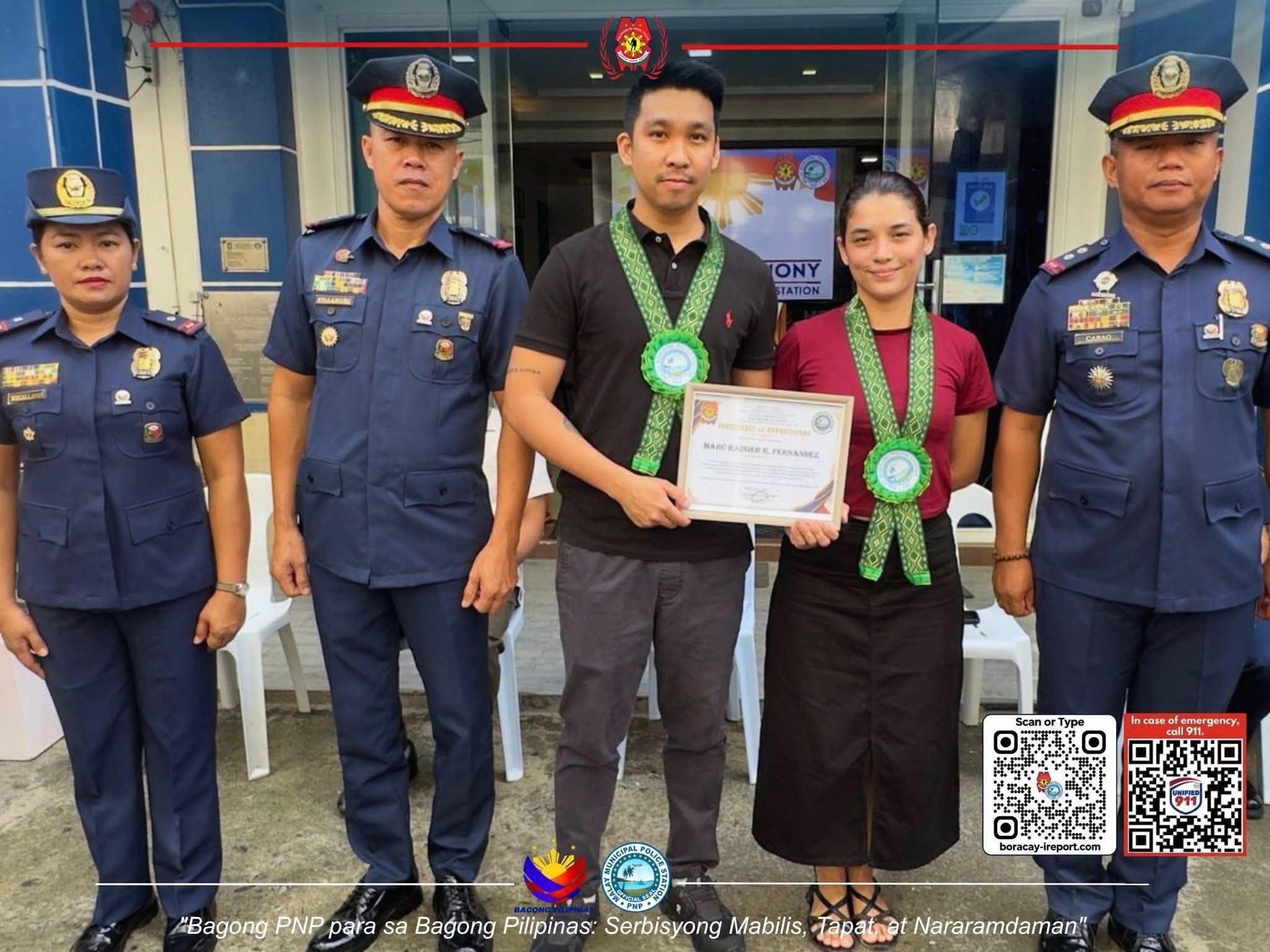

By Marc R. Fernandez, Founder of Enkel and developer of Boracay iReport
How It All Started
There were several inspirations behind Boracay iReport, most of which came together around November 2025.
At the time, I was providing AI and automation services to businesses. Through that experience, I saw firsthand how automation could significantly improve the speed and efficiency of business operations.
I began exploring the possibility of utilizing these technologies beyond my usual target audience. I figured that if automation could bring such benefits to businesses, imagine what it could do for public services and the wider community.
One day, as I was passing by the police headquarters in Station 3, Boracay, I noticed several people waiting inside the station.
I thought about how much time tourists could lose having to physically visit a police station and wait just to report an incident, particularly when they were supposed to be enjoying their vacation.
What if there was a faster and more convenient way of doing all this?
That was when I began conceptualizing a platform that would not only address this problem but also remove as many barriers as possible for tourists and residents to quickly report incidents to the proper authorities.
As I continued conceptualizing the platform, I encountered even more reasons to build it.
I had great neighbors from Poland who spoke very little English, and we would often communicate using translation apps on our phones. I wondered, if they were already having difficulty communicating with me in a casual setting, how much more difficult would it be if they ever needed police assistance while under stress?

This became one of the inspirations behind making Boracay iReport multilingual.
Another personal inspiration came from learning about someone who had suffered years of abuse at the hands of a family member and had no safe and discreet means of reporting what was happening to her.
That incident made me realize that the barriers to reporting were not always about inconvenience or language. Sometimes, they were about fear, intimidation and the circumstances surrounding the victim. This influenced some of the fundamental design decisions behind Boracay iReport.
Then there was one of my motivations for developing a public reporting platform—the devastating impact of illegal drugs on individuals, families and communities.
I wondered what would happen if people were given a more accessible and discreet way to report suspected illegal drug activities to the authorities without having to directly confront anyone.
And what if it actually worked? It could potentially serve as a deterrent and a significant force multiplier in the fight against illegal drugs.
All these experiences eventually led me toward a common vision: to use technology to bridge the gap between the public and law enforcement by removing unnecessary barriers to reporting, whether those barriers were time, language, inconvenience or fear.
The Development Journey
I began independently conceptualizing, designing and developing Boracay iReport in Boracay in November 2025.
The first person I showed the initial prototype to was RADM Leonard Tirol of the Philippine Coast Guard Auxiliary (PCGA). He was the first person to validate the concept, and his early belief in its potential was an important part of my development journey. It gave me the impression that what I was doing and about to do could have a real place in government use, particularly the PNP.
The earlier versions of the platform had relatively basic user interfaces. Although I experimented with different layouts and designs, they still looked and felt like traditional reporting forms, similar to most of the reporting platforms I had seen online.
I wasn’t satisfied with that.
I kept iterating until I began developing something that looked and felt like a modern mobile application, but without requiring users to download anything or register an account.
To me, this was one of the most crucial parts of the entire development process. Building a platform capable of receiving and transmitting incident reports was only part of the challenge. Designing an experience that people would actually want to use was equally important.
I wanted something that anyone could easily use, regardless of their age, nationality or familiarity with technology.
But beyond usability, I wanted to create an experience that people would remember long after they had submitted a report. I wanted them to remember how easy it was, so that whenever they needed to report another incident, they would know where to turn.
I continuously looked for ways to eliminate unnecessary steps, reduce complexity and remove anything that could discourage someone from completing a report.
Ultimately, I wanted the experience of using Boracay iReport to be defined by three things: simplicity, speed and convenience.