Lifestyle
13th Asia. Health, Wellness & Security Conference Brings Together Over 350 Regional Leaders To Advance An Inregrrated Approach To Resilence

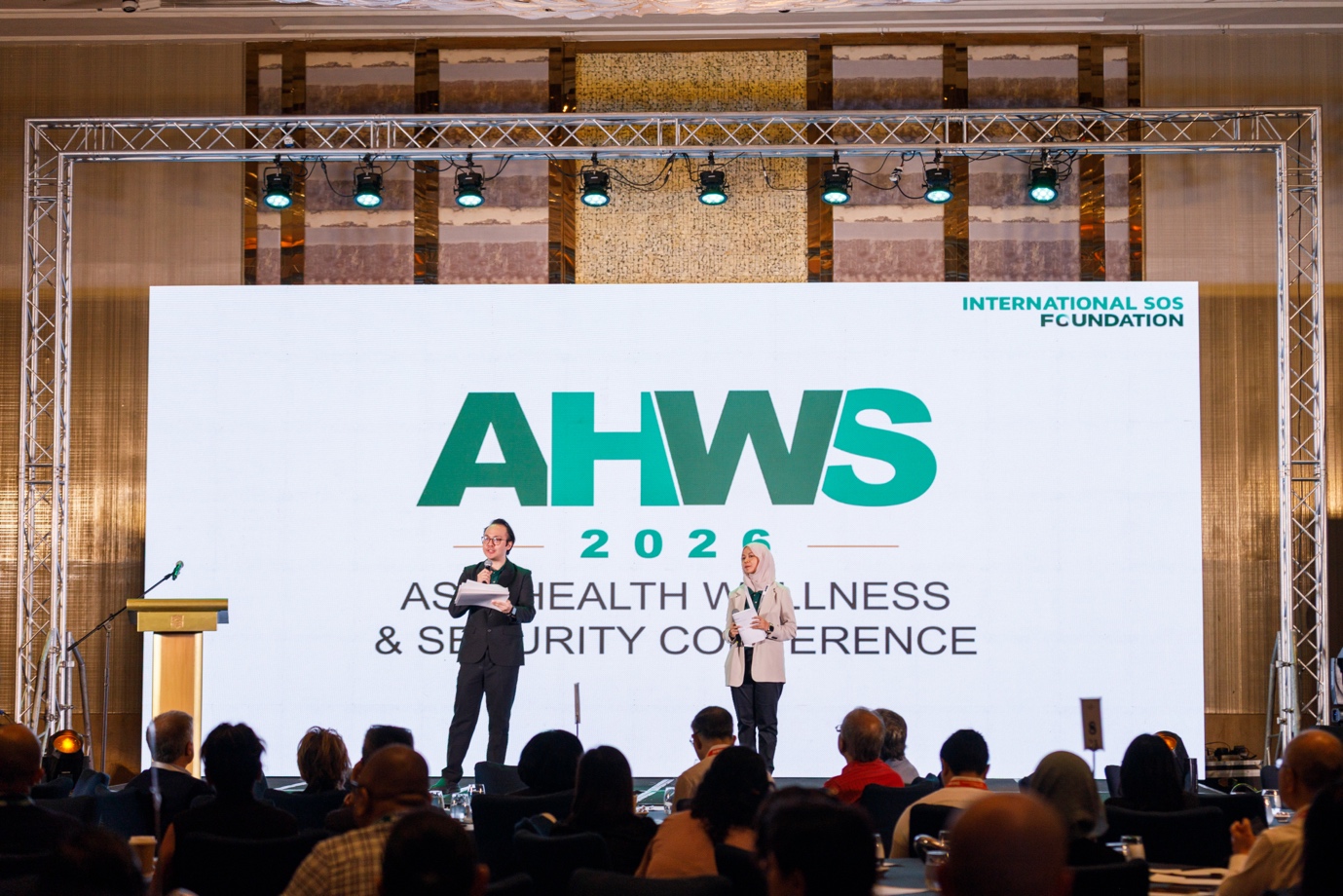
The 13th Asia Health, Wellness & Security Conference, organised by the International SOS Foundation, was held at Shangri-La The Fort, Manila, on 24–25 November 2026.
The Fort, Manila- – The International SOS Foundation concluded the 13th Asia Health, Wellness & Security (AHWS) Conference, held on 24–25 November at Shangri-La The Fort, Manila. More than 350 delegates from across the region gathered to examine interconnected risks shaping organizational resilience, workforce wellbeing and business continuity.
Maria Antonia Yulo-Loyzaga, Special Envoy for Disaster Risk Reduction and Management and Senior Adviser to the Secretary of National Defense, delivered a keynote address on the importance of maintaining essential systems and social cohesion in the face of multiple, overlapping threats.
AHWS 2026 convened senior business leaders, government representatives, healthcare professionals, security practitioners, HR leaders and risk management experts to explore how organizations can prepare for and respond to a complex risk landscape.
A consistent message emerged across the conference: health threats, geopolitical instability, climate-related disruptions, security challenges and workforce vulnerabilities are interconnected, and addressing them requires collaboration across disciplines, functions and sectors.
Building Resilience Beyond Crisis Preparedness
A central theme was the need to view resilience as more than an organization’s ability to withstand or recover from a crisis. Speakers discussed how it can be developed as an ongoing capability, embedded in everyday decisions, behaviors and business practices.
The conference took place against the backdrop of ongoing efforts to strengthen disaster resilience in the Philippines, where communities face hazards including typhoons, floods and earthquakes. In 2025, the World Bank approved support for the Philippines Community Resilience Project, known as Pagkilos, which aims to help communities identify risks and develop resilience plans. These efforts reflect the importance of collaboration across communities, government and other sectors, a theme also explored at AHWS 2026.
In his opening address, Dennis Mark, Regional General Manager, Southeast Asia & Korea, International SOS, highlighted the importance of building resilience into daily operations.
“Resilience is not defined by the absence of crises, nor simply by how quickly an organization recovers from disruption. It is an organizational capability cultivated through everyday decisions, the culture we build and the way we equip our people,” he said.
Addressing the Complexities of Health & Security in a Polycrisis
Under the theme “The Resilience Paradigm: Health & Security in Polycrisis,” AHWS 2026 explored how organizations can navigate an environment where health, security, environmental and operational threats overlap.
Through keynote addresses, plenary discussions, expert panels, breakout sessions and masterclasses, the two-day conference examined:
- Preparing for major disruptions: Disaster risk management, preparedness for large-scale emergencies and coordinated responses, including the potential impact of major seismic events.
- The economics of resilience: Rising healthcare costs and how organizations can balance expenditure with workforce health, wellbeing and productivity.
- Leadership and security: Executive protection, regional security threats and safeguarding people and business operations amid geopolitical uncertainty.
- Resilience across critical industries: Occupational health, safety and security challenges in the energy, industrial and maritime sectors.
- The changing nature of workforce health: Unhealthy leadership, workforce longevity, infectious diseases, mental health and pressures associated with an always-connected workplace.
- Technology and the future of health: Artificial intelligence in healthcare and how emerging technologies can support workforce wellbeing.
- Collective responsibility and community resilience: Corporate citizenship, public-private partnerships and cross-sector collaboration in disaster preparedness.
At his Natural Hazards Preparedness masterclass, Dr Noel Bernado, Medical Director, Public Health and Consulting, SEA, International SOS, discussed the “common-sense gap” in earthquake preparedness.
“The common-sense gap is the measurable distance between what everyone agrees is the sensible thing to do and what most people actually expect or choose to do. In earthquake preparedness, it shows up as near-universal belief in readiness and a far lower rate of real-world action,” he said.
In an informal show of hands during the session, all attendees indicated that being prepared for the next earthquake was important, while approximately one in five said they would realistically take action.
Conference discussions also considered how a major earthquake could create cascading security risks and disrupt business operations, including whether organizations are prepared to operate independently in the first 72 hours while government and emergency responders manage competing priorities.
By bringing together expertise from across sectors, AHWS 2026 continued the International SOS Foundation’s work to foster meaningful dialogue and support more effective Duty of Care practices across the region.
###
About the International SOS Foundation
The International SOS Foundation is a global non-profit organization committed to enhancing the health, safety, security, and wellbeing of individuals worldwide. Through research, advocacy, and education, the Foundation advances global Duty of Care standards and fosters multidisciplinary collaboration to build safer, more resilient organizations and communities.