Business
Indonesia’s BSKDN Hosts Green Mobility Policy Talks, Calls for Realistic EV Adoption and Cross-Regional Synergy

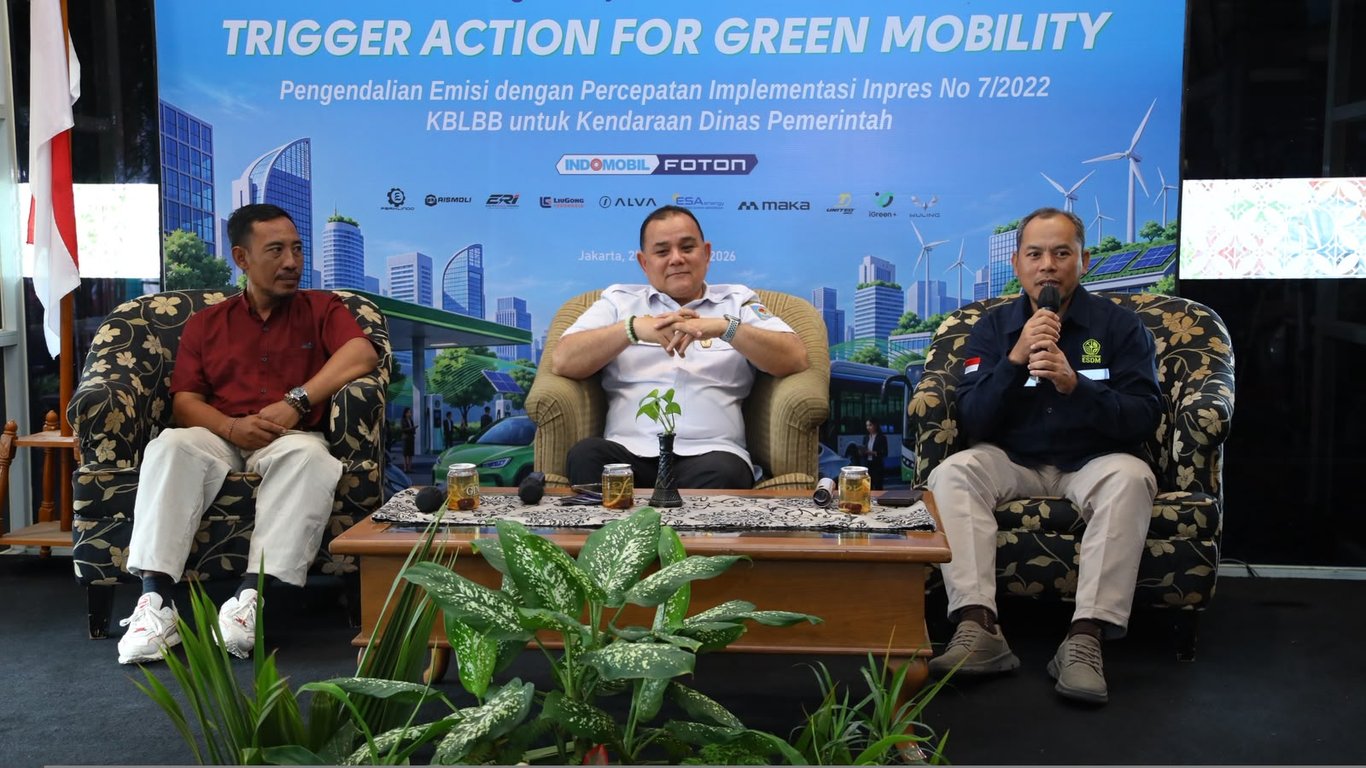
Jakarta, November 26, 2026 — Indonesia’s Domestic Policy Strategy Agency (BSKDN) under the Ministry of Home Affairs successfully held the Policy Talks Forum: Trigger Action for Green Mobility at Hotel Horison Menteng in Jakarta on Wednesday, November 25, 2026. Attended in person and virtually via Zoom and YouTube Live by representatives from provincial and municipal Regional Development Planning Agencies (Bappeda), Regional Financial and Asset Management Agencies (BPKAD), and Transportation Agencies across Indonesia, the forum was officially opened by Deputy Minister of Home Affairs Dr. Akhmad Wiyagus, S.I.K., M.Si., M.M., following an opening report by Acting Head of BSKDN Raden Gani Muhammad, S.H., M.AP.
The forum aimed to align Indonesia’s national green mobility policy direction, highlight local innovations and best practices in electric vehicle (EV) adoption, and strengthen collaboration among the government, the EV industry, and the public to build a cleaner, more sustainable ecosystem.
Dr. T.R. Fahsul Falah, S.Sos., M.Si., Head of the Center for Regional, Population, and Public Service Policy Strategy at BSKDN, emphasized that the insights and best practices shared during the event point to two priority actions moving forward.
“First, we must accelerate vehicle electrification through realistic and measurable steps, taking into account infrastructure readiness, financing capacity, and the specific conditions and needs of each region,” Fahsul Falah said. “Second, cross-sector and inter-regional coordination in air pollution control must be strengthened—ranging from air quality monitoring and emission source supervision to integrating these policies into regional planning and budgeting documents.”
National Energy Policy and EV Adoption Challenges
During the main discussion, speakers examined Indonesia’s National Energy Policy under Government Regulation (PP) No. 40 of 2025, which serves as the reference for drafting the National Energy General Plan (RUEN). The policy framework focuses on national energy availability, domestic resource utilization, energy development priorities, and national energy reserves. Energy diversification was underscored as essential to strengthening energy security, reducing reliance on imports, cushioning the impact of global energy price volatility, and improving system reliability.
The forum also addressed the wide adoption gap on the ground. While the Indonesian government targets 13 million electric motorcycles by 2030, current adoption remains below 1 percent, highlighting the need for stronger policies and tighter coordination between central and regional governments. On the upstream industrial side, a Ministerial Decree from the Ministry of Energy and Mineral Resources (ESDM) has designated 22 strategic commodities vital to supporting national development, the EV industrial ecosystem, and the broader energy transition.
Regional Best Practices and Integrated Air Pollution Control
The Special Capital Region of Jakarta (DKI Jakarta) and West Nusa Tenggara (NTB) shared their experiences as pilot provinces advancing toward Net Zero Emissions. Both regions have deployed electric vehicles across public transportation and government operational fleets, demonstrating lower operating costs while helping curb air pollution.
From the environmental management standpoint, the Ministry of Environment outlined updated motor vehicle emission standards and noted the operation of 133 air quality monitoring stations, several of which are already integrated into a central data system to support data-driven policymaking. The ministry continues to push an integrated air pollution control strategy combining regular emission testing and vehicle maintenance, low-sulfur fuels, mass public transit expansion, vehicle electrification, and the implementation of Low Emission Zones (LEZs).
Fiscal Balance and Industry Input
Participants also discussed fiscal risks facing both central and local governments, particularly regarding incentive schemes, potential shifts in regional tax revenues, and funding requirements for supporting infrastructure. Stakeholders stressed the need for clear regulations and targeted incentives for regional governments, businesses, and micro, small, and medium enterprises (MSMEs) to ensure an inclusive transition toward green energy.
Alongside the seminar, the event featured an interactive discussion and an electric vehicle exhibition to gather direct feedback from industry players. EV entrepreneurs highlighted the need for clear regulations governing electric motor vehicle engine standards and consistent government support to sustain a competitive domestic EV industry.
The Policy Talks brought together cross-sector speakers and panelists:
– Speakers: Luh Nyoman Puspa Dewi, Head of the Bureau for Energy Crisis Mitigation and Supervision at the National Energy Council (DEN); Abdul Chair, Ak., CFE, CFrA, Regional Secretary of West Nusa Tenggara Province; Deftrianov, Acting Head of Bappeda DKI Jakarta; Slamet, M.T., Ph.D., Acting Head of the Center for Survey and Testing of Electricity, New, Renewable Energy, and Energy Conservation at the Ministry of Energy and Mineral Resources (ESDM); and Heru, representative of the Ministry of Environment.
– Panelists: Sastrodirjo, Functional Analyst for Central and Regional Finance at the Ministry of Finance; Ir. Bayu Hadiyanto, S.T., M.Si., Head of the Banyuwangi Regency Environmental Agency; Dian, representative of the Directorate of Urban Boundaries; Divo Kartono, CEO of Elektrik Rakyat Indonesia (ERI); Ferry Bayu Nirwono, CEO of VRITIMES; and Daryono, representative of PT Mayasari.
Closing the forum, Fahsul Falah reaffirmed BSKDN’s commitment to ensuring that the discussions translate into concrete follow-up actions across government levels.
“BSKDN will continue to serve as a facilitator for policy communication and stronger synergy between the central and regional governments. All inputs gathered from this forum will serve as vital material to strengthen coordination and define concrete next steps within each stakeholder’s respective mandate,” he concluded.
This press release has also been published on VRITIMES