Commentary
Before Aklan Well’s Run Dry: Water Security Cannot Wait

By: Guillermo Sumbiling
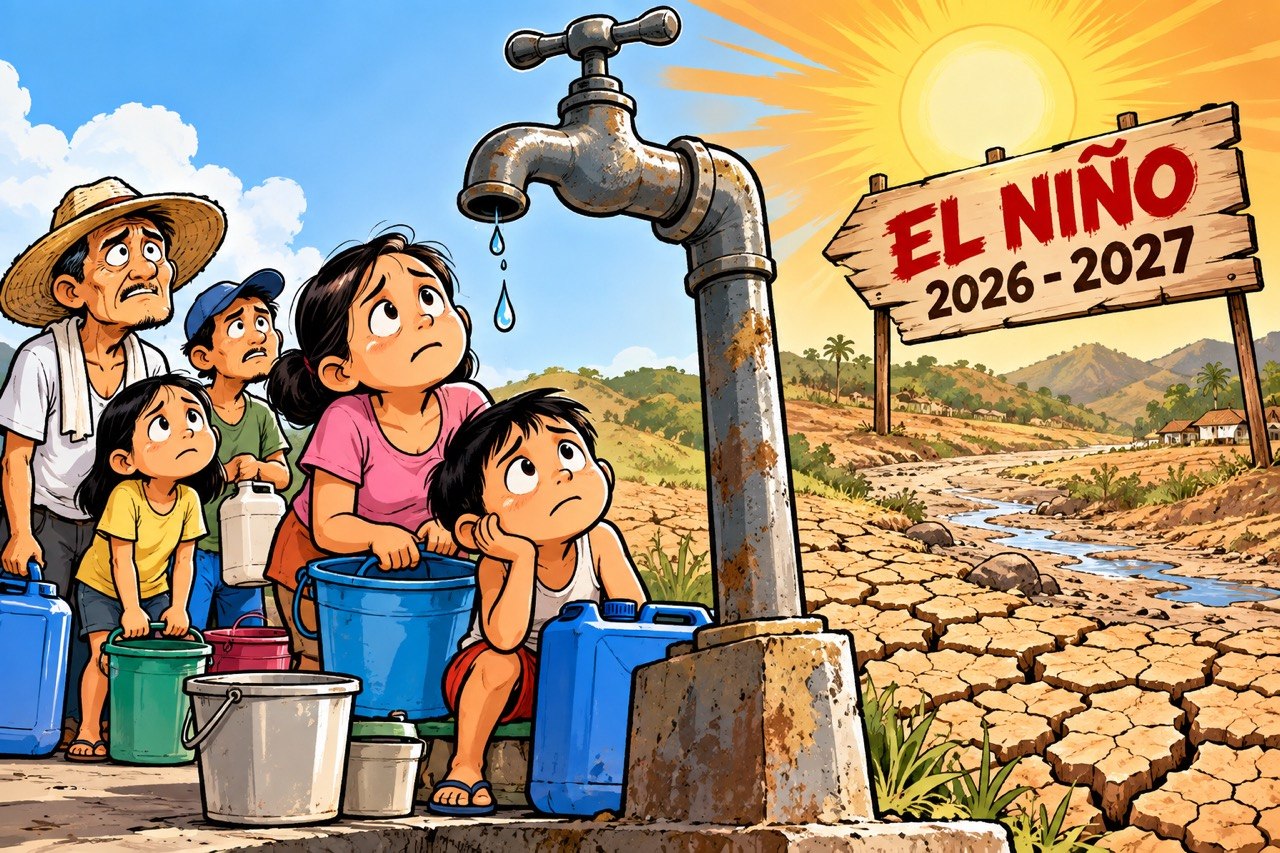
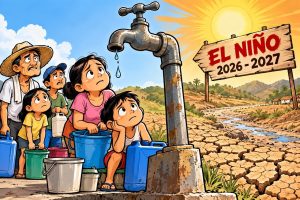
Aklan should start preparing for a water crisis before people begin lining up with empty containers.
As the province faces the threat of a prolonged dry period extending into 2027, our attention should not be limited to drying rice fields and irrigation canals. The more immediate question for thousands of Aklanon families is much simpler:
Where will our drinking and household water come from when the wells and springs begin to run low?
The numbers should concern every provincial and municipal decision-maker.
According to the PSA figures cited for Aklan, only around 33% of households are connected to a community water system—about 19% through their own faucets and 14% through shared communal faucets.
That means roughly two out of every three Aklanon households are outside a community water system.
Around 36% reportedly depend on deep wells, while many others rely on shallow wells, springs, water-refilling stations, bottled water and other sources.
This dependence becomes dangerous during a prolonged drought. Groundwater levels can fall. Shallow wells can dry up. Springs can weaken. And families dependent on commercial drinking water may have to spend more of their household income simply to obtain something as basic as safe water.
The problem is especially serious in Libacao, Madalag, Malinao, Ibajay, Altavas and Batan, where upland and geographically dispersed communities make water infrastructure more difficult.
There is already evidence on the ground.
In Barangay Medina, Madalag, DOST identified an Akeanon-Bukidnon community as an unserved and underserved area, where residents commonly relied on spring water for drinking. In 2026, DOST installed a solar-powered treatment system benefiting at least 50 households. In Barangay Manika, Libacao, DOST earlier reported that the community had no potable water source and depended on free-flowing mountain or river water. A ram-pump system was installed there to serve 28 households or about 225 people.
These projects demonstrate both the problem and the possible solutions.
Aklan had a population of 615,475 people in the 2020 Census. Water security, therefore, is not a small infrastructure concern. It is a fundamental development and public-health issue.
We need an Aklan Water Security Program now—barangay by barangay.
Map vulnerable wells and springs. Drill and rehabilitate sustainable deep wells where technically appropriate. Build communal storage tanks. Expand piped systems. Install rainwater harvesting facilities. Protect watersheds and recharge areas. Prepare tankers and emergency distribution points. Replicate solar-powered treatment and ram-pump technologies in remote communities.
Most importantly, funding should go first to barangays where families remain dependent on wells, springs and rivers.
We spend millions building roads, markets, buildings and other visible infrastructure. But what value is development if an Aklanon family still has to worry every morning about where to get clean water?
The dry months ahead will test our preparedness.
Do not wait for the wells to run dry before declaring an emergency.
Water security should become one of Aklan’s highest development priorities—not in 2027, but today.