Business
Why the Malunggay Pandesal Vendor Continues to Outperform Modern Businesses

By John Dela Cruz
In every community, there is one entrepreneur who seems immune to economic downturns, rental increases, labor disputes, inflation, and even shopping mall competition.
No, it is not a technology startup founder.
It is the Malunggay Pandesal vendor.
While corporations hold strategic planning sessions, conduct market research, and prepare PowerPoint presentations, Mang Nanding is already halfway through his route at 6:30 in the morning, selling hot bread and collecting cash.
The economics are surprisingly brilliant.
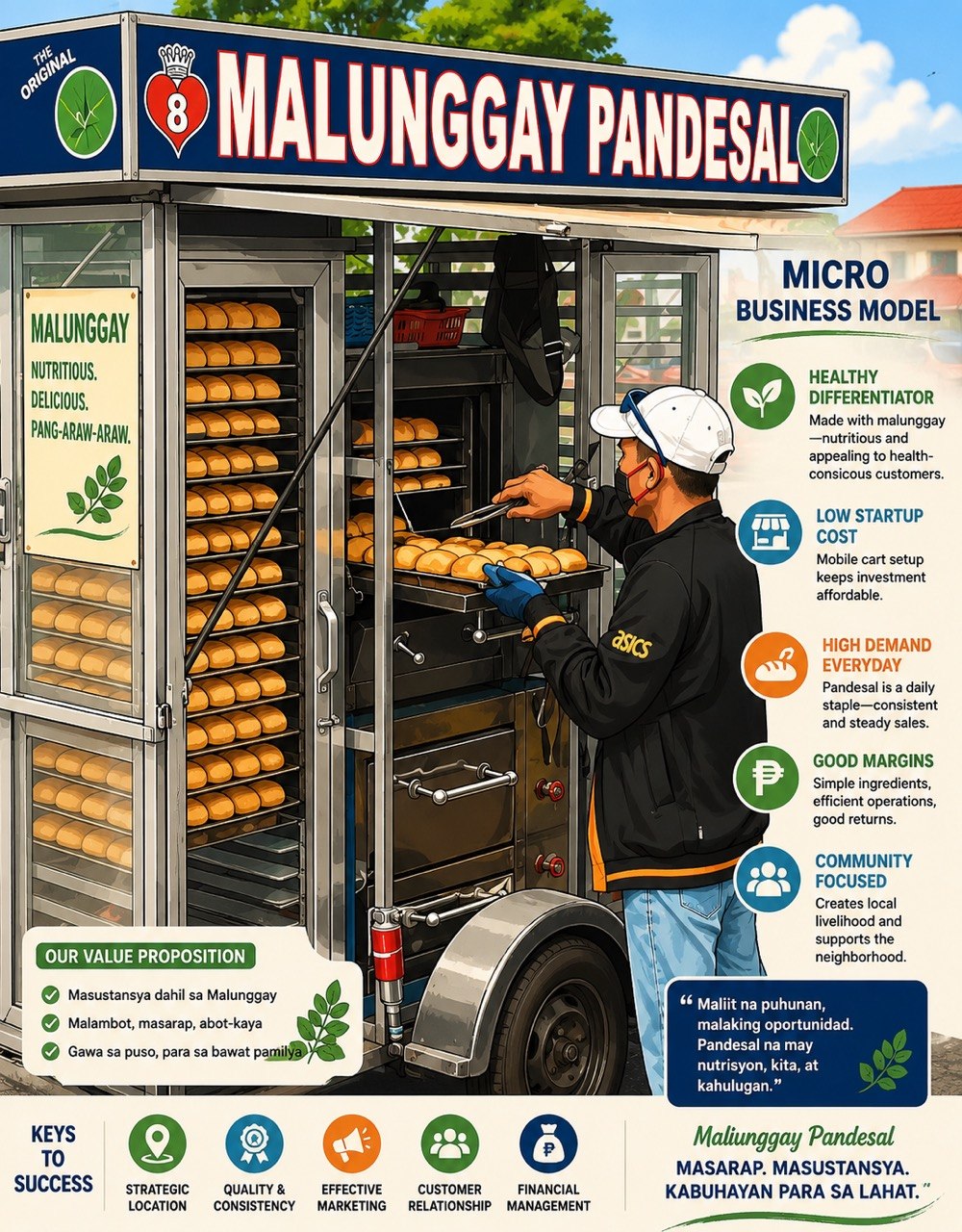
First, the Malunggay Pandesal vendor enjoys what many formal businesses secretly dream of: little to no commercial rent. While stores fight over expensive locations and landlords raise rental rates every year, the pandesal vendor’s storefront is wherever customers happen to be standing. Today beside the plaza, tomorrow near the school, and next week beside the public market.
Location, location, location? The vendor brings the location with him.
Second, he is remarkably flexible. If sales are slow in one area, he simply pedals or drives to another. A shopping mall cannot relocate itself before lunchtime. A pandesal vendor can.
Third, fresh bread still wins.
No matter how attractive the packaging, many consumers continue to prefer warm pandesal that came out of the oven a few hours ago over bread that has spent weeks inside plastic packaging. The aroma alone is a powerful marketing campaign.
The vendor does not need a billboard.
The smell does the advertising.
Then there is the matter of labor economics.
A formal business must budget for minimum wages, social security, health insurance, employee benefits, holiday pay, overtime pay, uniforms, and compliance requirements. The Malunggay Pandesal vendor often works for himself or with family members. His human resource department, accounting department, and operations department may all be represented by one person wearing slippers.
His board meeting is conducted while riding a bicycle.
Taxation also plays a role.
Formal enterprises shoulder business permits, regulatory fees, accounting requirements, and various taxes. Small neighborhood vendors often operate at a scale where compliance costs are far lower than those faced by larger businesses. While this reality creates policy debates, it undeniably contributes to the competitiveness of the informal sector.
The result?
A simple business with low overhead, low fixed costs, direct customer access, minimal marketing expense, and daily cash flow.
In modern business language, the Malunggay Pandesal vendor has achieved an “asset-light, mobile distribution model with hyperlocal customer engagement.”
In ordinary Filipino language, he sells bread from house to house.
Yet despite its simplicity, this model supports thousands of families throughout the country. It provides employment, distributes affordable food, supports local bakeries, and keeps money circulating within communities.
The next time you hear a bell ringing down the street early in the morning, remember that you are not merely witnessing a bread vendor.
You are witnessing one of the most efficient micro-enterprise models ever created.
And somewhere, a highly paid business consultant is probably trying to invent a fancy name for it.