Agriculture
Beyond Rice And Palms: How Four High-Value Tropical Fruits Could Reshape Akl

by John Dela Cruz
While the world knows Aklan for the powdery white shores of Boracay, the province’s inland agricultural heartland is quietly sitting on an untapped economic reservoir. For generations, local farming has revolved around traditional staples like rice, coconut, and banana. Yet, as climate volatility increases and regional tourism drives demand for authentic local flavors and wellness products, provincial leaders and agri-entrepreneurs are turning toward a promising new frontier. Identified by the Department of Science and Technology – Philippine Council for Agriculture, Aquatic and Natural Resources Research and Development (DOST-PCAARRD) as strategic commodities with immense potential for local economic development, four high-value underutilized tropical fruits are ready for commercial scale.
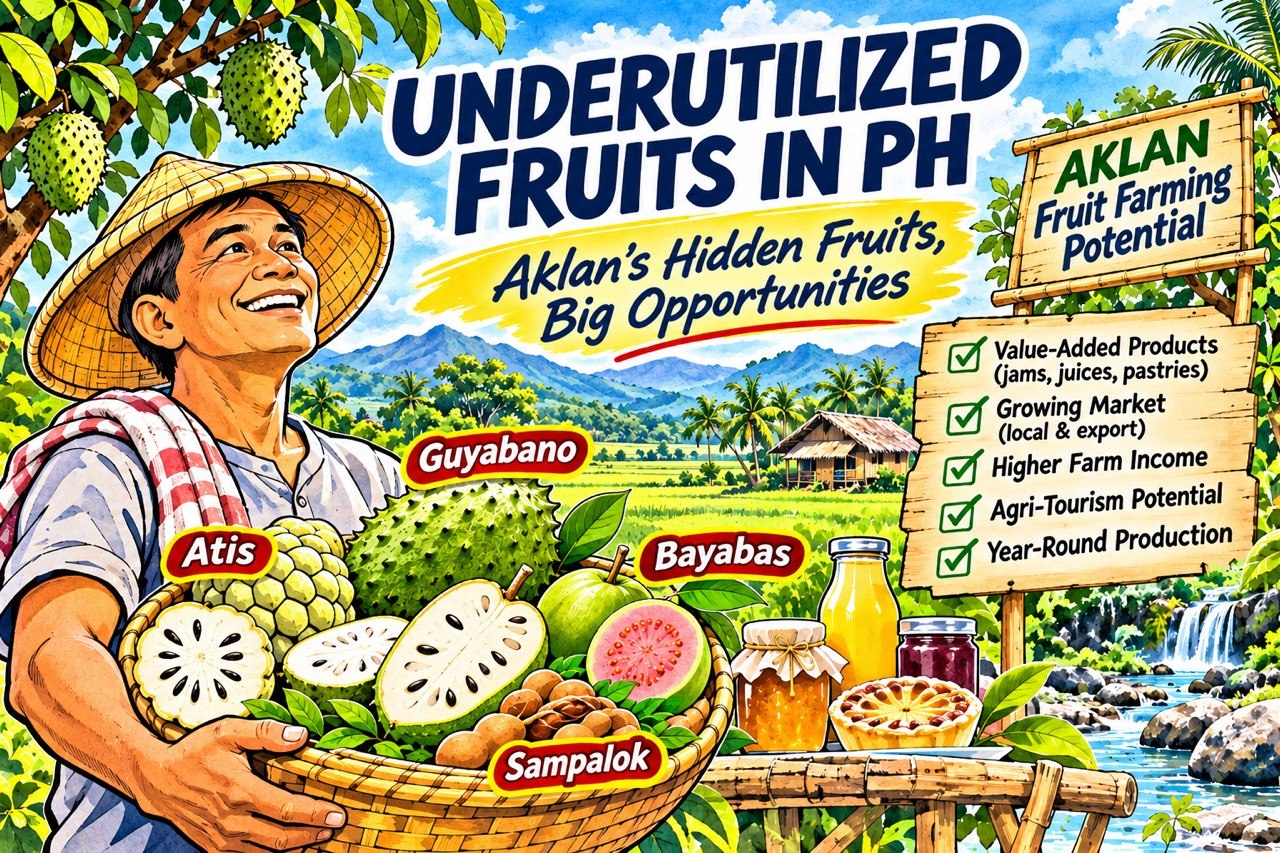
These resilient crops—Guyabano (Annona muricata), Guava (Psidium guajava), Atis (Annona squamosa), and Sampalok (Tamarindus indica)—are proving that diversified agribusiness can flourish across Aklan’s distinct microclimates.
In the fertile interior plains of Banga and the gently rolling hills of Buruanga, Guyabano thrives exceptionally well. When processed into bottled nectars, frozen gelato bases, and dried herbal teas, this nutrient-dense fruit offers smallholders steady profit margins that far outpace raw produce sales.
Meanwhile, the sunny lowland coastal plains of Numancia and Makato present ideal environments for Vitamin C-rich Guava, where simple processing into gourmet jams, high-pectin jellies, and dried fruit chews can safeguard harvests against post-harvest decay.
Further along the sun-drenched, well-drained coastal terrains of Tangalan and Batan, the naturally sweet Atis takes center stage. By deseeding and processing its aromatic pulp into uniform purées, local suppliers can directly feed mainland cafes and Boracay’s resort market with signature tropical shake bases.
Finally, in the upland borders and agroforestry slopes of Ibajay and Altavas, deep-rooted Sampalok functions as both a natural windbreak and a high-yield canopy crop, yielding pods for sweetened candies, bottled culinary pastes, and refreshing coolers.
The roadmap for Aklan’s agricultural transformation is clear. By leveraging DOST-PCAARRD research, establishing certified clonal nurseries, setting up shared barangay-level processing facilities, and linking local producers directly with tourism supply chains, Aklanon farmers and entrepreneurs can cultivate a resilient, high-value agro-industrial future for generations to come.