Lifestyle
Through the Lens of Care: Photographing the Journey Toward Better Health for Women and Girls

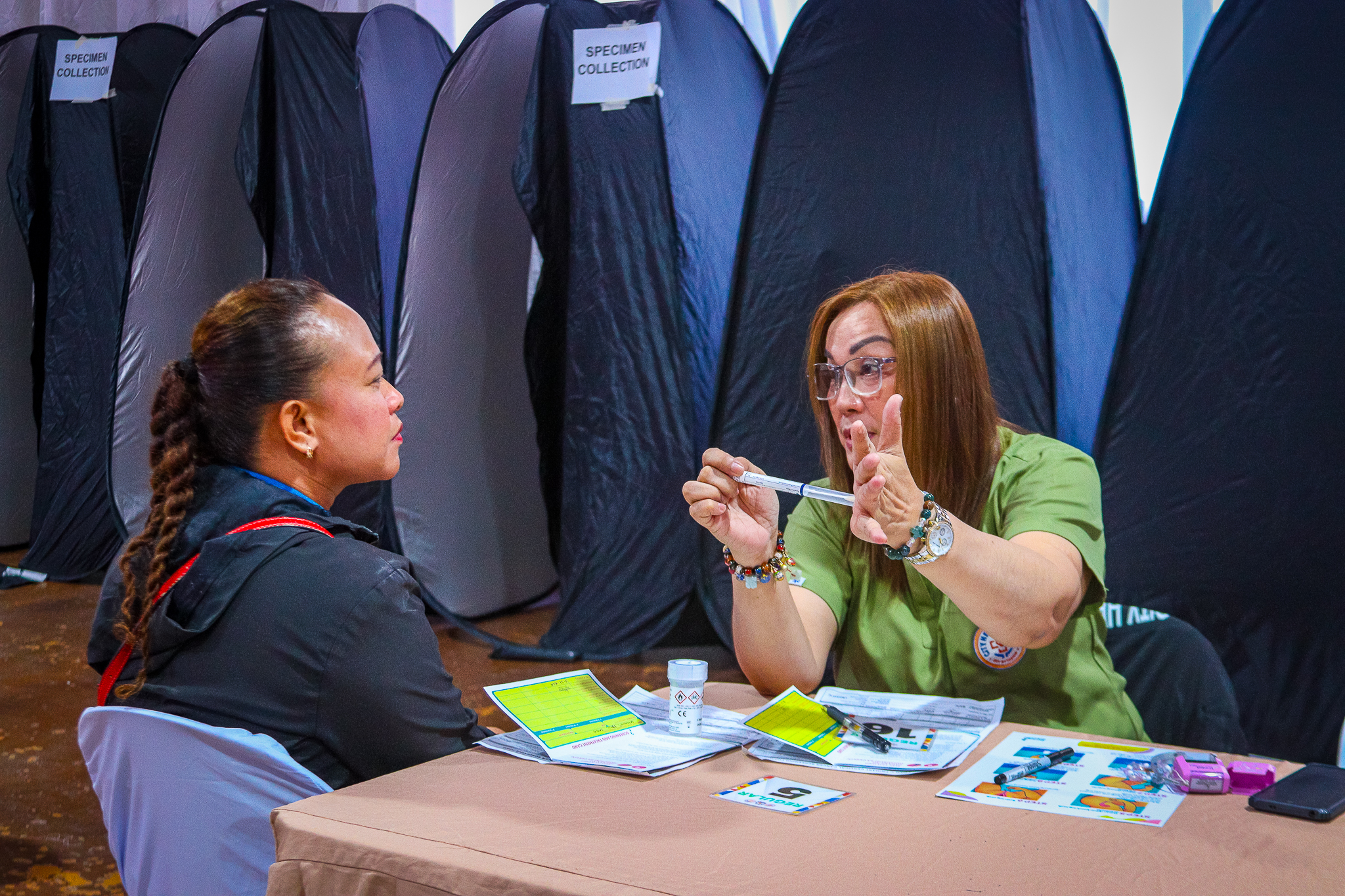
QUEZON CITY — A group of women sit quietly inside a community health center, carefully following instructions as they perform HPV self-collection tests. Hundreds of kilometers away, a couple cradles their newborn before choosing a long-acting family planning method that allows the woman to plan her next pregnancy on her own terms.
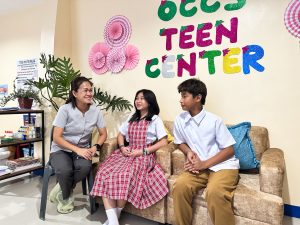
In Northern Mindanao and Eastern Visayas, young people gather in adolescent-friendly spaces, where teen center managers lead open conversations about relationships, mental health, and sexual and reproductive health. On the streets of Metro Manila, motorcycle riders weave through traffic carrying laboratory specimens that could determine whether a woman receives timely treatment for cervical cancer.
These moments unfold every day across the Philippines. They rarely make headlines.
Yet through the photographs of Filipino photojournalist and multidisciplinary artist Geri Matthew Carretero, they tell a larger story—one of women making choices about their health, young people finding trusted spaces to learn, healthcare workers extending care beyond clinic walls, and communities working together so that no woman is left behind.
For Carretero, the most meaningful photographs are often the quietest ones.
“A photograph can freeze a moment,” he said. “But what interests me is everything happening beneath it, the courage it takes to seek care, the trust between a health worker and a patient, and the people whose work often goes unseen.”
Over the past several years, Carretero has documented health programs in communities across the country, witnessing the continuum of care that supports women and girls through adolescence, motherhood, disease prevention, and healthy living. Rather than focusing on medical procedures alone, his camera follows the people whose everyday decisions and dedication make healthcare possible.
His photographs reveal adolescents asking questions without fear, mothers returning for postpartum care, women choosing cervical cancer screening for the first time, health workers patiently explaining unfamiliar procedures, laboratory personnel processing samples late into the day, and local health workers traveling long distances to reach underserved communities.
One series of photographs follows adolescents inside school-based teen centers and adolescent-friendly health facilities, where conversations that were once considered difficult are becoming more open. Here, young people learn not only about sexual and reproductive health but also about leadership, resilience, healthy relationships, and making informed decisions.
The images capture something that statistics cannot: confidence growing in real time. A hesitant question becomes a discussion. A discussion becomes understanding. Understanding becomes empowerment.
Another collection documents women embracing self-care through HPV self-collection, an innovation that allows them to collect their own screening samples safely and privately. For many women, the method offers greater comfort, convenience, and control—reducing barriers that have long prevented regular cervical cancer screening.
For Carretero, the significance of these images extends beyond the medical procedure itself.
“They show women taking ownership of their health,” he said. “That decision, no matter how small it may seem, can change the course of a life.”
Not all of the people in his photographs are patients.
Together, the photographs reveal that healthcare is rarely the work of a single person. Every image hints at an invisible network connecting communities, health workers, educators, laboratories, local governments, and families.
It is also a reminder that improving the health of women and girls begins long before illness appears.
It begins with a teenager finding a trusted adult who will answer difficult questions without judgment.
It begins with a mother deciding to plan her family.
It begins with a woman choosing to be screened even when she feels healthy.
It continues with healthcare workers who provide compassionate care, riders who transport laboratory specimens across cities, and countless others whose names rarely appear in headlines but whose work helps sustain entire health systems.
As a Bicolano multidisciplinary artist, independent curator, community development worker, co-founder of the Kurit-Lagting Art Collective, member of the Concerned Artists of the Philippines, and member of the Press Photographers of the Philippines, Carretero has long believed that photography can do more than document events.
It can foster understanding.
It can challenge assumptions.
It can make invisible work visible: women receiving follow-up care more quickly, health workers coordinating services more efficiently, and fewer opportunities for patients to fall through the cracks.
In this collection, his photographs invite viewers to look beyond the clinic and beyond the diagnosis. They reveal that every advancement in women’s health is built not only through science and policy but also through compassion, collaboration, and ordinary acts of care repeated every day.
The photographs do not ask viewers simply to look.
They ask them to recognize the people behind every healthier future for women and girls.
Photos By: Geri Matthew Carretero