Lifestyle
Changi. There is genuinely nowhere else like it

By: Miko Santos
Sngapore- We touched down at Singapore Changi Airport at 10:45am, and even on four hours of broken sleep across a metal seat and an economy cabin, stepping into this terminal does something to your mood. It resets you.
That is not an accident — it is the result of deliberate, sustained investment in what an airport can be when the people running it treat the passenger experience as the actual product.
Let me try to describe it for those who haven’t transited here.
The Changi control tower rises above the approach road, visible through rain-streaked glass as the shuttle brings you in — that instantly recognisable white column with its spherical crown, standing over a landscape of tropical palms and orderly roads. Even in grey morning rain, it looks composed. Purposeful. Singapore in a single frame.
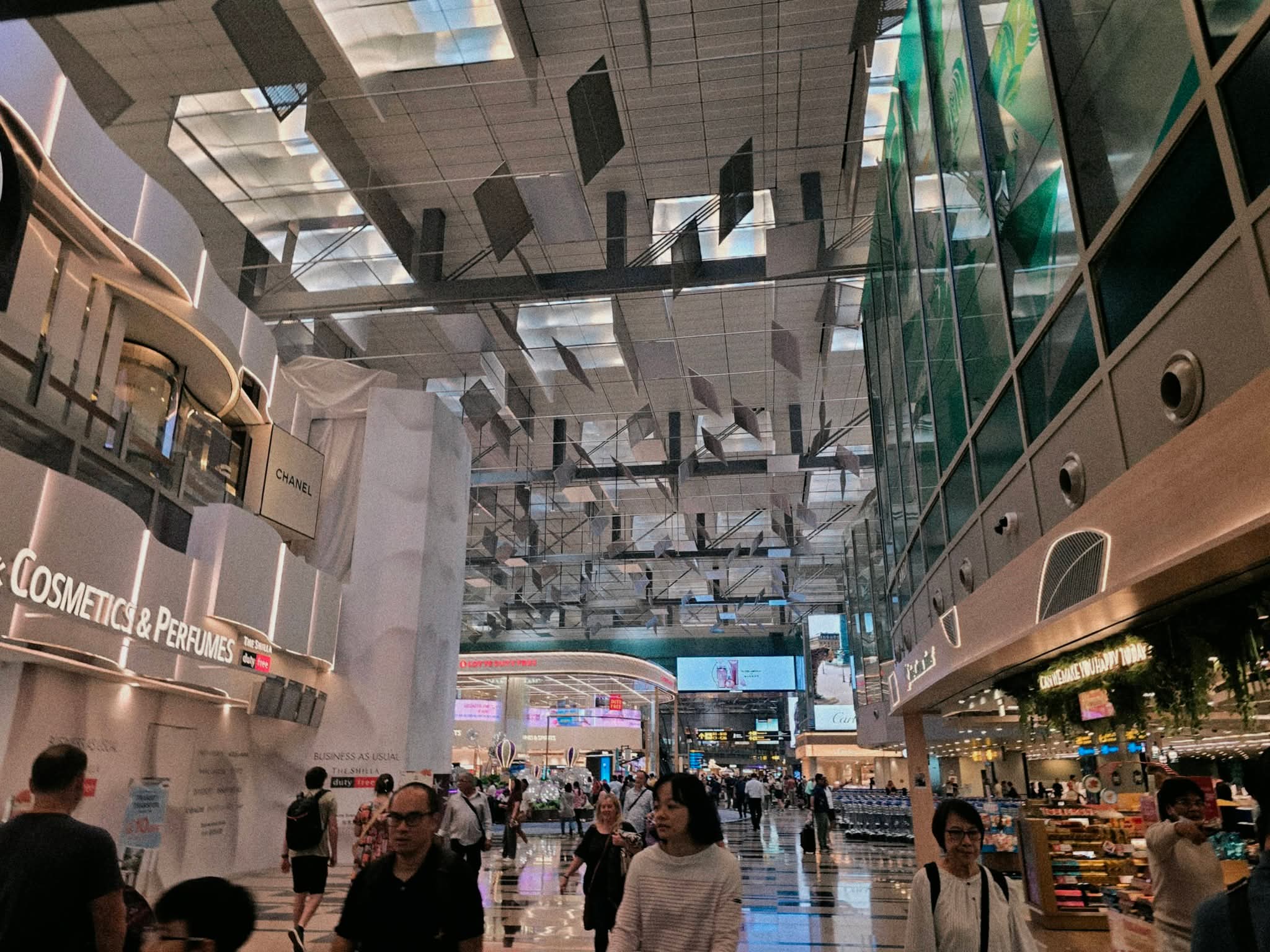
Inside Terminal 3, the scale of the departure hall opens up immediately. The ceiling installation — dozens of angular geometric panels suspended at varying heights and angles, like a three-dimensional architectural sketch frozen mid-thought — catches your eye before anything else. Below it: Singapore Food Street on the upper level, its warm lighting and Chinese-English signage offering laksa and chicken rice to passengers who would rather eat well than eat quickly. The duty-free corridor runs deep and wide, Chanel and Cartier flanking one side, Starbucks and The Shilla duty free on the other, hundreds of people moving through it with the unhurried confidence of travellers who know they have time and space to use it.
And then there is Jewel.
If you have a layover of any meaningful length at Changi and you have not walked through to Jewel Changi Airport, I genuinely do not know what you are doing with your time.
The Rain Vortex — the world’s tallest indoor waterfall, dropping through the centre of a glass-domed garden atrium — is one of those things that photographs well but lands differently in person. The scale of it, the sound of it, the sheer improbability of standing inside an airport surrounded by full-grown tropical palms watching a curtain of water fall forty metres through a vaulted geometric dome while people eat Shake Shack nearby. It is not subtle. It is not trying to be. It works completely.
After exploring, I made my way to the Ambassador Transit Lounge in Terminal 2, Level 2.
Six hours is a long layover. It is also, after the night I had at NAIA, exactly the right amount of time to do absolutely nothing useful. The Ambassador Lounge costs SGD $120 for walk-up access, but as a Priority Pass member I walked straight in — a reminder that the annual fee on the right travel credit card pays for itself in precisely these moments, in exactly this airport, after exactly this kind of overnight departure.
The lounge did what a good transit lounge should: fed me a decent early lunch, offered a chair that did not have perforations, and let me sleep. Not elegantly. Not in a day room with a proper bed. But in the particular collapsed, grateful way you sleep when you have been awake since before midnight and someone has finally given you permission to stop moving.
I slept for a couple of hours. It was enough.
Adelaide boards later today. The last leg. After Manila’s 3am metal chairs, Singapore Airlines economy breakfast over the Sulu Sea, and a waterfall the size of a small cliff inside a shopping centre attached to an airport — home is close enough to feel real again.
Have you done a long Changi layover properly — Jewel, the rooftop pool, the full terminal walk? Or do you go straight to the gate? Tell me your Changi transit strategy below. 👇
✈️ Singapore Changi → Adelaide | Final leg