Latest News
Nearly 50 Distribution Utilities Charge Residential Electricity Rates Above Already-High National Average

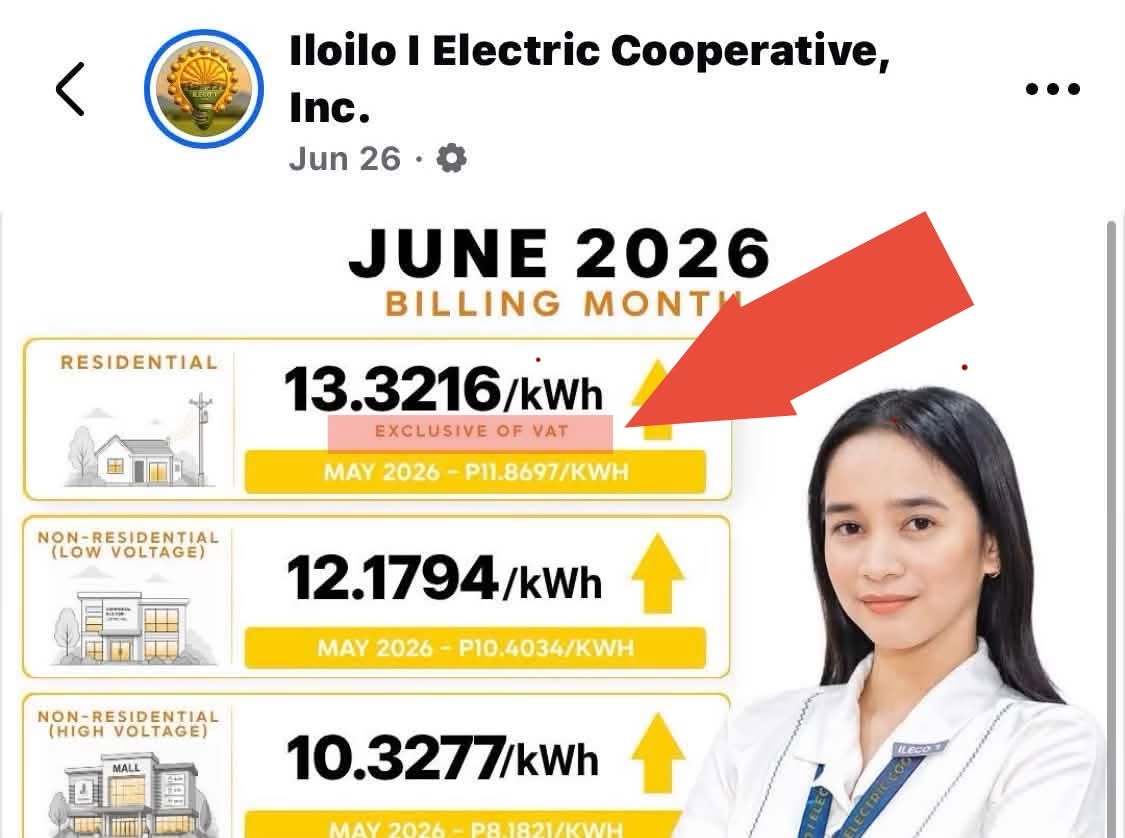
Nearly 50 distribution utilities (DUs) recorded residential electricity rates above the national average of ₱12.43 per kilowatt-hour (kWh) in June 2026, indicating that consumers in many parts of the Philippines continue to pay significantly more than the national benchmark, according to an analysis by the Institute for Climate and Sustainable Cities (ICSC).
The findings underscore how differences in distribution utilities’ power supply can influence electricity costs across the country, underscoring the importance of building a more diversified and resilient power mix.
The analysis comes after the Department of Energy’s (DOE) announcement that the Philippines has the highest average residential electricity rate in Southeast Asia. According to the DOE, high electricity prices have been driven by tightening supply, prolonged power plant outages, higher fuel costs, and greater reliance on more expensive electricity sources.
National averages, however, tell only part of the story. Data compiled by ICSC through its electricity rate monitoring platform, Power Rates and Energy Supply Overview for the Philippines (PRESYO-PH), indicates that 48 on-grid electricity providers recorded residential rates above the national average in June 2026, showing that many Filipino households are paying significantly more than the national benchmark.
Table 1. On-grid Distribution Utilities with the Top 20 Highest Residential Electricity Rates in June 2026.
|
Distribution Utility |
June 2026 Rate |
Share of WESM in Generation (%) |
WESM Generation Rate (PHP/kWh) |
|
SOLECO |
24.57 |
14.38 |
|
|
AURELCO |
NDA |
NDA |
|
|
LEYECO 4 |
10.76 |
39.08 |
|
|
NORSAMELCO |
8.12 |
40.72 |
|
|
CAMELCO |
NDA |
NDA |
|
|
LEYECO 3 |
NDA |
NDA |
|
|
BILECO |
NDA |
NDA |
|
|
KAELCO |
48.99 |
7.92 |
|
|
MERALCO |
9.87 |
9.95 |
|
|
ESAMELCO |
NDA |
NDA |
|
|
CEBECO 2 |
21.55 |
14.44 |
|
|
CEBECO 1 |
NDA |
NDA |
|
|
DORELCO |
19.74 |
9.45 |
|
|
MORE |
38.03 |
10.30 |
|
|
NEPC |
32.25 |
10.21 |
|
|
NEECO 2 – A2 |
9.09 |
15.03 |
|
|
VECO |
74.33 |
11.28 |
|
|
ILECO 3 |
40.54 |
9.62 |
|
|
ZANECO |
28.40 |
9.59 |
|
|
ILECO 1 |
47.55 |
9.00 |
*Exclusive of 12% Distribution VAT
NDA: No Data Available
Electricity prices are influenced by a range of factors, including power supply agreements, exposure to the Wholesale Electricity Spot Market (WESM), and local operating conditions. The recurrent outages of many coal power plants, particularly in the Visayas region have driven WESM prices sharply higher, significantly contributing to the recurring grid alerts and the increase in electricity rates. Distribution utilities with greater exposure to WESM purchases were particularly affected by these price spikes.
These findings reinforce the need to diversify the country’s power mix by expanding the use of indigenous renewable energy resources with more stable and predictable pricing, supported by prudent long-term power procurement and planning.
Notable DUs with lower rates include BOHECO I in Bohol Province, whose residential electricity rate was approximately ₱10.80/kWh in June 2026. Another is SAJELCO in San Jose City, Nueva Ecija, with a residential electricity rate of ₱9.85/kWh in the same period. A contributing factor to these lower rates is their power procurement strategy, which prioritizes geothermal energy, an indigenous resource with relatively stable and predictable generation costs. As a result, despite elevated WESM prices, these DUs were better able to shield their consumers from higher electricity costs.
Figure 1. June 2026 Generation Portfolios of BOHECO 1 and SAJELCO. BOHECO 1 sourced approximately 91% of its electricity from geothermal power at 4.62 PHP/kWh and about 8.5% from WESM at 21.05 PHP/kWh. In contrast, SAJELCO sourced 100% of its electricity from geothermal power at 5.54 PHP/kWh.
These comparisons underscore the value of looking beyond national averages to better understand the factors shaping electricity affordability across the country. Higher electricity costs ultimately extend beyond monthly bills, placing upward pressure on the cost of goods and services that Filipino households rely on every day.
“While recent public discussions have focused on the various charges reflected in electricity bills, the generation charge consistently accounts for the largest share of what consumers pay. This highlights the need for a more diversified power mix centered on indigenous renewable energy resources and improved power procurement strategies that prioritizes affordability, energy security, and resilience,” shared ICSC Energy Transition Advisor Alberto Dalusung III.
Over the long term, building more resilient power portfolios among electricity providers is essential. By reducing dependence on imported fuels, utilities can better protect consumers from electricity price volatility, as fuel costs are directly reflected in generation charges—the largest component of electricity bills.
As the Philippines works to address persistently high electricity costs, expanding the role of indigenous renewable energy resources presents a practical path toward a more secure, affordable, and reliable energy future. Beyond reducing exposure to imported fuel price volatility, a more diversified power mix can strengthen the country’s long-term economic competitiveness, enhance resilience to external shocks, and improve the well-being of Filipino consumers.