Commentary
From 17 Percent to Leadership: Aklan Must Build a Strategic Banana Industry



By Guillermo Sumbiling
The latest agricultural statistics should serve as both a warning and an opportunity for Aklan.
In its special report released on July 8, 2026, the Philippine Statistics Authority reported that banana was the largest fruit crop in Western Visayas during the first quarter of 2026. Regional production reached 52,582 metric tons—2.2 percent higher than the 51,448 metric tons produced during the same period in 2025.
But the distribution of production reveals how far Aklan remains from agricultural leadership.
Iloilo produced 67 percent of the region’s bananas. Aklan came in a distant second with a 17.2 percent share, followed by Antique at 8.9 percent. While Aklan’s position is modest, banana is the only major regional fruit crop in which the province has a meaningful share.
In other fruits, Aklan is nearly absent from the regional picture.
Guimaras accounted for 62.8 percent of Western Visayas’ mango production and 61.6 percent of calamansi output. Iloilo produced 99.3 percent of pineapple, 99.2 percent of melon and 97.3 percent of watermelon. Aklan contributed only 0.1 percent of regional mango and 2.5 percent of calamansi production. Its share in the other major fruits was negligible.
These numbers are difficult to accept for a province that hosts Aklan State University, a premier national institution for agricultural education and research. ASU has had tissue-culture technology and agricultural expertise in the past. Yet these scientific capabilities have not been fully transformed into a province-wide commercial fruit industry.
The question is no longer whether Aklan should develop another agricultural crop. The more urgent question is: Why not build on the crop in which Aklan already has a foundation?
Banana Is Aklan’s Best Starting Point
The case for banana is supported by more than its 17.2 percent regional share.
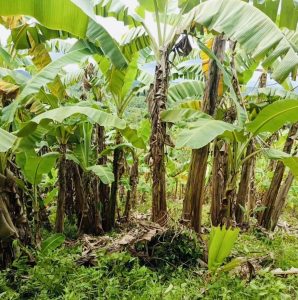
PSA’s annual report for Aklan showed that the province produced 26,267 metric tons of banana in 2025, an increase of 2.9 percent from 25,534 metric tons in 2024. Saba—the province’s dominant variety—grew by 5.3 percent to 22,018 metric tons. Bungulan, Lakatan and Cavendish also posted increases.
There is also a strong price signal. During the first quarter of 2026, the average farmgate price of Lakatan in Western Visayas increased by 44.8 percent, from ₱25.78 to ₱37.33 per kilogram. Saba rose by 20.8 percent, from ₱17.80 to ₱21.50, while Bungulan increased by 9.9 percent.
These figures tell us that banana is not merely a backyard crop. It is a growing economic opportunity.
Aklan should therefore declare banana—particularly Saba and selected higher-value varieties—as a strategic provincial fruit product.
Bring Tissue Culture Back to the Farms
Aklan State University’s previous experience in tissue culture should be revived, strengthened and directed toward commercial-scale banana development.
Tissue culture can support the rapid propagation of uniform and healthier planting materials. But laboratory technology becomes valuable only when plantlets reach organized farmers, survive in village nurseries and produce marketable fruit.
ASU should lead the technical program, but it cannot carry the industry alone. The provincial government, municipal agriculture offices, Department of Agriculture, Department of Science and Technology, farmers’ cooperatives, financial institutions, processors and institutional buyers must work under one Banana Industry Roadmap.
The roadmap should establish:
• Suitable banana production zones in Aklan;
• A revived tissue-culture laboratory and accredited nurseries;
• Reliable access to quality, disease-free planting materials;
• Training in pest, disease and climate-resilient farm management;
• Production targets for participating municipalities;
• Financing, crop insurance and irrigation support;
• Consolidation and post-harvest facilities; and
• Purchase agreements with processors, retailers, hotels and restaurants.
Boracay provides Aklan with a ready tourism market. The province also has bakeshops, restaurants, pasalubong centers and food manufacturers that can use bananas for chips, bread, cakes, flour, puree, vinegar, beverages and other processed products.
This local demand should be organized into a real supply chain—not left to chance.
A Call for Measurable Action
Aklan does not need another ceremonial planting activity, isolated research project or short-lived distribution of seedlings. It needs a ten-year industry-building commitment with measurable targets.
The province should aim to raise Aklan’s regional banana share from 17.2 percent to at least 25 percent within five years. It should organize growers by production cluster, increase farm productivity and create recognizable Aklan-made banana products.
ASU’s performance should also be measured partly by how successfully its research improves farmers’ incomes, creates rural enterprises and strengthens agricultural production in its home province.
The PSA report has shown us where Aklan stands. We are weak in nearly every major regional fruit crop—but we already hold a meaningful position in banana.
That 17.2 percent share is not something to celebrate yet. It is something to build upon.
If Aklan’s policymakers, educators, farmers and agribusinesses act together, banana can become more than a backyard crop. It can become a source of stable rural income, food-processing investment and provincial pride.
The opportunity is already growing in Aklan’s soil. What is missing is the collective decision to cultivate it into an industry.