Agriculture
𝗔𝗦𝗙 𝗽𝗿𝗲𝗽𝗮𝗿𝗲𝗱𝗻𝗲𝘀𝘀 𝘁𝗮𝗯𝗹𝗲𝘁𝗼𝗽 𝗲𝘅𝗲𝗿𝗰𝗶𝘀𝗲𝘀 𝗮𝗺𝗼𝗻𝗴 𝗪. 𝗩𝗶𝘀𝗮𝘆𝗮𝘀 𝘃𝗲𝘁𝗲𝗿𝗶𝗻𝗮𝗿𝗶𝗮𝗻𝘀 𝗽𝘂𝘀𝗵𝗲𝗱

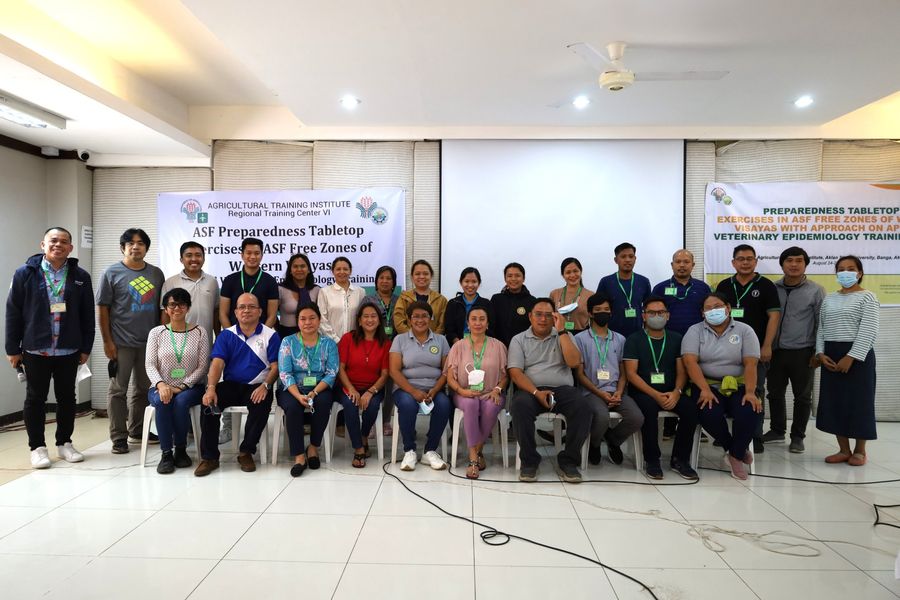
Aiming to capacitate more veterinarians in Western Visayas on epidemiology, the Bureau of Animal Industry (BAI), Agricultural Training Institute (ATI), and Department of Agriculture (DA) Western Visayas facilitated a three-day workshop on Applied Epidemiology training among the selected veterinarians in Region 6 on August 24 to 26 at Aklan State University, Banga, Aklan.
Lecturers from the Philippine College of Veterinary Epidemiology delivered content educating participants on the African Swine Fever (ASF) preparedness knowledge and how to conduct targeted surveillance activities for early detection and response, likewise training them on preparing and planning intervention measures against ASF and other important diseases.
Dr. Samuel Castro, Deputy Coordinator- National African Swine Fever Prevention and Control Program emphasized that there is a need to prepare in the event that an ASF outbreak would come, especially in those areas which are still in the Green Zones. It is a greater-than-anticipated increase in the number of endemic cases. If not quickly controlled an outbreak can become an epidemic.
“ASF may not be the last outbreak that will come to us, that is why there is an emphasis on quick control and response and we call for a unified action,” he added.
Castro also lectured on the outbreak investigation, data collection, and sample analysis. Outbreak investigation looked at four major objectives- determining the cause of the outbreak, source of the outbreak, best control measure, and spread or the extent of infections.
Dr. Romeo Gundran, epidemiologist and professor at the College of the Veterinary Science and Medicine, Central Luzon State College imparted contents on Measure of Disease Frequency, Pattern of Disease, Disease Determinants, and Demonstrating Association, Sampling, and Diagnostic Testing.
“Veterinary epidemiology is the study of frequency, distribution, and determinants of disease or health-related threats, and the application of this study to control the health problem,” said Gundran.
Dr. Jerome Cuasay from the DA Region IV-A was also invited to present their experiences and responses during the outbreak of ASF in their region. According to Cuasay, challenges during the outbreak include the accuracy of the data on the inventory of hogs, limited funds, and manpower, availability of the burial sites, media engagement, health and security issues, terrain and weather condition, resistance from the hog raisers, confiscations of processed meat, waterways were used as an alternate route for illegal transport of live hogs, and delays in the test results. The agency then created its Regional Disease Task Force and capacitated its Quick Response Team, implemented DA administrative orders, and strengthen biosecurity measures.
Western Visayas is one of the few regions remaining to be ASF-free. Dr. Jonic Natividad, Chief of DA-WV Regulatory Division and Regional Focal for ASF Taskforce expressed his appreciation for the continuous collaboration of agencies, provincial and municipal veterinarians, and private sectors. Aside from the massive information dissemination and continuous surveillance, Local Government Units (LGUs) were engaged in the program to enact ordinances related to ASF control, registration, and deputization of Barangay Biosecurity Officers, issuances of hog transport pass, disease monitoring, and reporting, and recovery and repopulation.
Veterinary researchers from state universities also expressed the relevance of the topics being discussed and the table exercises given to them to the current research topics that they are proposing for research with their universities.
“This has been very informative, malaking tulong para sa mga future researchers from the academe because we are going to research prevalence and incidence,” said Dr. Maryneth Barrios.
Dr. Leonel Abordo raised a challenge to the group if they can consider conducting studies on wild birds, especially in high-density areas flying from one farm to another because of the presence of feeds, that they might be carrying the virus.
“I don’t know if carrier talaga sila. How can we be effective against ASF? Sa FMD hindi ito natin naramdaman. The probability of spreading through the flying birds sa kanilang mga paa, sana magkaroon nga research tungkol dito,” Abordo suggested.
As of the first quarter of 2022, Western Visayas contributed significantly to the livestock and poultry performance of the country. It has ranked second in the production of swine, achieving a 175% sufficiency level, and contributing 12.3% to the national need.### (MCMBuala/DA-RAFIS-6).