Latest News
𝗗𝗕𝗠 𝗿𝗲𝗹𝗲𝗮𝘀𝗲𝘀 𝗣𝟭-𝗕 𝗳𝗼𝗿 𝗔𝗜-𝗽𝗼𝘄𝗲𝗿𝗲𝗱 𝗳𝗹𝗼𝗼𝗱 𝗳𝗼𝗿𝗲𝗰𝗮𝘀𝘁𝗶𝗻𝗴, 𝗱𝗶𝘀𝗮𝘀𝘁𝗲𝗿 𝗽𝗿𝗲𝘃𝗲𝗻𝘁𝗶𝗼𝗻 𝘁𝗵𝗿𝗼𝘂𝗴𝗵 𝗣𝗿𝗼𝗷𝗲𝗰𝘁 𝗡𝗢𝗔𝗛

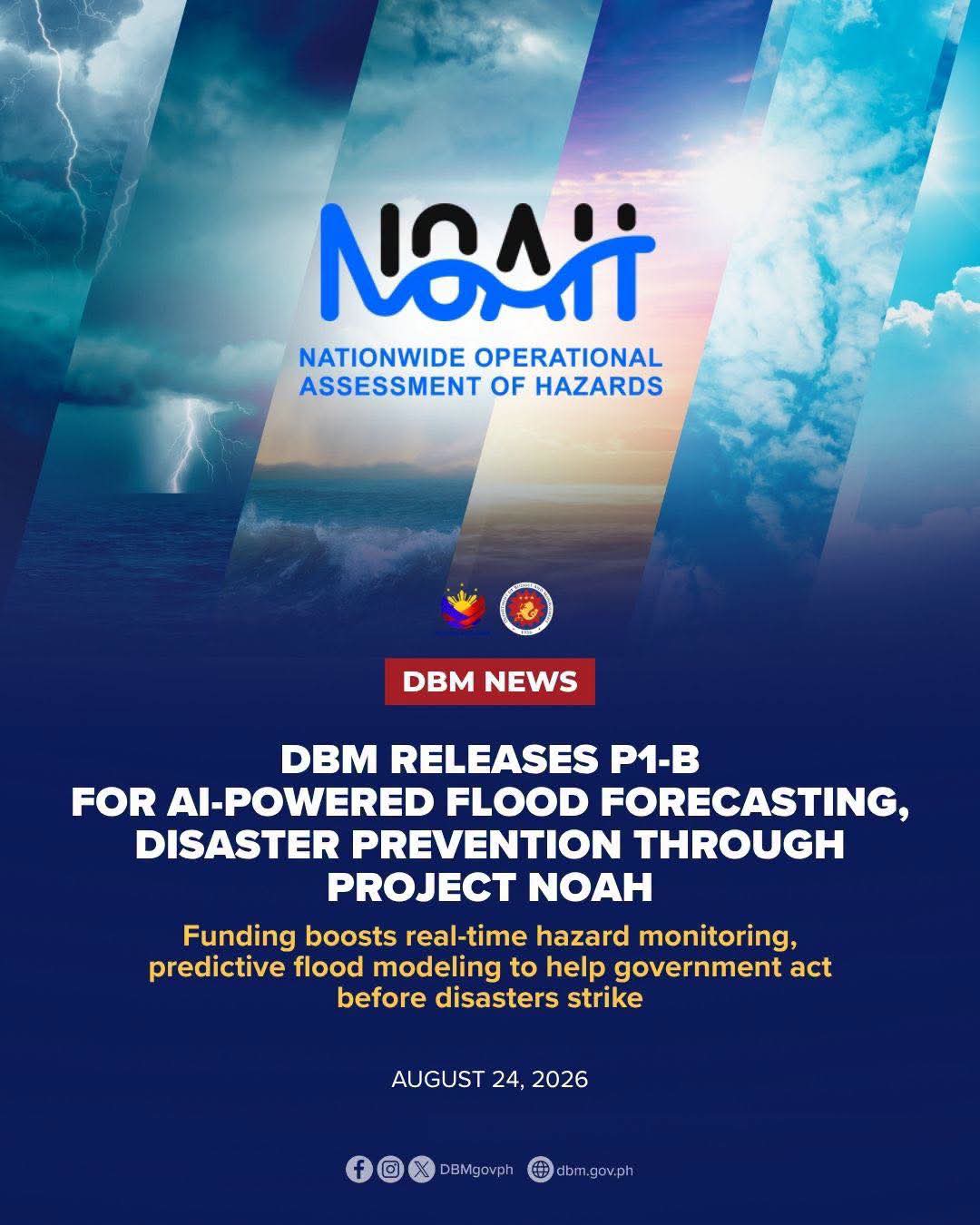
𝘍𝘶𝘯𝘥𝘪𝘯𝘨 𝘣𝘰𝘰𝘴𝘵𝘴 𝘳𝘦𝘢𝘭-𝘵𝘪𝘮𝘦 𝘩𝘢𝘻𝘢𝘳𝘥 𝘮𝘰𝘯𝘪𝘵𝘰𝘳𝘪𝘯𝘨, 𝘱𝘳𝘦𝘥𝘪𝘤𝘵𝘪𝘷𝘦 𝘧𝘭𝘰𝘰𝘥 𝘮𝘰𝘥𝘦𝘭𝘪𝘯𝘨 𝘵𝘰 𝘩𝘦𝘭𝘱 𝘨𝘰𝘷𝘦𝘳𝘯𝘮𝘦𝘯𝘵 𝘢𝘤𝘵 𝘣𝘦𝘧𝘰𝘳𝘦 𝘥𝘪𝘴𝘢𝘴𝘵𝘦𝘳𝘴 𝘴𝘵𝘳𝘪𝘬𝘦
The Department of Budget and Management (DBM) has released P1 billion to the University of the Philippines (UP) System to strengthen Project NOAH’s AI-powered flood forecasting, real-time hazard monitoring, and disaster prevention capabilities, giving government and communities better tools to anticipate threats and act before lives and livelihoods are put at risk.
The funding reinforces the Marcos Jr. administration’s push to shift disaster management from responding after calamities strike to using science, technology, and data to anticipate risks and prevent hazards from becoming disasters.
“Hindi natin kailangang hintayin na tumaas ang tubig bago tayo kumilos. The goal is to know where the danger is, who is at risk, and what needs to be done before disaster strikes,” DBM Acting Secretary Kim Robert C. De Leon said.
“This P1-billion investment in Project NOAH is an investment in prevention. We are putting science, AI, and real-time hazard information to work so government can act earlier, communities can prepare better, and more Filipino lives and livelihoods can be protected,” he added.
Of the P1-billion release, chargeable against the University’s built-in appropriation under the FY 2026 General Appropriations Act, P935 million will support research services, while P65 million will fund general management and supervision for the implementation of Project NOAH.
The funding will support the procurement and deployment of critical ICT, digital, technical, and scientific equipment; the engagement of highly specialized technical personnel; and the establishment of operational support systems needed to strengthen the country’s hazard assessment and forecasting capabilities.
Implemented by the UP Resilience Institute (UPRI), Project NOAH advances disaster risk reduction and management and climate change adaptation and mitigation through research, development, and extension services.
The program harnesses AI-enhanced modeling, LiDAR mapping, data analytics, and other digital technologies to generate real-time hazard assessments, predictive flood scenarios, and science-based information that can help national government agencies and local governments make faster and better-informed decisions before and during emergencies.
For De Leon, strengthening disaster prevention is also a matter of protecting public resources, as major disasters can destroy homes, livelihoods, infrastructure, and years’ worth of government investments in a matter of hours.
“The best disaster management is when we are able to prevent disasters from becoming a catastrophe. Every peso we invest in better forecasting and preparedness can help save lives, protect livelihoods, and avoid far greater losses later on,” De Leon said.
“We cannot stop typhoons or heavy rains from coming, but with the right information at the right time, we can reduce their impact. That is what we want public funds to deliver—not simply resources after a disaster, but greater protection before it happens,” he stressed.
DBM has also previously partnered with UP NOAH to integrate disaster risk reduction strategies into the Digital Information for Monitoring and Evaluation (Project DIME), helping assess the exposure and resilience of government infrastructure projects to natural hazards.
The latest release builds on that partnership by strengthening the scientific and technological capabilities needed to translate hazard data into earlier warnings, better planning, and faster action on the ground.