Latest News
𝗦𝘁𝗿𝗼𝗻𝗴𝗲𝗿 𝗰𝘆𝗯𝗲𝗿 𝗽𝗿𝗼𝘁𝗲𝗰𝘁𝗶𝗼𝗻 𝗳𝗼𝗿 𝗢𝗙𝗪 𝘄𝗼𝗺𝗲𝗻, 𝗳𝗮𝗺𝗶𝗹𝗶𝗲𝘀

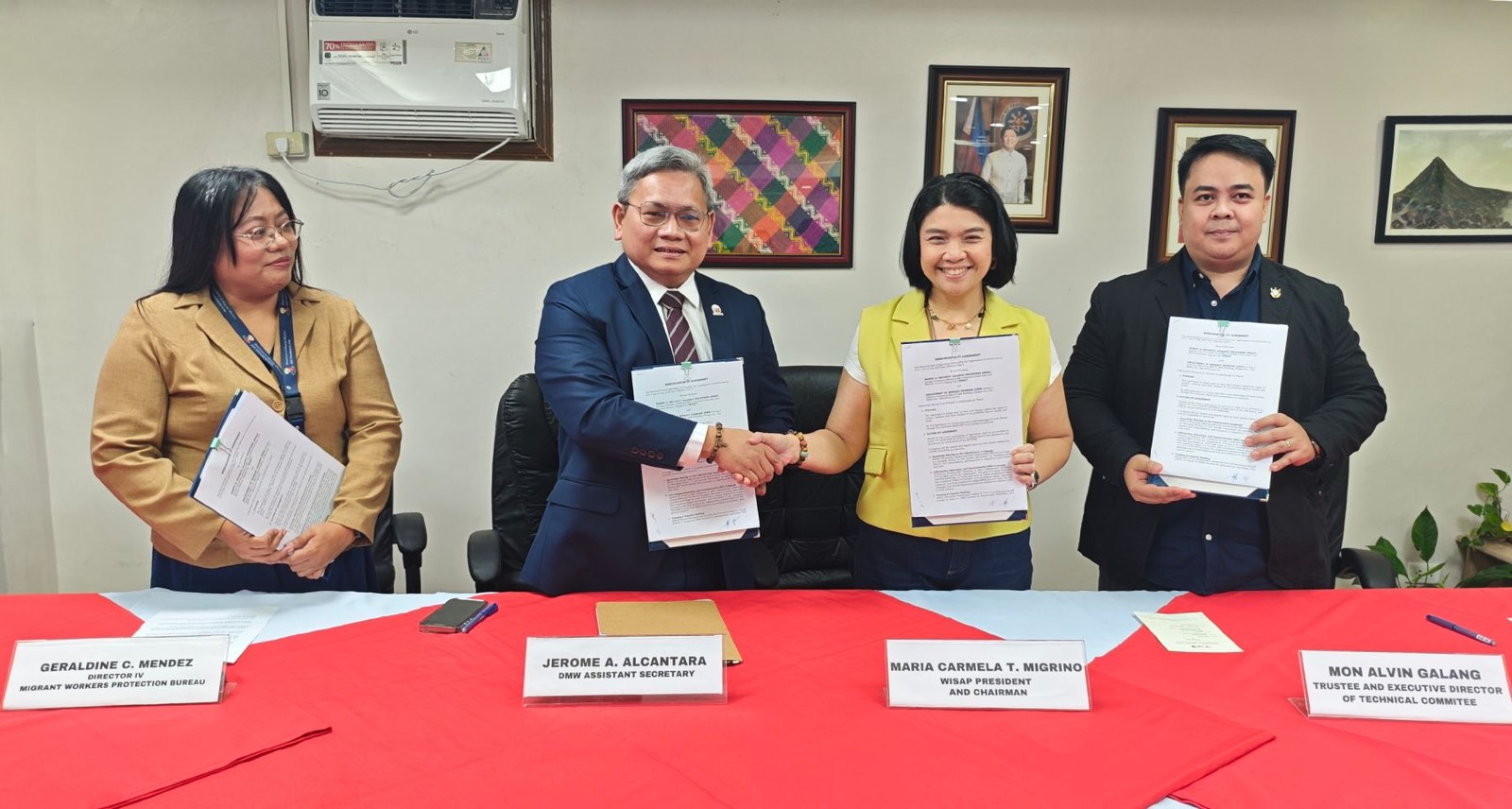
Better cyber protection is on guard for women overseas Filipino workers (OFWs), their children, and families against scams and exploitation with the strengthened partnership between the Department of Migrant Workers (DMW) and the Women in Security Alliance Philippines (WiSAP).
The Memorandum of Agreement (MOA) signed in time with the observance of the World Day Against Trafficking, aimed at empowering and protecting women OFWs against cyber scams and trafficking.
The partnership supports President Ferdinand R. Marcos Jr.’s directive to digitalize government services and protect OFWs from online trafficking and other cyber threats.
Under the agreement, the DMW and WiSAP will work together on knowledge-sharing on cybersecurity, information campaigns, training and capacity building, and empowering women OFWs through WiSAP membership.
DMW Assistant Secretary Jerome A. Alcantara reaffirmed the Department’s commitment to digitalization while emphasizing the need for vigilance in cybersecurity.
“The trend in government right now is digitalization, we are migrating a lot of our systems and processes online. And while it poses a lot of benefits, it also poses serious threats in cyber safety and security. It will be irresponsible to not look at potential threats and not be prepared to deal with that,” Alcantara said.
He also underscored the global forces shaping this collaboration—digitalization, migration, and security—and highlighted the alignment between DMW and WiSAP’s programs in addressing these issues.
WiSAP President Carmela Migrino, meanwhile, expressed the organization’s strong commitment to empowering OFW women and supporting the DMW in enhancing its cybersecurity initiatives.
“We also wanted to collaborate with the DMW on strengthening their cybersecurity policies and practices and to provide guidance on how they can build a roadmap towards cyber resilience. Also, we are one with the DMW in their fight against human trafficking,” said Migrino.
WiSAP is a non-stock, non-profit organization dedicated to empowering women to lead and contribute meaningfully in the field of cybersecurity. ##