Lifestyle
DOST Ready to Relay Science Message to the Incoming Government to Aid in Evidence-based Policy-making

New administration, new ways of doing things, another round of lobbying.
Understandably, the long and winding road to making policies has to be re-set every time a new set of government officials are coming in. Lobbying by government agencies also have to start from square one to bring attention to their mandated objectives.
More than 60 million Filipinos still have their thumbs marked with indelible ink after exercising their suffrage in the national and local elections (NLE) on May 9, 2022. At least traces of the blue ink are still visible in some fingers.
The National Research Council of the Philippines (NRCP), one of the only three Councils under the wings of the Department of Science and Technology (DOST), is up on its feet, readying to meet with the new set of officials, not the least with senators and congressmen as the 19th Congress is afoot. No surprise there as Congress is the policy-making body.
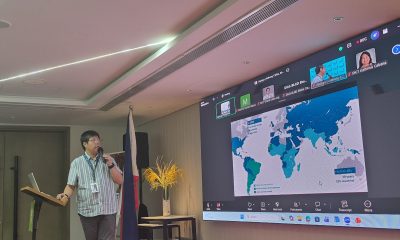
On Wednesday, May 11, 2022, the NRCP conducted its CALABARZON Regional Basic Research Caravan (RBRC) at the Philippine International Convention Center (PICC) in Pasay City, Metro Manila. It’s the NRCP’s second iteration of the event, and the first hybrid in the new normal — both face to face (F2F) and online — event during the coronavirus pandemic.
The pandemic that erupted in Wuhan City, Hubei Province, China, as reported in December 2019 decimated peoples’ everyday lives and routines, becoming in so short a time the “mother” (no offense to mothers) of all calamities, killing “almost 15 million people in 2020 and 2021” as seen from a World Health Organization (WHO) overall estimate.
WHO’s estimate is three times the total number of fatalities attributed directly to the SARS-CoV-2 disease as opposed to the broader impact of the health crisis.
Organizations, people around the world, individuals have to learn a bit or two about adjusting their lives to the effect of the Covid-19 pandemic, including the way meetings are conducted — giving rise to hybrid fora, or webinars (online or virtual seminars).
The NRCP with Executive Director Marieta B. Sumagaysay presiding had its first dual-mode media forum — in-person and online at the PICC.
After the morning to noon time event she obliged for an exclusive interview with SDN — Science and Digital News.
In the interview she made plain that a new round of meetings should be held with the incoming administration, not the least with members of Congress, senators and congressmen, to get them to recognize the importance of adding science and evidence to the mix in the crafting of policies.
“With the new administration we will be very happy to come to introduce NRCP, and what we are doing and how else we can help. Of course, maybe they have other priorities, then we will be very happy to know those priorities so we can align, so we can help in nation building,” Sumagaysay emphasizes.
She said they are ready to explore ways to coordinate and introduce NRCP, what it is doing, what its thousands of researchers are doing and the results of their studies that can be forwarded to policy-makers.
“As I said, one of the mandates of the NRCP is we provide the science for evidence-based policy-making, and we will be very happy to assist our lawmakers whether at the local or national level.
“Our scientists are experts (who are members of the NRCP), they can be engaged to do the research, we can provide lawmakers the research we’ve done,” she adds.
Importance of adding science in crafting policies
Sumagaysay explained why it is important to add science to the mix in the policy-making process.
“Of course, if we add research results to the programs and policies being developed it will be very valid because they have basis, they have evidence and these are translated to programs, activities for the people.
“We are also monitoring our completed projects if these have impact, if the research results were really used and translated so the citizens can understand and benefit,” says Sumagaysay, “whether through education we are doing, or initiatives by other agencies. That’s where we are helping, providing the science.”
Lawmakers and other policy-makers can rest assured the NRCP is not short of scientists, researchers, engineers, and artists because it has a membership of over 4,900-strong scattered across the country as of March 2021. The members provide the backbone for the Council, assuring a steady stream of scientific studies.
Everyone can also be assured the NRCP is not sleeping on its responsibility to liaise with Congress as it has established a new medium dubbed BRITER project among which its function is to know what bills are pending and measures which might need an input or two from the science side. “We will be very glad to share this,” she assures.
BRITER stands for Basic Research Information Translation for Empowerment in the Regions Program. It “aims to develop a science culture among the stakeholders, and is primarily intended for policymakers through the expert’s scientific discussion in a popular and laymanized manner.”
Sumagaysay cited a bill on the incidence of teen pregnancy.
Upon seeing the bill had no provision on disasters, he recalled, the NRCP suggested adding such provision as its researchers saw a relationship between disasters and the incidence of teenage pregnancy.
Sumagaysay was apparently referring to House Bill No. 474, or the “Prevention of Adolescent Pregnancy”.
“So, here we have a research on disasters and teen pregnancy, and our researchers saw a relationship between the two. Maybe this can enhance the bill, or add a provision, like, what can be done if there’s a pandemic, or a disaster,” she suggests.
In the NRCP study conducted by one of its social science researchers, Dr. Gloria M. Nelson was able to establish a link between disasters and teenage pregnancy.
Funded by the Population Commission (POPCOM), Nelson found out “that teenage girls, ages ranging 10-19 years old are the most vulnerable group during the time of stay in evacuation centers” because of “poor condition and minimal provision for privacy and security as factors.”
The NRCP researcher conducted her study after the onslaught of Super Typhoon Yolanda in 2013 in the Eastern Visayas.
Nelson’s study results established found out that “teenage girls are most likely to get molested or pregnant with the length of stay in evacuation centers”.
In the Senate, Akbayan Senator Riza Hontiveros has authored Senate Bill No. 161, also known as the “Teenage Pregnancy Prevention Bill”. She noted that the incidence of teenage pregnancy “is extremely alarming”.
“Our children should not be having children,” the Akbayan solon said, but yet the children are giving birth to their own kids (per Philippine Star).
Hontiveros wanted protection for these teen mothers as teenage pregnancy is fraught with dangers.
She is again pushing for the bill’s passage along with its twin bill, Senate Bill No. 162, the “Girls Not Brides Act of 2019”. Hontiveros chairs the Committee on Women, Children, Family Relations and Gender Equality.
It was learned that the pandemic had triggered a spike in teenage pregnancy, apparently one of the reasons the lady senator saw the need for her bills’ passage.
Science it is, then, to improve lives
Another study, Sumagaysay said, done by another NRCP researcher was on how can plants grow on a barren area. The researcher, she added, was able to create a protocol for growing plants on an arid area and was able to prove that 95 percent can survive.
“So, the LGU (local government unit) of Mogpog, Marinduque, used the protocol.”
She said those two are examples the NRCP was able to provide the science and translated to policy-making which the community adopted. “We were able to change life,” Sumagaysay points out, adding though that benefiting from scientific studies is takes a long process.
Four researchers from the Philippine Normal University (PNU) performed the research project dubbed “Development of an Innovative Pedagogical Method for Financially-Disadvantaged Students” as they aimed to discover and introduce new ways to teach poor students and help them push their studies to the finish line.
They are Professors Dr. Wilma S. Reyes, Dr. Elanor O. Bayten, Dr. Adonis P. David, and Dr. Teresita T. Rungduin.
Reyes discussed their interactions with the student-respondents. She also related how their research came to life. Videos of students speaking of their plight were also shown at the event.
Rungduin acknowledged that “poverty negatively impacts academic performance.”
“Even if we say that tuition is free, there are so many costs associated with going to school,” she notes, citing as factors fare, food, project, and uniform, among others, which “adds up quickly” to a student’s litany of expenses.
“This is why kids from poor families tend to delay the start of their education, and why the same kids are more likely to drop out before completing their education,” Rungduin points out.
She continued her discussion.
“As educators and members of an institution of higher learning, we need to enable poor college students to maximize their resources and see to it that they are able to complete their studies.
“Failing to do so condemns otherwise studious and hardworking students and this perpetuates the vicious cycle of poverty.”
Bayten cited the PNU as “the premier teacher education institution in the country,” revealing that most of the university’s students are scholars with the majority from families that are financially-challenged.
For the research project, she related that they spoke with 122 third year students from the five campuses of the PNU as they “conducted qualitative interviews, focus group discussions, and home visits to understand the Contextual, Personal, and Relational Dimensions of their experiences.”
They also spoke with PNU teachers, expanding the scope of the study.
Reyes said the study sought to answer the question “what characterizes the academic experience of financially-disadvantaged students.”
“What we found are students who are striving to finish their studies despite the hardships brought about by a lack of funds,” David reveals.
He said the students’ every day expenses for sustenance posed a big challenge. “They have to stretch their budgets and ‘baon’ (pocket money) for daily living to accommodate the costs of studying.”
David said that even with these challenges the students were willing to make sacrifices “because they know that a college education will help in their social mobility.”
While there are already scholarships available, Bayten recommended expanding these opportunities. “If the budget can afford it, funds for learning resources and allowance should be added to free tuition.”
“It would be good also for institutions to review their policies that maybe even more making it hard for financially-disadvantaged students,” suggests Bayten.
The four PNU researchers identified six Core Strategies to lessen the burden on the shoulders of poverty-stricken students.
These are Flexible Strategies, Integrative Startegies, Collaboration Strategies, Modelling Strategies, Future-oriented Strategies, and Positive Mindset Strategies.
Sumagaysay lauded the researchers for performing a study that may directly impact the lives of vulnerable students.
“Just imagine if we can grow the number of researchers, scientists, engineers, and artists in our country — a lot of inquiring minds will be working towards responding to the needs of Filipinos in every region in the country.”
As often cited, hope springs eternal. (✓)