Commentary
NGCP and the Case for Early Energy Literacy

.
By Dadmar Amores
In a world powered by invisible currents and vast transmission networks, energy has quietly become as essential as food, water, and shelter. Parang pagkain—that is how we should begin to understand it. Yet, despite its central role in modern life, energy remains a surprisingly neglected subject in our basic education system.
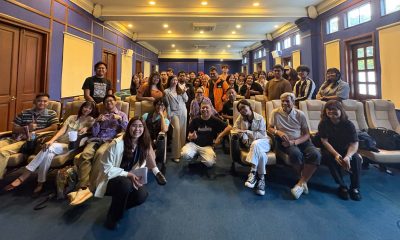
Guided by its education advocacy, the National Grid Corporation of the Philippines (NGCP) views learning as a vital link in shaping a more secure and progressive future for the youth. It was in this context that I raised this gap during the recent Power 101 Seminar held on March 19 at Casa Pilar.

Encouragingly, Assistant Vice-President Cynthia Perez-Alabanza readily affirmed the importance of “energy education” as both a compelling and urgent advocacy. Everyday life now runs on electricity. From homes and schools to industries and hospitals, our dependence on power has grown exponentially.The youth, in particular, are deeply immersed in technology—smartphones, computers, and digital platforms—yet many lack even a basic understanding of where electricity comes from, how it is transmitted, and why it must be used responsibly.This disconnect is not trivial. It reveals itself in rising electrical accidents, misuse of appliances, and mounting household energy costs.
More critically, we are living in a time defined by climate change and the global transition to renewable energy. Understanding energy is no longer optional; it is civic knowledge. Citizens must grasp not only consumption but also sustainability—how their choices affect the environment and the future of power generation.
And yet, where do we find energy in our classrooms? In the current curriculum of the Department of Education (DepEd), discussions on energy are often fragmented or confined to technical subjects, if at all. In Araling Panlipunan, where the foundations of citizenship are taught, energy is rarely given the attention it deserves. This is a missed opportunity. Energy, after all, is not merely a scientific concept; it is economic, political, environmental, and deeply social.
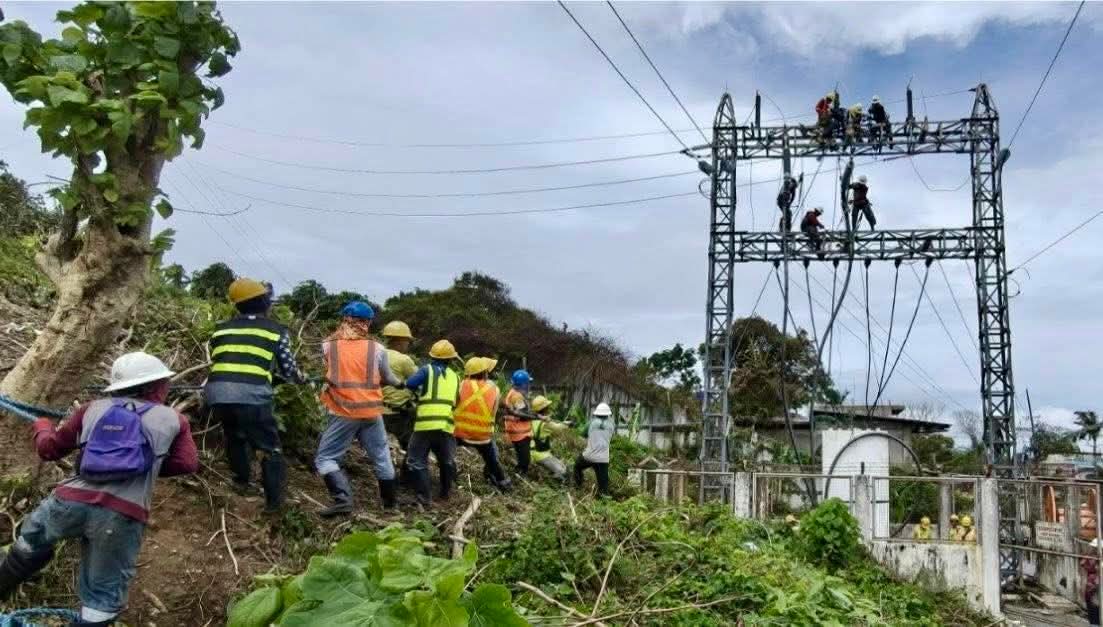
NGCP, to its credit, recognizes the transformative power of education. Its advocacy reflects a forward-looking vision: that by investing in the youth, it helps secure not only the country’s energy future but its broader national development. As emphasized by its leadership, education is integral to strengthening not just transmission lines, but the very fabric of the nation.
But advocacy must move toward institutionalization. The idea of early energy literacy—introducing the fundamentals of energy, electricity, and power systems at the basic education level—deserves serious consideration. This does not mean turning elementary and high school students into engineers.
Rather, it calls for a curriculum that communicates core ideas in simple, relatable terms: what energy is, how electricity reaches homes, why conservation matters, and how renewable sources can shape a sustainable future. Pwede nating umpisahan sa pagbasa ng electric bill at pag-compute ng consumption. Assistant Vice-President Cynthia Perez-Alabanza acknowledged the complexity of translating this vision into policy.
As she pointed out, the idea has long been recognized, but NGCP cannot pursue it alone. It will require close collaboration with the Department of Education, the Department of Energy, and ultimately, legislative support from Congress. At a time when DepEd itself is undergoing reforms, integrating a new dimension like energy literacy raises important questions: Where will it fit? How will it be taught? Who will train the teachers?
Yet these challenges should not deter action. Energy is not too heavy a subject for young minds—it only becomes complex when poorly communicated. With the right approach, it can be woven seamlessly into existing subjects, particularly Araling Panlipunan, where its societal implications can be fully appreciated.
The more pressing question may be this: can we afford NOT to teach it? If the next generation is to inherit a world grappling with energy insecurity, environmental degradation, and rapid technological change, then early education must prepare them accordingly. Awareness must begin not in college, but in childhood.
The Power 101 Seminar has opened the conversation. Now comes the real challenge—to transform advocacy into policy, and policy into practice. For NGCP, this is an opportunity to lead not only in infrastructure, but in shaping a more informed, responsible, and energy-literate citizenry.
Because in the end, understanding energy is not just about keeping the lights on. It is about empowering a nation. ###