Latest News
Drinking Liquor Inside the Government Office After Office Hours is Not Grave Misconduct- SC

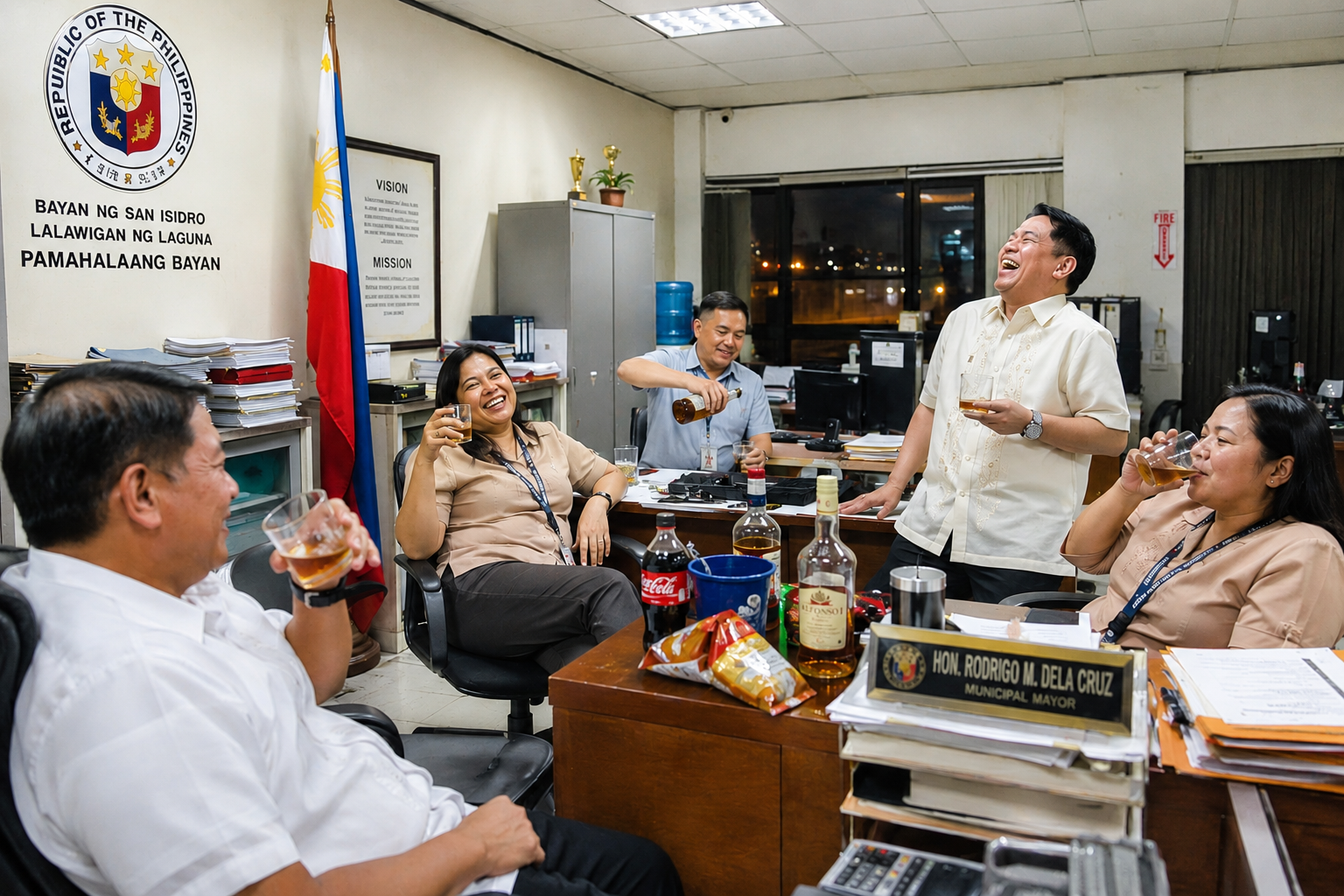
The Supreme Court (SC) ruled that drinking liquor inside a government office after office hours, while improper, does not automatically constitute grave misconduct. The Court stressed that misconduct, to be an administrative offense, must be directly related to the performance of a public officer’s official duties.
In Berces v. Civil Service Commission and the Mayor of Tabaco City (G.R. No. 222557, September 29, 2021), the Court reinstated a Civil Service Commission (CSC) decision reducing the penalty imposed on Engr. Juan B. Berces, then City Planning and Development Officer of Tabaco City, from dismissal to a six-month suspension.
The case arose after Berces and two fellow employees were found drinking liquor inside the City Planning and Development Office at around 8:30 p.m. He later admitted the incident, explaining that they were celebrating his 15th anniversary in government service.
The mayor charged Berces with Grave Misconduct and Conduct Prejudicial to the Best Interest of the Service, eventually ordering his dismissal from the service. On appeal, however, the CSC downgraded the offense to Simple Misconduct and imposed a six-month suspension.
The outgoing mayor filed a motion for reconsideration before the CSC seeking to reinstate the penalty of dismissal. However, before the motion could be resolved, a newly elected mayor assumed office and formally withdrew it. Despite the withdrawal, the CSC still granted the motion and reinstated Berces’ dismissal.
The Supreme Court reversed the CSC.
The Court held that a successor public official has the authority to continue or withdraw actions filed by a predecessor in an official capacity. Since the new mayor validly withdrew the motion for reconsideration, there was no pending motion left for the CSC to resolve. Consequently, the CSC’s earlier decision had already become final and executory, and any subsequent resolution modifying it was void for violating the doctrine of immutability of judgments.
On the merits, the Court clarified that Berces’ act did not constitute grave misconduct. It emphasized that “to constitute an administrative offense, misconduct should relate to or be connected with the performance of the official functions and duties of a public officer.” Because the drinking session occurred after office hours and had no direct relation to Berces’ official duties, the essential element of misconduct was absent.
The Court further explained that Berces’ act was more appropriately classified as Conduct Prejudicial to the Best Interest of the Service, an administrative offense that need not be connected with or related to a public officer’s official functions, but is broad enough to include acts that tarnish the image and integrity of the public service.
Nevertheless, the Supreme Court ruled that the earlier finding of Simple Misconduct could no longer be disturbed. Although it observed that the classification was technically inaccurate, it held that the CSC’s decision had already attained finality and was protected by the doctrine of immutability of judgments.
Accordingly, the Supreme Court declared the CSC Resolution reinstating Berces’ dismissal void and reinstated the CSC Decision imposing only a six-month suspension without backwages.
ASSIGNMENT | READINGS
BAR CHAIR’S CASE NO. 165
Berces v. Civil Service Commission and the Mayor of Tabaco City, G.R. No. 222557, September 29, 2021, Second Division, Per Gaerlan, J.