Environment
Protect VIP Calls for Justice Over Killing of Marine Scientist Dr. Kent Carpenter

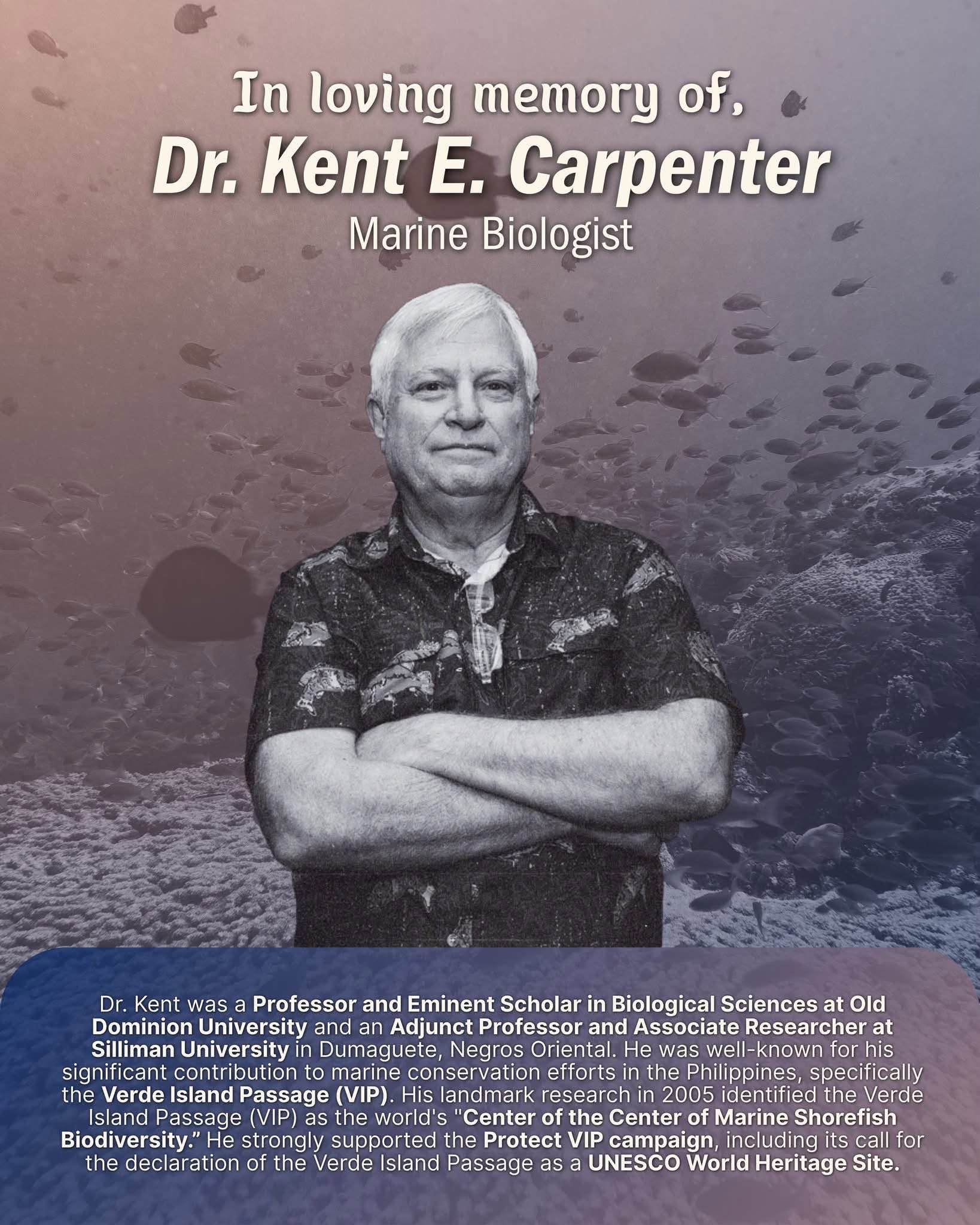
Negros Oriental- Protect Verde Island Passage (Protect VIP) has called for justice following the fatal shooting of Dr. Kent E. Carpenter.
Dr. Carpenter was a world-renowned marine scientist who made immense contributions to the study of Philippine waters, and brought global attention to the Verde Island Passage (VIP) as the “Center of the Center of Marine Shorefish Biodiversity.”
According to reports, Dr. Carpenter was shot and killed after three armed men broke into his home in Negros Oriental.
Fr. Edwin Gariguez, Lead Convenor of Protect VIP, stated that Dr. Carpenter dedicated his life to showcasing the Verde Island Passage’s extraordinary natural wealth to the world.
“His research reminded us that the Philippines bears a global responsibility to safeguard this irreplaceable marine treasure,” Gariguez said.
The group extended its deepest sympathies to Dr. Carpenter’s family and the entire marine conservation community, while urging authorities to conduct a thorough investigation and ensure full justice for the scientist.
At the same time, Protect VIP reaffirmed the urgent need to protect environmental defenders—people who dedicate their lives to science, conservation, and caring for nature and the communities that depend on it.
“As we mourn his loss, we stand firm in upholding the cause Dr. Carpenter fought for: the protection of the Verde Island Passage, its rich biodiversity, and the communities that steward and rely upon it,” the group stated.
Dr. Carpenter’s name has long been synonymous with marine research and conservation in the Philippines. Since the 1970s, he devoted much of his career to the country, partnering with Filipino fishermen, researchers, and conservationists to protect one of the world’s most biologically diverse marine ecosystems.
He was also a key advocate for the Protect VIP campaign. In 2024, he shared his expertise and support for stronger, long-term safeguards for the Verde Island Passage—including its formal recognition as a national marine protected area and critical natural heritage site.
(Photo courtesy of Old Dominion University)