Business
RTWPB VI Opens Dialogue on Fair Wage Review


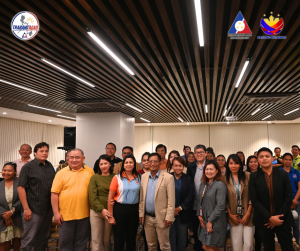
Iloilo City- The Regional Tripartite Wages and Productivity Board (RTWPB) Region VI, chaired by the Department of Labor and Employment (DOLE) Regional Office No. VI, opened a Regional Stakeholders’ Dialogue on July 21, 2026, at Citadines Amigo Iloilo to discuss the pending wage petitions and assess the positions, concerns, and evidence presented by various sectors affected by wage issues in Western Visayas.
The dialogue forms part of the government’s continuing commitment, under the leadership of President Ferdinand R. Marcos Jr., to protect workers’ welfare while promoting sustainable economic growth, employment stability, and inclusive development. Consistent with this policy direction, the government recognizes the importance of social dialogue and evidence-based decision-making in addressing labor concerns while considering the capacity of businesses and industries.
Aligned with the mandate of DOLE Secretary Francis Tolentino to strengthen meaningful engagement among government, labor, and management sectors, the RTWPB VI dialogue provided a platform for stakeholders to present factual information and recommendations necessary for a fair and balanced wage review. The dialogue is part of the Board’s prior process to determine whether there is sufficient basis, including the existence of a supervening event, to warrant further action on the pending wage petitions.
The dialogue brought together representatives from various labor and management sectors, including workers’ organizations, the business process outsourcing (BPO) industry, transportation sector, healthcare sector, and other affected industries, to present their respective positions on the proposed wage adjustments.
DOLE Regional Director and RTWPB VI Chairperson Atty. Sixto “Popoy” Rodriguez Jr. emphasized that wage determination is a legal and consultative process that requires careful evaluation of evidence, economic conditions, and the interests of both workers and employers.
Before any wage petition may be acted upon, Director Rodriguez explained that the Board must first determine compliance with legal requirements, including whether the petition was filed by a proper party, whether documentary requirements were satisfied, and whether sufficient factual basis exists to establish probable cause for further proceedings, particularly the presence of a valid supervening event that would justify another wage review.
Under Republic Act No. 6727 or the Wage Rationalization Act, the RTWPB is mandated to consider relevant economic and social indicators, as well as the capacity of industries, in determining appropriate wage policies.
The RTWPB VI has received three wage petitions in 2026:
- On April 30, 2026, the United Labor Western Visayas (ULWV) Alliance filed a petition seeking a P250 daily wage increase, raising the regional minimum wage from P550 to P800, together with the grant of a Cost-of-Living Allowance (COLA), citing global oil supply disruptions and their impact on the regional economy.
- On June 5, 2026, the Iloilo Doctors Hospital Employees Union (IDHEU) and a member of United Labor- Western Visayas filed a similar petition. After evaluation, the Board found that the petition substantially complied with legal requirements and issued a resolution recognizing its sufficiency.
- On June 26, 2026, the BPO Industry Employees Network (BIEN) filed a wage petition seeking the same adjustment while raising concerns specific to business process outsourcing workers.
The dialogue featured presentations from the Philippine Statistics Authority (PSA), Department of Energy (DOE), Department of Trade and Industry (DTI), and Department of Economy, Planning, and Development (DEPDev) to provide updated socioeconomic data and relevant indicators that would assist the Board in determining whether current conditions constitute a supervening event.
During the discussions, labor organizations presented their arguments supporting the wage petitions, citing the rising cost of basic goods and services, declining purchasing power of minimum wage earners, increasing household expenses, and concerns that current wage levels may no longer adequately address workers’ daily needs.
Representatives from the healthcare sector highlighted concerns on workforce retention and migration linked to compensation issues, while transportation workers raised concerns on the impact of fuel prices and operating costs on workers’ income. BPO industry representatives emphasized the need for compensation levels that reflect the specialized skills, demands, and contributions of employees in the sector.
Management representatives, meanwhile, presented their position on the pending petitions, acknowledging the challenges faced by workers while raising concerns on the possible effects of another wage increase on business sustainability, employment generation, and industry competitiveness.
Employer groups cited economic pressures such as rising production costs, fuel price increases, global uncertainties, and business difficulties affecting enterprises, particularly micro, small, and medium enterprises (MSMEs). They emphasized the need for careful consideration of timing, implementation, and the capacity of businesses to absorb additional labor costs.
The RTWPB VI assured all stakeholders that every argument, submission, and recommendation raised during the dialogue will form part of the Board’s comprehensive evaluation before any determination is made.
“The Board remains committed to a transparent, impartial, and evidence-based wage determination process. This dialogue allows us to assess all available information and determine whether the circumstances presented constitute a valid basis for further wage review,” Director Rodriguez said.
The Regional Stakeholders’ Dialogue reinforces the principles of tripartism, social dialogue, and participatory governance in wage determination. Through a dialogue with labor, management, and government stakeholders, the RTWPB VI continues to ensure that any wage decision is grounded on facts, fairness, and the shared goal of promoting both workers’ welfare and sustainable economic development.