Commentary
Navigating The Storm: Aklan’s Economic Crossroads

.
By: John Dela Cruz
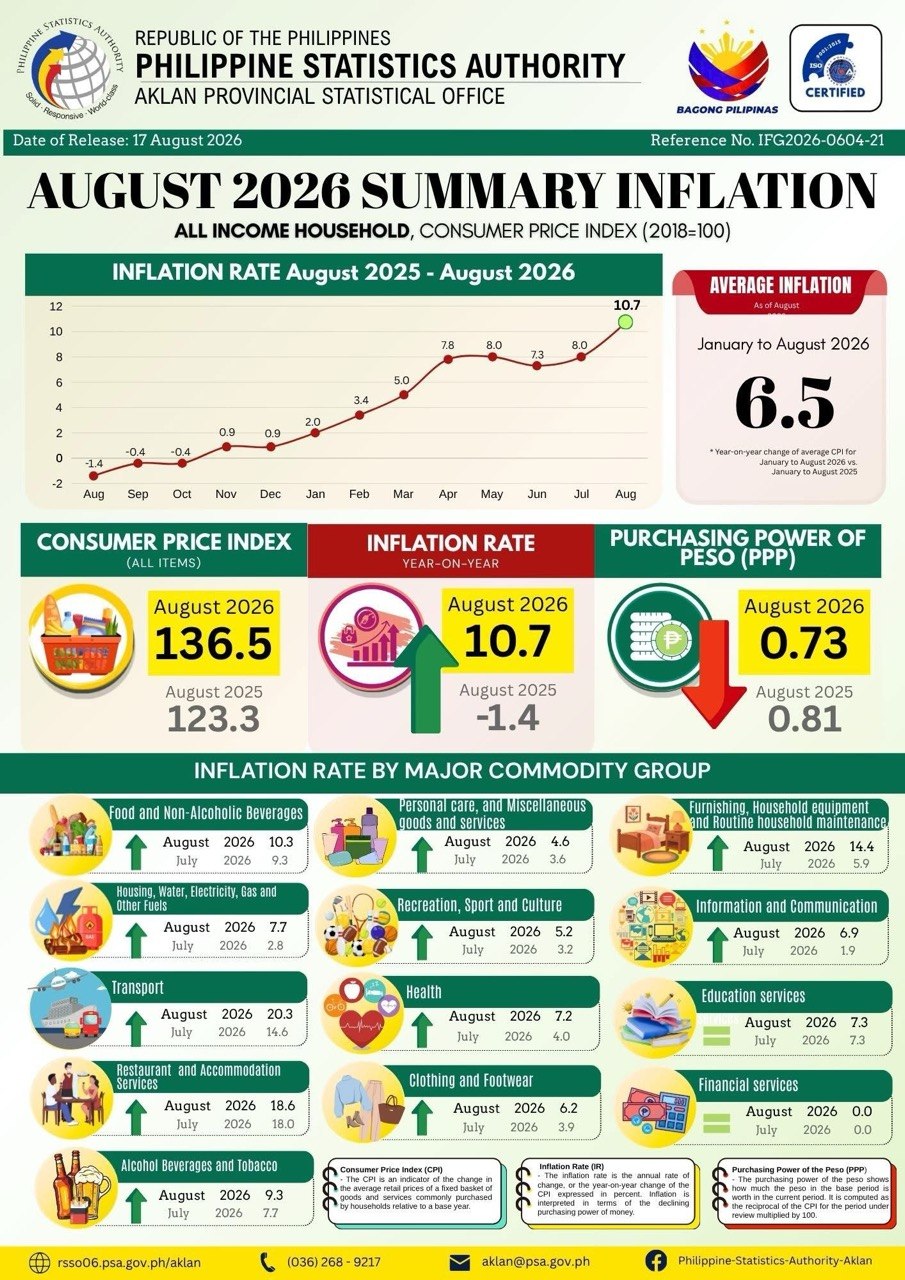
Aklan’s economic landscape is facing a profound test, anchored by a distressing consumer price index spike that saw provincial inflation hit a staggering 10.7%, according to recent Philippine Statistics Authority (PSA) reports. Far from a mere statistical blip, the data mirrors a compounding web of economic pressures threatening the province’s growth trajectory—hardships likely to persist well into the first part of 2027.
The cascading crisis was accelerated early in the year by punishing first-quarter fuel price hikes, mandatory regional minimum wage adjustments (climbing to ₱550 for non-agriculture workers under Wage Order No. RBVI-28), and escalating logistics costs. Compounding these overheads, a severe El Niño-induced dry spell battered local agriculture, squeezing rural livelihoods. Together, these factors triggered widespread business closures, job losses, and a sharp contraction in business confidence and investment.
Infrastructure and connectivity bottlenecks have only deepened the downturn. The prolonged delay in completing and fully opening the Kalibo public market has hampered local commerce, while a noticeable reduction in domestic and foreign flights to Aklan has slowed tourism—the lifeblood of the provincial economy. Furthermore, persistent power brownouts have crippled daily business operations, cementing an economic slowdown.
Amid these severe headwinds, what has largely sustained the provincial economy is the continued influx of government spending through targeted cash transfers to the marginal sector, alongside a favorable improvement in the dollar-peso exchange rate. These financial cushions have helped balance out the negative impacts of delayed government infrastructure spending.
However, safety nets alone cannot substitute for structural growth. Moving forward, both national and local governments must actively work to restore and accelerate public infrastructure spending, aggressively fight corruption and red tape, and foster an environment that encourages sustainable investments. Only through decisive administrative reform and robust capital outlays can Aklan stimulate local commerce, rebuild business confidence, and provide quality, lasting jobs for the community.