Agriculture
From Farmer Technician to Organic Farm Entrepreneur; Tribal Member Shares His Journey

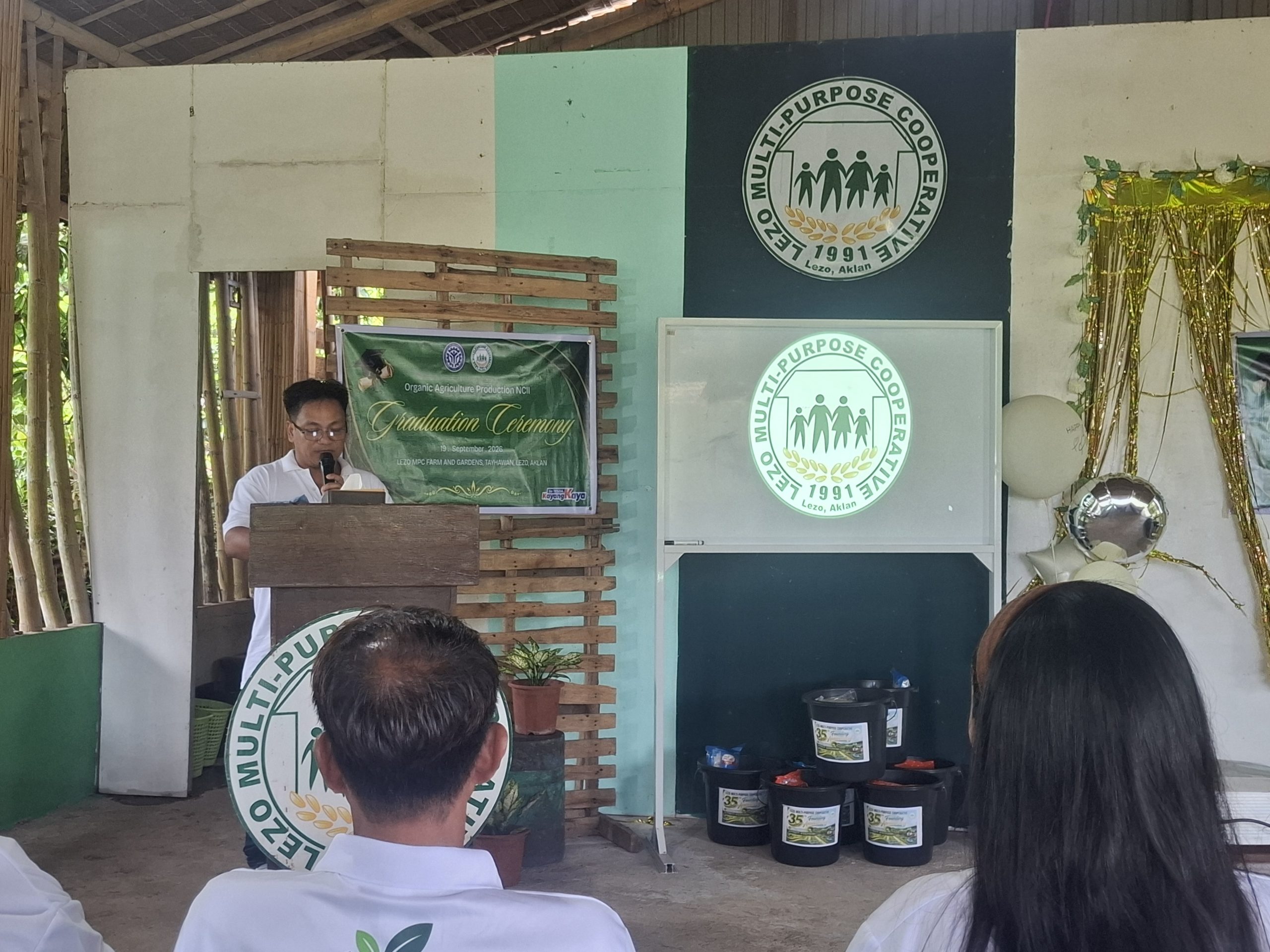
LEZO, Aklan — From learning how to grow crops to learning how to grow opportunities, Akeanon Bukidnon tribal member Lemuel Imperial shared his inspiring journey toward becoming an organic farm entrepreneur during the 35th Foundation Day celebration of the Lezo Multi-Purpose Cooperative (Lezo MPC).
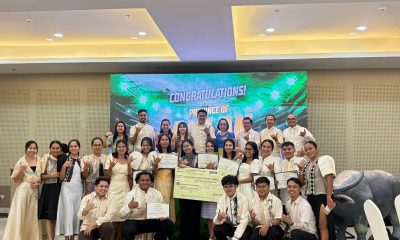
Imperial was among the 31 graduates from the first and second batches who completed the Organic Agriculture Production NC II training under the Technical Education and Skills Development Authority (TESDA).
In his testimony, Imperial recalled how his decision to undergo the training opened his eyes to new knowledge, technologies and opportunities that could help farmers improve their livelihoods and contribute to food security.
He completed 29 days of Skills Training in Organic Agriculture Production NC II, followed by three days of entrepreneurship training. On June 22, 2026, he successfully passed the Organic Agriculture Production NC II assessment.
As one of the seven Local Farmer Technicians (LFTs) in Malinao, Aklan, Imperial regularly works with farmers, particularly rice producers, and sometimes serves as a resource person for farmer clusters under the MASAGANA Program. He has also completed four Training of Trainers courses and received certificates from the Department of Agriculture (DA) and the Agricultural Training Institute (ATI).
For Imperial, organic agriculture is more than a livelihood. As a member of the Akeanon Bukidnon Tribe, he said his connection to indigenous heritage has deepened his appreciation for land, nature, traditional knowledge and the sustainable use of agricultural resources.
He said the farmers he serves inspired him to pursue further training after witnessing their struggles with low yields, water shortages, expensive fertilizers and farm inputs, pests and diseases, and rising production costs.
Many farmers, he noted, also asked about organic farming, soil preparation, organic fertilizers and organic concoctions.
These experiences encouraged him to expand his knowledge beyond crop production and explore crop diversification, integrated farming and additional sources of income.
Imperial also recalled the demanding practical assessment, where their open-field skills demonstration at ASU-Banga lasted for more than eight hours under intense heat, hunger, thirst and exhaustion.
Despite the difficulty, he pushed himself to finish.
“That experience taught me that perseverance brings results, and every skill gained and every competency achieved carries a responsibility to be shared,” Imperial said in his testimony.
His learning continued through a 10-day Farm Business School training for Local Farmer Technicians, where he learned that farming is not only about production but also about business, profitability, quality, sustainability and market opportunities.
Imperial said farmers should not only ask, “How much can I harvest?” but also, “How much can I earn?”
He also emphasized the importance of technology reaching farmers and being translated into practical solutions that can help lower costs, improve quality, increase income and promote healthier and more sustainable food production.
He cited the value of resources already available in farming communities, including soil, water, sunlight, farm residues, animal manure, organic materials, local knowledge and community resources.
“What we often consider agricultural waste can become a valuable farm input,” he said, emphasizing that resourcefulness can also be considered a form of technology.
Imperial further expressed his long-term dream of helping farmers transform idle lands into integrated and sustainable agricultural farms combining crops, vegetables, livestock, poultry, composting and value-adding activities, with the possibility of developing agricultural tourism or ecotourism.
He envisioned farms that not only produce food but also create livelihoods, protect the environment and serve as learning and demonstration sites for the next generation of farmers.
His journey, he said, has transformed him from a farmer technician into a continuous learner, farmer technician, resource person, technology-transfer advocate and aspiring organic farm entrepreneur.
He expressed gratitude to TESDA, DA, ATI, DTI, the Municipal Agriculture Office of Malinao, Lezo Multi-Purpose Cooperative, his trainers and fellow trainees for supporting his journey.
Meanwhile, DA Western Visayas Regional Executive Director Dennis Arpia commended the organic farmers and graduates for their efforts, noting that organic farming is among his primary advocacies in advancing food security.
Arpia’s message highlighted the important role of organic farmers and trained agricultural workers in strengthening local food production and promoting sustainable farming practices.
For Imperial, earning his Organic Agriculture Production NC II competency is not the end of his learning but the beginning of a greater responsibility.
“I started by learning how to grow crops. Now, I am learning how to grow opportunities.”
He said he hopes to eventually harvest not only crops but also livelihoods, empowered farmers, sustainable communities and a better future for the next generation.
His story, shared during Lezo MPC’s 35th Foundation Day, reflected how technical training can become a stepping stone for farmers and community members to turn knowledge and skills into opportunities for sustainable agriculture and food security.