Environment
Aklan’s Coastal Treasures: Where Corals Breathe And Colors Come Alive

As vast as the deep oceans are the variety of life and colors that thrive beneath its waters. The oceans trap tons of carbon dioxide from the atmosphere, and is the largest active carbon reservoir on Earth.
“The ocean, with around 38,000 gigatons (Gt) of carbon (1 gigaton=1 billion tons), contains 16 times as much carbon as the terrestrial biosphere, that is all plant and the underlying soils on our planet,” said worldoceanreview.com, an authority in ocean science which publishes articles authored by renowned scientists and institutions.
Not only does a healthy coastal and marine ecosystem support biodiversity, but it also helps buffer the impacts of extreme weather events, such as those associated with the El Niño phenomenon. With diverse and healthy populations of corals, seagrasses, and mangroves, coastal and marine ecosystems are generally more resilient to the impacts of rising sea temperatures.
In the years, 2017-2018, 2020, 2024-2025, the Provincial Environment and Natural Resources Office (PENRO) in Aklan have conducted validation of coral habitats, assessed seagrass beds, and mangroves (natural stands) in the eight coastal areas of the province, namely: Buruanga, Malay, Nabas, Ibajay, Tangalan, Numancia, Batan, and New Washington, and the island of Boracay.
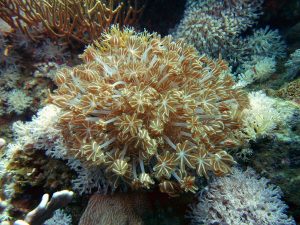
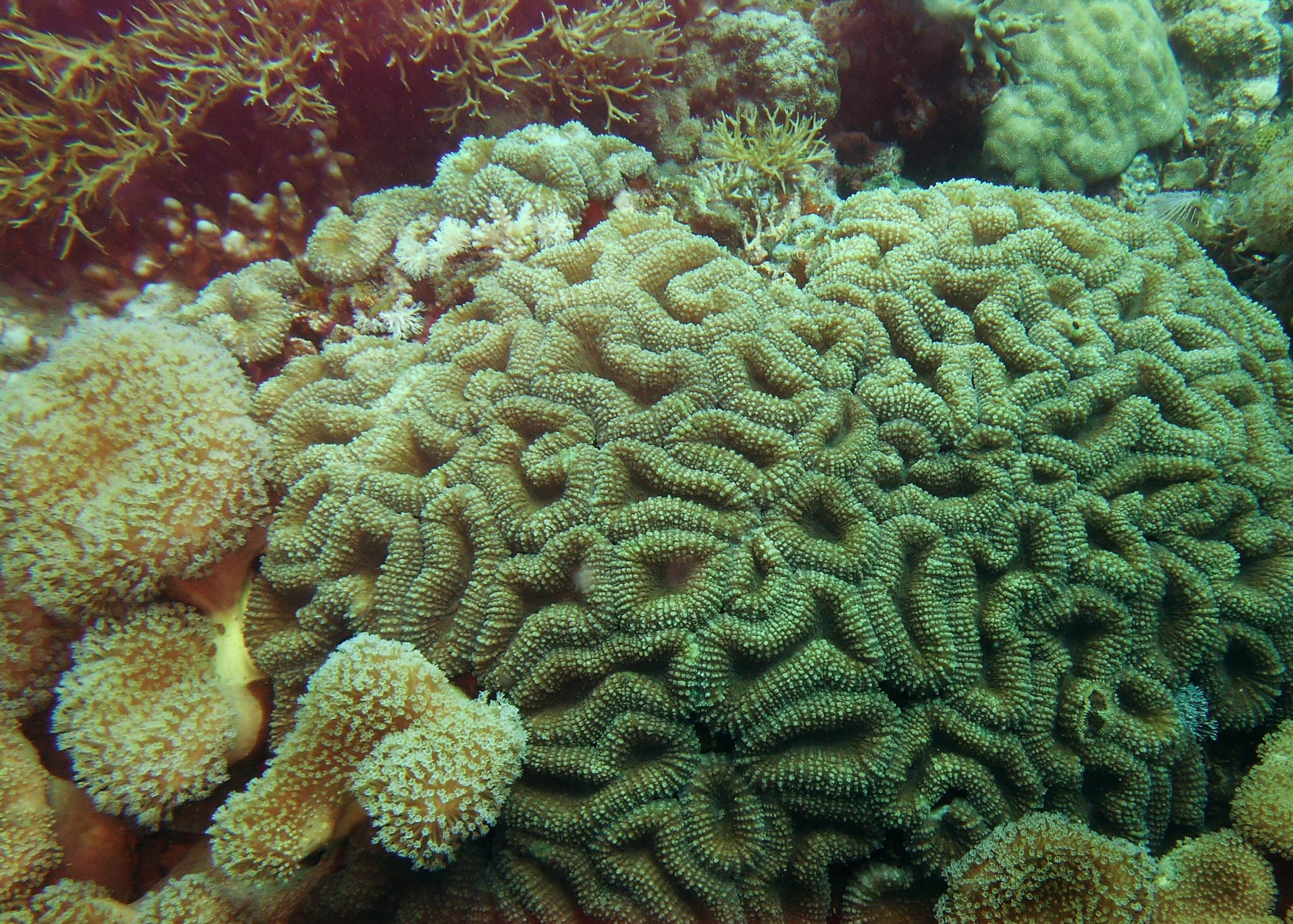
Dressed in attractive colors, an amazing variety of healthy corals are found across 1,884.54 hectares of coastal waters in Aklan province. The island of Boracay has the largest coral habitat with 763.30 hectares.
The seagrass beds, spawning a total of 451.37 hectares across the province, documented nine species in Tangalan, seven in Nabas, and ten (10) in Malay.
Among the seagrasses, the sickle seagrass (Thalassia hemprichii) and the noodle/syringe seagrass (Syringodium isoetifolium) which are in abundance, serve as an “eat-all-you-can buffet” for Green sea turtles and Dugongs. There is also the pineleaf halodule / Fiber-strand grass (Halodule pinifolia) which works as a first-aid plant in the ocean by growing fast to help stabilize underwater sand after a heavy typhoon.
Approximately 909.015 hectares of mangroves with natural stands were also mapped by the PENRO Aklan team. The largest portion was in Batan with 339.49 hectares, and in New Washington with 323.60 hectares. This triad ecosystem of mangrove, seagrass and corals, with its own diverse populations, play a key role to withstanding extreme drought such as the Super El Niño and other weather disturbances.
“Our mangroves, seagrasses and corals work together in maintaining the ecological balance so the planet could adapt to the impacts of climate change. When we keep them healthy, they keep sustaining our very own lives, too,” said DENR 6 OIC Regional Executive Director Ramar Niel V. Pascua.
The validation, assessment and mapping of these ecosystems provide valuable baseline data for Aklan province that would be very useful especially for the local leaders in identifying conservation priorities and coastal management interventions./DENR 6