Latest News
DBM naglabas ng P27.4B Tulong Pang-Medikal para sa mga Pilipinong Higit Na Nangangailangan sa Buong Bansa

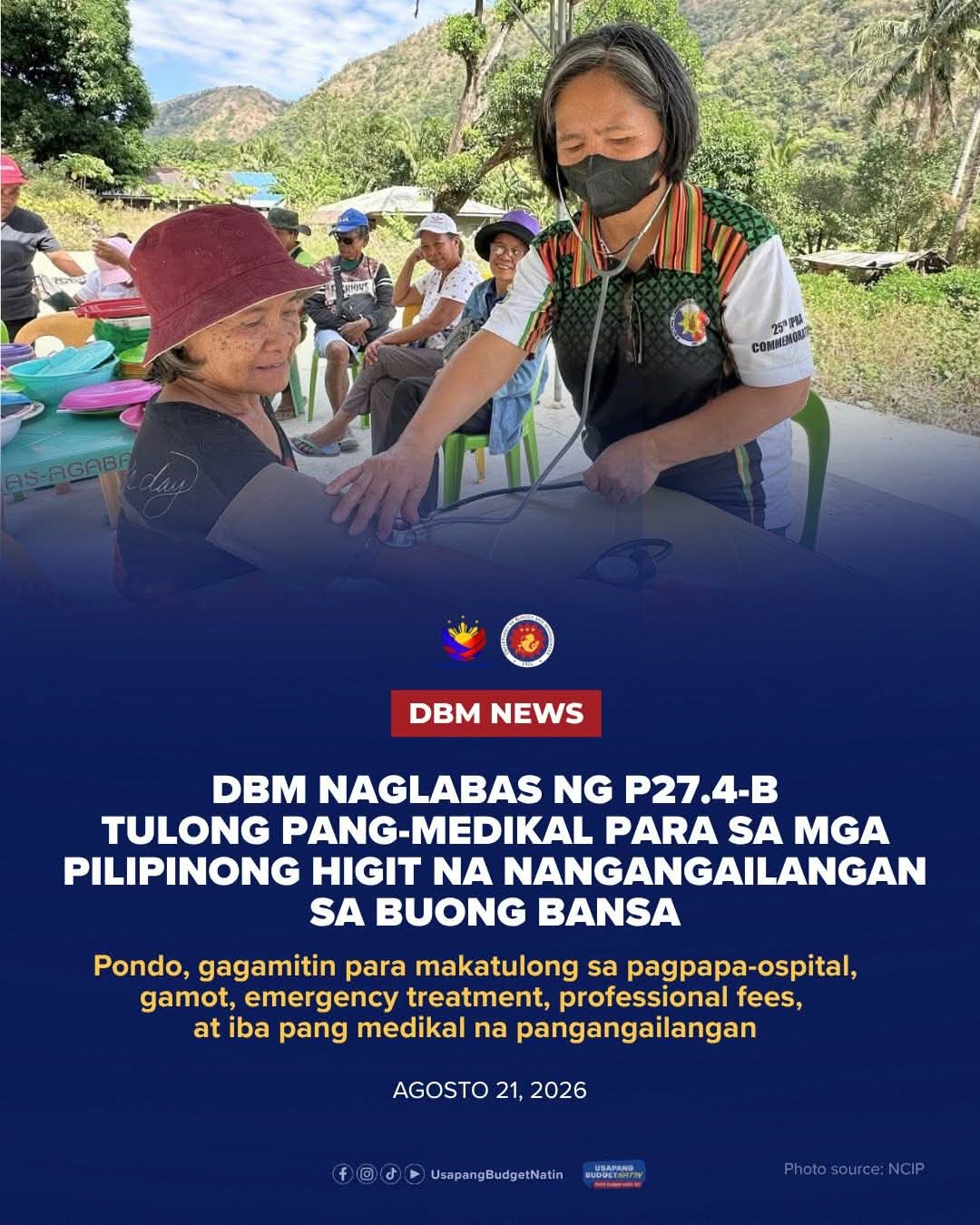
_Pondo, gagamitin para makatulong sa pagpapa-ospital, gamot, emergency treatment, professional fees, at iba pang medikal na pangangailangan_
Naglabas ang Department of Budget and Management (DBM) ng P27.410 bilyong medical assistance para sa mga indigent at financially incapacitated na Pilipino sa buong bansa. Layunin nitong magbigay ng mahalagang tulong ng pamahalaan sa mga pasyente at pamilyang nahihirapang tustusan ang pagpapa-ospital, gamot, emergency treatment, professional fees, at iba pang healthcare needs.
Susuporta ang pondo sa patuloy na pagpapatupad ng Medical Assistance to Indigent and Financially Incapacitated Patients (MAIFIP) Program ng Department of Health (DOH), na nagbibigay ng tulong sa mga pasyenteng hindi kayang tustusan nang buo ang gastusin sa kanilang pagpapagamot at iba pang serbisyong medikal.
Ayon kay Budget Secretary Kim Robert C. De Leon, layunin ng P27.410-bilyong release na gawing konkretong tulong ang resources ng pamahalaan, lalo na sa oras na higit itong kailangan ng mga Pilipino—sa aktuwal nilang pagpapagamot.
_“The Php27.4 billion we are releasing is meant to translate into real help at the hospital level—medicines that can be bought, procedures that can be performed, and medical bills that families do not have to shoulder on their own. This is a substantial investment, but its true value will be measured by the number of Filipinos it is able to help,”_ pahayag ni Secretary De Leon.
Ang halaga ay magmumula sa DOH Regular Budget sa ilalim ng FY 2026 General Appropriations Act at susuporta sa funding requirements ng Centers for Health Development (CHDs), DOH hospitals sa Metro Manila at mga rehiyon, GOCC Specialty Hospitals, University of the Philippines-Philippine General Hospital (UP-PGH), at Drug Abuse Treatment and Rehabilitation Centers.
Sa kabuuang release, ang pinakamalaking bahagi na P19.145 bilyon ay mapupunta sa CHDs para suportahan ang pagbibigay ng medical assistance sa pamamagitan ng mga partner local government hospitals, privately owned institutions, at iba pang health facilities sa buong bansa.
Samantala, P4.353 bilyon ang ilalaan para sa DOH hospitals sa Metro Manila at mga rehiyon; P2.910 bilyon para sa GOCC Specialty Hospitals, *tulad ng Lung Center of the Philippines, National Kidney and Transplant Institute, Philippine Children’s Medical Center, at Philippine Heart Center*; P950 milyon para sa UP-PGH; at P52 milyon para sa Drug Abuse Treatment and Rehabilitation Centers.
Binigyang-diin ni Secretary De Leon na ang pagbibigay ng malaking bahagi ng pondo sa CHDs ay makatutulong upang mapalawak ang abot ng MAIFIP lampas sa mga pangunahing ospital at mailapit ang medical assistance sa mga pasyente sa mga komunidad sa buong bansa.
_“Medical need does not recognize geography or income. Whether a patient is in Metro Manila or in the provinces, government assistance should be within reach. That is why the bulk of this funding will flow through our Centers for Health Development and partner facilities across the country, so that help is available closer to where our people actually live and seek treatment,”_ dagdag pa ni Secretary De Leon .
Susuportahan din ng pondo ang pagpapatupad ng eMAIFIP sa pamamagitan ng eGovPH superapp, alinsunod sa DOH guidelines at Presidential Directive No. PBBM-2026-1881-1886, habang patuloy na ginagawa ng pamahalaan na mas accessible ang medical assistance sa pamamagitan ng digital channels.
_“We also want to make getting government assistance less burdensome. A patient or a family already dealing with illness should not have to navigate an unnecessarily difficult process just to seek help. With eMAIFIP, we are supporting a system that is more accessible, more efficient, and more responsive to the people who need it,”_ ani Secretary De Leon.
Sa pamamagitan ng MAIFIP at iba pang healthcare initiatives, patuloy na pinapalakas ng administrasyong Marcos Jr. ang social protection at public health financing, lalo na para sa mga Pilipinong nangangailangan ng agarang medical care ngunit walang sapat na kakayahang tustusan ang buong halaga ng kanilang treatment.