Agriculture
Farmer cooperative in Agusan del Sur finds success in organic rice farming

by: Vic Thor Palarca
There is strength in numbers. When farmers unite and share their stories of how organic farming has enabled them to send their children to school, augmented their incomes, and led healthier lifestyles, their testimonies demand recognition—especially from those who still practice conventional farming. Unlike organic farming methods, conventional farming often depends on harmful chemicals and pesticides, which pose significant risks to our health and the environment.
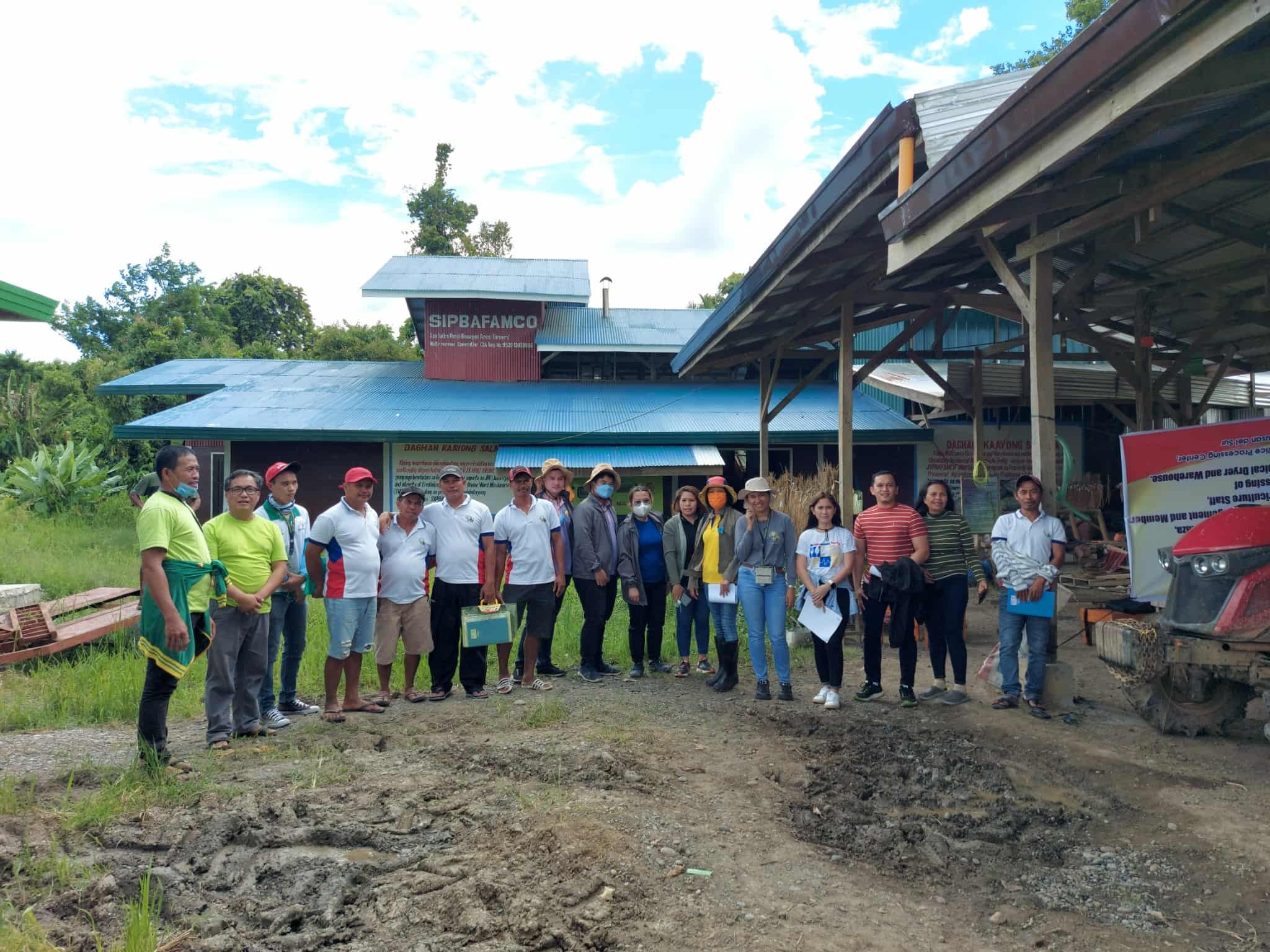
In Loreto, Agusan del Sur, a farmer cooperative is making progress and significant strides in both production and marketing of their rice produce through organic practices. The rice farmers in this cooperative practice organic agriculture and during harvest season, are able to sell their produce at competitive prices. The San Isidro Parish Binucayan Area Farmers Multi-Purpose Cooperative (SIPBAFAMCO) began as a small farmer organization and as its membership grew, evolved into a full-fledged cooperative.
Father Anthony “Bong” Salas, SVD, a member of the Society of the Divine Word religious congregation, is currently assigned in Agusan del Sur to oversee the social action ministry. His passion for farming and commitment to organic agriculture have inspired him to guide SIPBAFAMCO and its members in Binucayan, Loreto. The cooperative was originally established by his predecessor in the 1990s, and Father Bong has since continued to provide guidance and oversight.
With 235 active members, SIPBAFAMCO champions sustainable organic agriculture. Supporting and advocating this effort is one of the key missions of the Divine Word Missionaries, whose members actively engage both parishioners and non-parishioners in transitioning toward sustainable farming systems. The cooperative’s membership is divided into two groups which is the lowland and upland farmer-members. SIPBAFAMCO has established dedicated production areas for rice, coconut, corn, and poultry, complementing their existing offices, training center, and trading post.
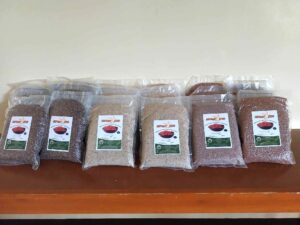
SIPBAFAMCO has also earned certification as a recognized Learning Site for Agriculture (LSA) of ATI through an endorsement by the Municipal Agriculture Office (MAO). A training on the Participatory Guarantee System (PGS) held in their training hall and facilitated by ATI-Caraga, involved six cooperative members. Later on, five of these participants became core members of the PGS certifying body by using their own farms as starting points for organic certification, marking a significant milestone on their journey toward sustainable agriculture. SIPBAFAMCO, as a PGS group, applied for and qualified as an Organic Certifying Body (OCB) in 2024.
“In our journey as this PGS group, my predecessors were already advocates of sustainable agriculture. We already had farmers who were essentially transitioning from conventional farming and they no longer used synthetic or harmful chemicals and had fully engaged in sustainable organic agriculture. So when we identified who could become members of the core group, there were already existing and active rice farmer-members practicing organic farming.
It was a challenging journey from the very beginning, but fortunately, the Department of Agriculture, the Agricultural Training Institute (ATI), and the Bureau of Agriculture and Fisheries Standards (BAFS) supported us in finalizing our manual and aligning it with Internal Standards (IS). The audits and additional training conducted by BAFS were also very helpful.
What makes our cooperative great and unique is that we were already an established cooperative before applying for certification, and the five members of PGS core groups are also members of our cooperative,” Father Bong shared.
SIPBAFAMCO holds the distinction of being Caraga’s first Participatory Guarantee System (PGS) Organic Certifying Body, having received its official Certificate of Accreditation in 2024 from the BAFS under its Organic Agriculture Program. As an accredited PGS certifying body, the cooperative is authorized to conduct thorough inspections and certification activities, ensuring that products labeled or sold as “organic” are produced, processed, prepared, and handled in full compliance with established organic standards and guidelines of the highest quality.
“Sila jud (the core members) is nagpakita jud ug dako nga interest nga mahimong PGS-group kay mahal magpa-certify sa third party. Blessing in disguise sad tong COVID-19 nga nahimong pamaagi nga ma-train sila sa ATI as PGS, nga supposed to be sa Surigao City unta ang venue, pero nabalhin dere ang training” (The core members have truly shown great interest in becoming a PGS group because the cost of third-party certification is quite expensive. The COVID-19 pandemic turned out to be a blessing in disguise, as it provided an opportunity for them to be trained by ATI as a PGS group. The training was originally supposed to take place in Surigao City, but it was moved here) said Ms. Arlyn Arnuza, the area’s dedicated agricultural technician and Organic Agriculture (OA) Focal Person, who continues to serve diligently despite limited budget and resources.
In a shared document by the ATI, PGS is a community-based organic certification system where a group of local stakeholders collectively vouch for the integrity and quality of organic products, promoting trust and farmer empowerment instead of costly third-party certification. ATI provides training and extends support to farmers and their groups in establishing and operating these PGS groups, helping them become accredited certifying bodies to ensure organic produce in the domestic market. The impact of the system facilitates the active participation of local farmers in the PGS process, leading to better quality control and increased consumer confidence in producing organic products.
ATI capacitates the PGS core group with PGS trainings and assists PGS groups seeking accreditation on organic agriculture standards and processes. In coordination with BAFS, ATI develops and updates the PGS and ensures that PGS groups follow the Philippine National Standards (PNS) for organic agriculture.
“Dakong tabang ang LGU-Loreto sa amoa kay gipakyaw nila among 60 tons milled-rice nga red rice ug black rice (certified organic). If wala sila nikuha, wala jud mi capital ma’am”, Salamat sad kang Father Bong sa pag-coordinate. Hopefully, i-pasa nila ang resolution nga dili sila mupalit sa gawas not unless mahurot una among supply dere sa coop. If ang LGU dere na jud mukuha sa SIPBAFAMCO, dakong tabang jud sa almost 150 rice farmers nga member sa coop” (The support from the LGU-Loreto has been a great help to us because they purchased our 60 tons milled-rice red rice and black rice (both certified organic) in bulk. Without their purchase, we really wouldn’t have had any capital, ma’am. “Hopefully, they will pass a resolution to prohibit purchasing rice from outside sources unless they buy first our supply here at the coop. If the LGU commits to sourcing their organic rice from SIPBAFAMCO, it would be a significant help to almost 150 rice farmers who are members of the cooperative.) SIPBAFAMCO General Manager Nerlita Caseria said, as told to Elena Madelo-Baquiano, Training Specialist II of ATI-Caraga. Nerlita also expressed gratitude to Father Bong for his assistance in coordinating the marketing effort.
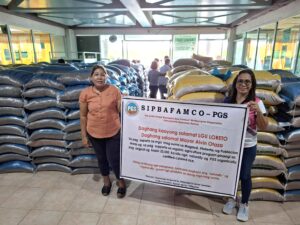
LGU-Loreto plans to use the purchased sacks of organic rice for their feeding program and to distribute to their constituents in times of disaster or calamity.
Nory Labaniego, a farmer-member of the cooperative and a core member of the PGS group, who also serves as the Rice Purchaser and Post-Harvest Facility Supervisor, shared that the peer review process helped in selecting members to become certifying members.
“Dili sayon ang among naagi-an kay sa pagsugod pa lang specially sa pag-switch from conventional farming to organic farming. Unang harvest pa lang, nibaba jud among production kay ni-adjust pa man ang yuta during conversion period. After sa conversion period, naka-recover ra mi ug nitaas na among kita during harvest namo” (It was not an easy journey, especially from the start when we switched from conventional to organic farming. During our first harvest, production decreased because the soil was still adjusting during the conversion period. But after completing the conversion period, we recovered, and our yields increased significantly with each harvest) Nory said.
The PGS system works effectively within farmer associations because it gives farmers the advantage of ensuring that the quality of their farm produce meets the highest standards in production and processing. Furthermore, when individual farmers come together to form an association or cooperative, they gain strength in numbers. As one organization, they can collectively access government programs and services, farming technology and information, forge partnerships with other stakeholders, gain access to financial institutions, and even reach broader markets. The reach of a farmer association is wide because, indeed, there is power in numbers.
SIPBAFAMCO can be reached through their official Facebook page: https://www.facebook.com/sipbafamco.binucayan