Entertainment
Resurrection: A Love Letter to Cinema

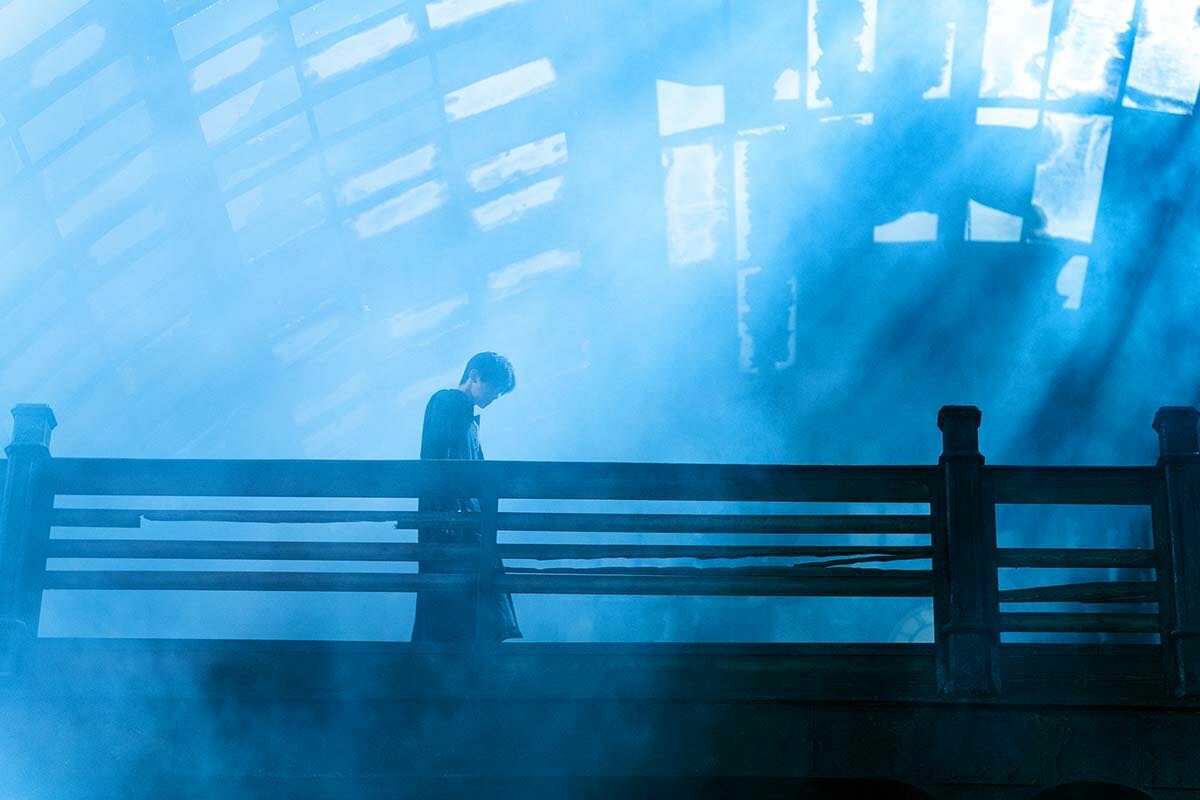
Across his promising career, Chinese filmmaker Bi Gan has established himself as a master of manipulating time and space through a self-consciously slippery dream logic. His latest feature “Resurrection” is his most ambitious plunge yet into the realm of pure cinematic dreamscape.
Following its world premiere at the 2025 Cannes Film Festival, where it was awarded the Prix Spécial, the film has solidified Bi Gan’s reputation as a visionary capable of traversing stylistic boundaries with supreme confidence.
The film’s premise is a maximalist paradox. In a near-future reality, humanity has discovered that the secret to immortality lies in no longer dreaming, an existence compared to a wax candle that never burns and thus lasts forever. However, outcasts known as Deliriants defy this decree, choosing shorter, brighter lives fueled by imagination.
The story follows an elegant “Big Other” named Miss Shu (Shu Qi), tasked with hunting these outliers. When she tracks down a monstrous, Nosferatuesque Deliriant (Jackson Yee), she is moved by his dedication to his inner life. In an act of seeming mercy, she installs a film projector inside him, allowing him a final series of reveries before his inevitable death.

The bulk of the film’s running time unfolds within the Deliriant’s dreams, presented in chapters corresponding to the six senses of Buddhist thought: Sight: A tribute to silent melodrama and German Expressionism, featuring a byzantine maze of crooked film sets that evokes memories of F.W. Murnau and George Méliès; Hearing: A mid-20th-century espionage noir involving a mysterious suitcase, a theremin playing Bach, and a mirrored labyrinth reminiscent of Orson Welles’s “The Lady From Shanghai”; Taste: A folk-tale set in a ruined Buddhist temple where an art thief encounters a trickster “Spirit of Bitterness” reincarnated in a rotten tooth; Smell: A tragicomic riff on Paper Moon, following a con artist and an orphan apprentice who swindle a mob boss using a fake ability to identify playing cards by scent; Touch: A woozy, red-lit romance between a young hoodlum and a vampire singer on New Year’s Eve, 1999; and Mind: The final reckoning where the monster’s mind is found in an opium den, leading to a funeral rite performed through the language of cinema.
Bi Gan utilizes breathtaking long takes to collapse past, present, and future. The film’s final 40-minute unbroken take, which is a breathlessly conceived sequence following the vampire romance, displays a casual fluidity that creates a surreal, trance-like atmosphere.
Despite the sheer opulence on display, some critics have noted a draining and mannered quality to the work, suggesting it may be more an act of preservation by a curator than a work of imaginative possibility. However, others argue that “Resurrection” is a cinephile’s delight, a deeply mysterious work of art that captures the unique, paradoxical pleasure of total immersion in cinema.
Ultimately, “Resurrection” functions as a love letter to cinema. In Bi Gan’s world, to give up dreaming is to give up what makes us human. By projecting these dreams onto the screen, he invites the audience to keep the faith and rediscover the sensorial illusion of cinema.
“Resurrection” will be shown at FDCP Cinematheque Centres in Manila on May 27, 2 p.m., and June 6, 4:15 p.m.; Iloilo on May 27, 2 p.m., June 3 and June 5, 5 p.m.; and Davao on May 30, 12 noon.