Commentary
To Rebuild Ties with China, Let Trade Lead While We Stand Firm on Sovereignty


By: John Dela Cruz
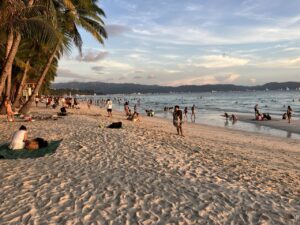
The most visible casualty of the Philippines’ increasingly tense relationship with China is not just in diplomatic circles or disputed reefs—it is in Boracay.
Once teeming with Chinese tourists arriving in droves from Beijing, Shanghai, or Chengdu, Boracay now watches its beachside stalls, hotels, and tour operators struggle to recover a key market segment that vanished almost overnight. The loss is not symbolic; it is economic. It reverberates across jobs, incomes, and provincial revenues.
And yet, this doesn’t mean we should surrender our sovereignty just to win it back. The Philippines must assert its rights in the West Philippine Sea—firmly, consistently, and peacefully. But it also must learn to speak the language that Beijing understands best: trade and commerce.
The Taiwan Template: Sovereignty vs. Strategy
China has a long-standing territorial claim over Taiwan—yet that hasn’t stopped China from becoming Taiwan’s largest trading partner. The two governments may not recognize each other diplomatically, but business flows in both directions. Cargo ships, semiconductors, electronics, food products—they all move freely because trade is seen as a stabilizing force amid political tension.
This is the paradox China lives with—and respects. It means they can disagree politically but cooperate economically. The Philippines should take a page from this playbook.
Why Trade is the Better Frontline
Unlike military generals or government spokespeople, businesspeople speak in terms of value, opportunity, and continuity. Filipino-Chinese entrepreneurs already know how to navigate the delicate dance of dealing with China. They are culturally attuned, fluent in both language and market behavior, and deeply invested in keeping economic doors open regardless of political friction.
This makes them our best ambassadors—not the warships or tough sound bites.
Boracay as the Symbol of What We Lost—and What We Can Regain
Boracay’s tourism market is a stark reminder that geopolitics isn’t just about maps; it’s about livelihoods. The island is a case study in how economic fallout hurts local communities. At its peak, Chinese tourists made up over 40% of Boracay’s foreign visitors. Their return—or continued absence—should be an urgent priority.
Bringing them back doesn’t require surrender. It requires smart diplomacy—built on trade missions, private sector dialogues, tourism promotions, and renewed flight connections.
Standing Firm, But Smart
We must make clear that the Philippines will never compromise its sovereignty. That is non-negotiable. But we can still negotiate everything else: travel, investments, joint ventures, exports, and digital economy partnerships.
We can take inspiration from how Vietnam—a nation with its own South China Sea disputes—still trades robustly with China. Why? Because it separates strategic friction from economic cooperation.
A Path Forward
• Empower Filipino-Chinese business groups to lead soft diplomacy;
• Launch a Boracay Tourism Recovery Program targeting Chinese return visitors through trade fairs and direct negotiations;
• Create trade corridors with Chinese cities via economic attaches—not political envoys;
• Reframe public messaging: assert sovereignty on political fronts, but open arms on economic ones.
Conclusion
We don’t need to choose between pride and prosperity. We can protect our territorial integrity while also pursuing peace and profit. The best way to do this is not through louder rhetoric or bigger ships—but through quieter deals and stronger trade.
In the end, China will understand not just our words, but our actions—and commerce is a language they’ve long respected.