Commentary
Bridging the Gap: Ozamiz’s Police-Media Orientation Sets a National Standard


By: Bhal Abad Cabrera
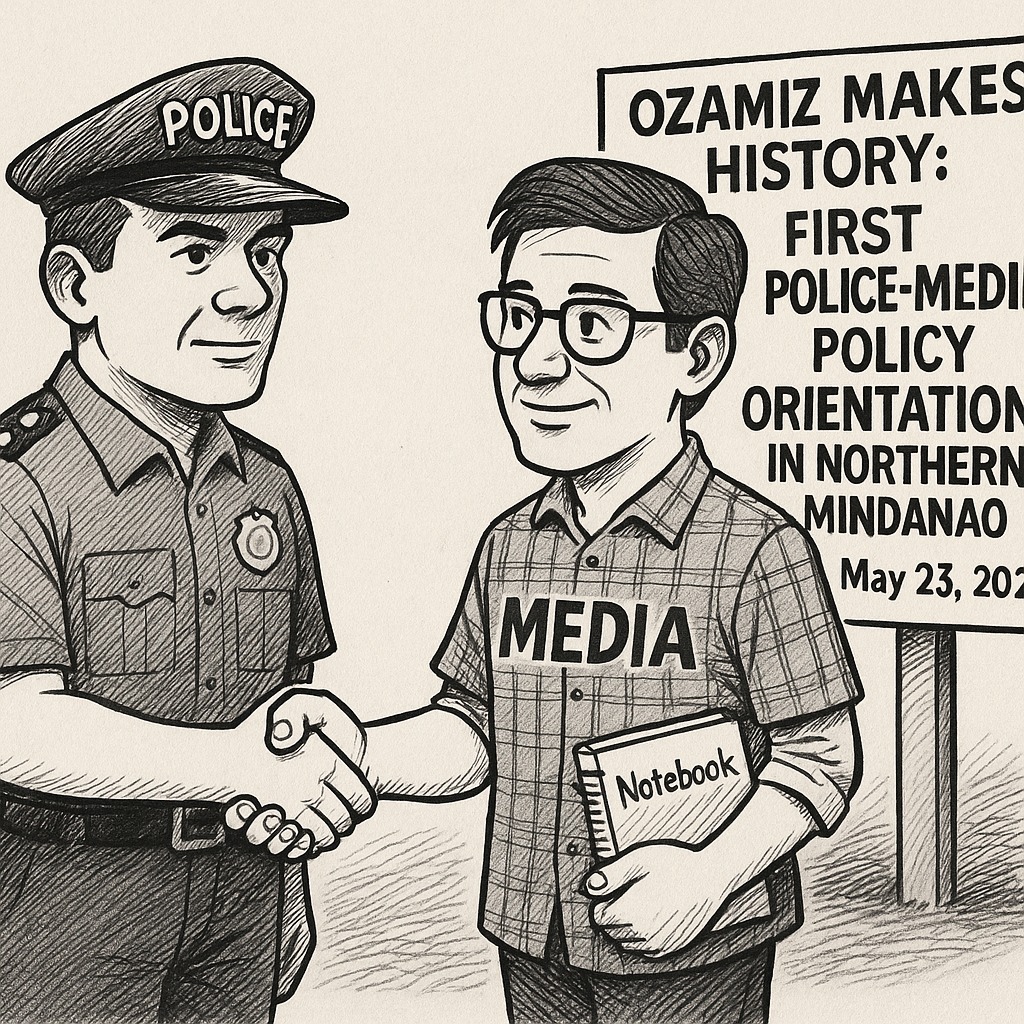
In a time when misinformation spreads faster than verified facts, Ozamiz City has taken a decisive step to address a long-standing gap between law enforcement and the media. On May 23, 2025, it became the first local government unit in Region 10 to institutionalize a Police-Media Policy Orientation—an initiative that deserves national attention and replication.
This was not a ceremonial event. It was a clear, strategic response to a crucial need: professionalizing the flow of information between two institutions that shape public perception and public safety.
The orientation, held at the New Asenso Building in Ozamiz City Hall, was spearheaded by the Ozamiz City Police Station in close partnership with the local government under the leadership of Mayor Atty. Indy Oaminal. Their shared vision was unambiguous: to establish a communication framework built on trust, accountability, and mutual respect.
PMAJ Euridecy Revillas, Deputy City Police Chief / Public Information Officer of Ozamiz CPS, and PMAJ Joan Navarro, Regional Public Information Officer, provided a detailed presentation of the PNP’s revised Media Relations Policy. The orientation emphasized:
* The prohibition of premature releases of sensitive information
* Strict adherence to verified facts
* The protection of identities in ongoing investigations
These are not just guidelines; they are safeguards designed to prevent misinformation, protect due process, and promote responsible reporting.
What made this initiative truly progressive was its inclusion of digital media stakeholders—vloggers, bloggers, and content creators—recognizing their growing role in public communication. In an age where platforms like TikTok and YouTube have become primary news sources for many, this move reflects a modern and inclusive approach to media engagement.
This is what makes Ozamiz different: instead of reacting to communication breakdowns, it is building systems to prevent them. The orientation provided both the police and the media with a clear understanding of protocols, roles, and responsibilities, creating a platform where ethical reporting and lawful policing can co-exist.
Mayor Atty. Indy Oaminal’s involvement sends a strong message of governance through transparency and proactive leadership. His support for the initiative reinforces a political culture that chooses open communication over institutional secrecy.
The question now is not whether this program was successful—it clearly was. The question is: who will follow?
Local governments in Misamis Occidental, Bukidnon, Lanao del Norte, Iligan, and Cagayan de Oro must recognize the value of this model. Strengthening police-media relations is no longer optional—it is essential for upholding public trust and ensuring that information during crises is accurate, timely, and constructive.
In sum, Ozamiz City has laid out a working framework for responsible engagement between police and media professionals. It is a visionary move grounded in practicality, driven by public servants who understand that true progress begins with communication, collaboration, and clarity.
This is not just a local milestone. It is a national template worth emulating.