Business
Philippines has over 1,800MW potential solar rooftop capacity nationwide –– ICSC


QUEZON CITY- Covering 174 cities and municipalities across the country, the Institute for Climate and Sustainable Cities (ICSC) found 1,309.64 megawatts (MW) of solar rooftop capacity in Luzon, 472.48MW capacity in Visayas, and 61.08MW capacity in Mindanao –– amounting to 1,846.08MW nationwide –– through a solar mapping tool launched recently.
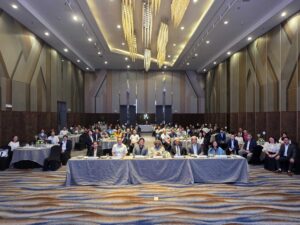
The Solar Power Estimation of Capacities and Tracking Using Machine Learning (SPECTRUM), developed by ICSC, is a proprietary model and web platform that allows users to visualize rooftop solar installations and estimate existing solar capacity across the Philippines. Launched today in Quezon City, the event gathered representatives from national government agencies, local government units, civil society, and the private sector to explore how SPECTRUM can be utilized effectively.
“Solar energy is not just about sustainability. It is about economic empowerment, especially for those in underserved and last-mile communities. At ICSC, we believe data drives purposeful action. Through initiatives like SPECTRUM, we turn research into evidence-based policies that guide national planning and empower local governments to adopt climate-smart strategies,” said Angelo Kairos dela Cruz, Executive Director of ICSC.
With the overall aim to support national efforts to increase the share of renewable energy (RE) in the Philippines’ energy mix, SPECTRUM utilizes machine learning and satellite data to provide accurate, up-to-date estimates of solar energy capacity across the Philippines. According to ICSC Chief Data Scientist Jephraim Manansala, unregistered solar rooftop capacities are becoming more significant across the country, which poses a challenge to distribution utilities to adapt their operations and planning.
“Despite being unregistered, these growing capacities could still contribute significantly to renewable energy generation targets. That’s why we need a clearer, more granular view of what’s already on the ground,” Manansala added.
The geographic scope of SPECTRUM was developed in three phases: the first phase covered major metropolitan areas across the country such as Metro Manila, Metro Cebu, Metro Davao, and Iloilo City; the second phase expanded to the Greater Metro Manila area and other cities across the Philippines; and the third phase includes other highly urbanized cities and municipalities, and Philippine Economic Zone Authority (PEZA) areas.
In addition, detected installations through SPECTRUM were categorized into the following:
-
Residential, referring to solar panels detected that are below 100 kilowatts (kW) or those under the Philippines’ Net-Metering Program;
-
Commercial and industrial, referring to solar panels detected that are above 100kW or those registered under the Distributed Energy Resources (DER) Program; and
-
Utility scale, referring to solar projects detected that are above 1MW.
Of the total 1,846.08MW of solar rooftop capacity detected, 1,398.25MW are utility scale, 202.03MW are commercial, and 245.8MW are residential installations. In evaluating these capacities, ICSC focused on precision or how the tool correctly identifies detected solar panels.
In its current version, residential installations achieved a precision of 87.6 percent, commercial installations achieved a precision of 87.1 percent, and utility scale projects achieved a significantly higher precision rate of 98.47 percent.
“I believe that the ongoing implementation of the SPECTRUM initiative will help us identify potential projects and explore new business models. As we move forward with the Voluntary Renewable Energy Market, we can expect increased consumer participation. This also paves the way for the introduction and expansion of innovative and impactful power purchase agreements,” said Department of Energy (DOE) Assistant Secretary Mylene Capongcol in her keynote address.
Alongside ASec. Capongcol, DOE Undersecretary Felix William Fuentebella also highlighted the importance of tools such as SPECTRUM in paving the way for the energy transition. “Metrics are essential—they serve as our compass. By consistently using a spectrum of tools to track these metrics, we can unite people and leaders—across barangays, provinces, cities, the nation, and even globally—around a shared vision,” said USec. Fuentebella.
The Climate Vulnerable Forum (CVF) and the Vulnerable 20 Group of Finance Ministers (V20) –– represented by Former Maldives President and CVF-V20 Secretary General and Barbados Ambassador Mohamed Nasheed and CVF-V20 Presidency Sherpa Elizabeth Thompson –– also celebrated the launch of SPECTRUM, underscoring the importance of civil society leadership in advancing climate action and the energy transition in climate-vulnerable nations such as the Philippines.
“As we all should know by now, knowledge is power — and in the climate fight, data-informed knowledge is transformative power. With tools like SPECTRUM, and with civil society at the forefront, we can accelerate the transition to renewable energy, strengthen resilience, and build a just and sustainable future for all,” said Former President Nasheed.
According to ICSC, SPECTRUM will be continuously developed: The tool’s machine learning model still has its limitations, and ICSC aims to further improve precision, expand coverage, and track the growth of solar capacities over time.
“By quite literally highlighting the potential of rooftop solar, SPECTRUM supports more stable grid operations, improved compliance with renewable energy targets, and greater community involvement. I commend the policymakers and energy planners here today — this is a powerful foundation upon which we can build even greater ambition,” said Ambassador Thompson.