Business
“𝗦𝗺𝗼𝗸𝗲 𝗶𝗻 𝗛𝗲𝗿 𝗩𝗲𝗶𝗻𝘀: 𝗧𝗵𝗲 𝗚𝗿𝗶𝘁 𝗮𝗻𝗱 𝗚𝗿𝗮𝗰𝗲 𝗼𝗳 𝗟𝗲𝗼𝗻𝗶𝘀𝗮”

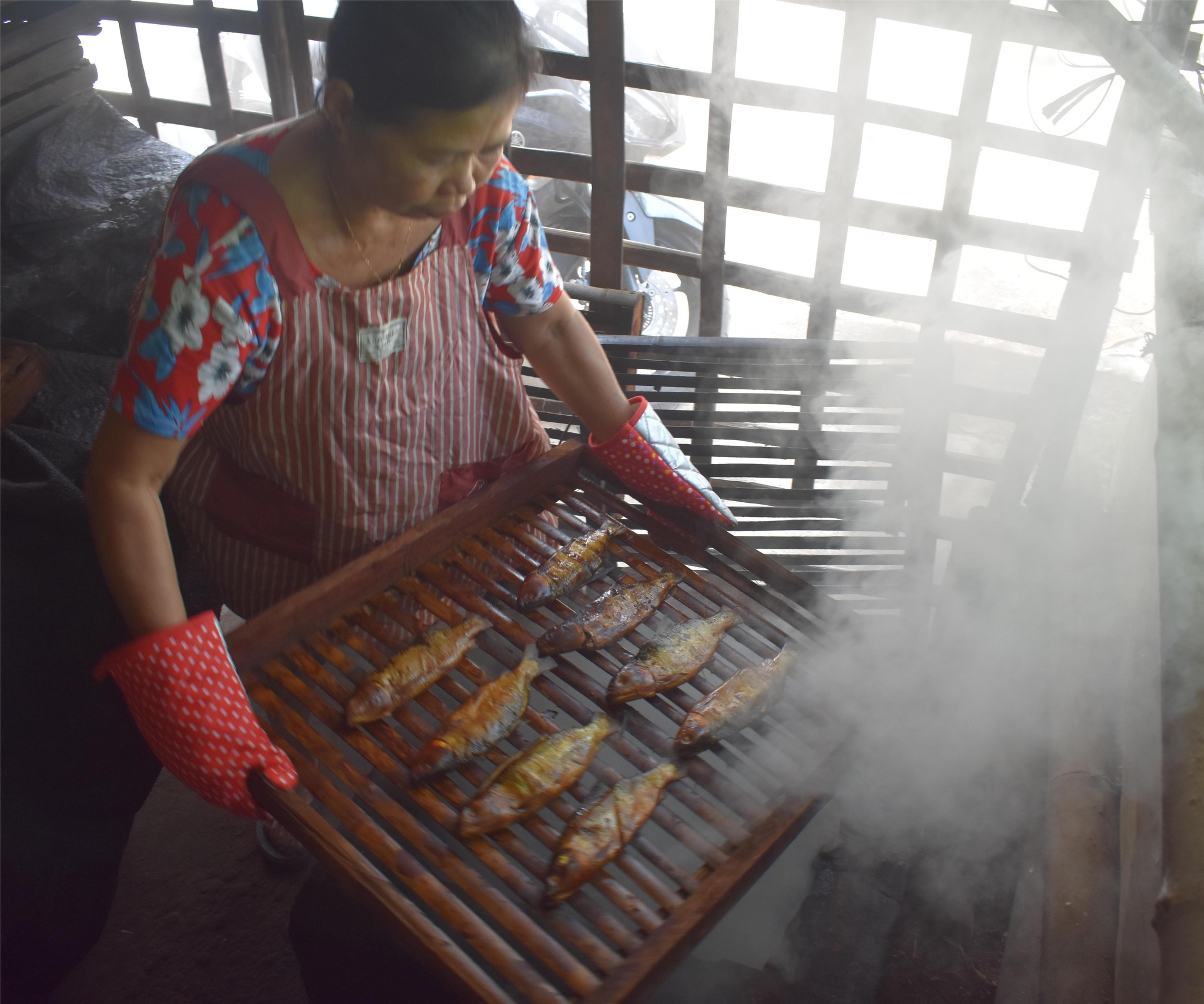
Roxas City, Capiz- In a bustling fishing village of Libas in the city of Roxas in the province of Capiz, poised between sea and sky where the wind is scented thick with salt and the seagulls’ warble harmonizing with the villagers’ cheerful whistles, a woman’s flame never goes out. Spirals of smoke drift upwards from behind her small bamboo-and-brick residence, wisping off across the sky like ethereal prayers. She doesn’t merely smoke fish – it’s her past, her sorrow, her strength. It is her name: Leonisa Delsolor.
From a Middle Eastern domestic helper to a proud entrepreneur now, Leonisa’s is an epic written in salt and adversity. She has six children of her own, and knows nothing of sleeping at nights and stomachs that rumble louder than thunder. But if life fell her down, she always stood up swinging – hands blistered, heart filled, hope still smoldering like a flickering ember refusing to give out.
𝗧𝗵𝗲 𝗙𝗶𝗿𝗲 𝗕𝗲𝗳𝗼𝗿𝗲 𝘁𝗵𝗲 𝗙𝗹𝗮𝗺𝗲
Leonisa’s heritage dates back deep into the briny soil of her hometown where villagers would lay fish on latticework trays and let them dry in the equatorial sun, and smoke the catch over smoldering coconut husks. Her grandmother was the one who first learned the art of the artesan-style smoked fish – tinapa that would dissolve on the palate and haunt the soul. The smokehouse, besides being a source of wealth, was also where stories were shared, children were raised, and food was prepared with more love than extravagance.
But legacy alone doesn’t pay the bills.
With a negligent husband, with six mouths to feed and a wandering heart, Leonisa stowed her dreams and desperation in a suitcase and flew abroad, as had thousands of Filipino women before her. She became a domestic worker in the Middle East, scrubbing floors until her knuckles were raw, swallowing her homesickness with each mouthful of leftover rice, and sending every peso back home.
“Then my life was like soap suds – dainty, temporary, and floating in someone else’s house,” she says.
The distance was harsh. For more than a decade, she missed birthdays, graduations, and the little everyday moments that make a family. Her children grew up on lullabies sung over speakerphones and hugs traded for modest balikbayan boxes. What cut the deepest was knowing that the money she bled for overseas was squandered on her husband’s vices, instead of feeding their children’s future. But she weathered the storm and, with a heart steeled by years of sacrifice, finally broke free from the chains of her drunkard husband. She vowed to herself that she would come back home – not battered, but hardened.
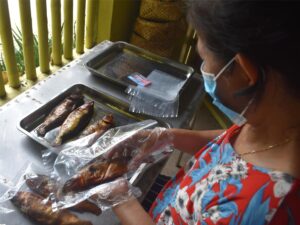
𝗟𝗶𝗴𝗵𝘁𝗶𝗻𝗴 𝘁𝗵𝗲 𝗢𝗹𝗱 𝗙𝗶𝗿𝗲 𝗔𝗻𝗲𝘄
When she was finally home in 2018, the village had changed, but the old smokehouse remained – weathered, leaning, but not broken, just like her. With less than ₱10,000 in savings and a steel will, Leonisa chose to begin again, one smoked fish at a time. She washed the soot-covered hearth, repaired the roof, and purchased her initial kilos of galunggong and bangus. The process was exhaustive. The fish had to be brined perfectly, set outside to dry beneath the temperamental sun, and smoked in sets. The smell of smoke pervaded her skin and clothing but she wore it like a protective armor.
She sold her tinapa at the market, silently smiling and offering a prayer. Other days, she came back empty-handed, with sore feet and a few pesos to her name. Some nights, she wept herself to sleep, wondering if she’d gone mad. But the children’s hunger – and laughter – got her going.
𝗔 𝗟𝗶𝗳𝗲𝗹𝗶𝗻𝗲 𝗖𝗮𝘀𝘁 𝗳𝗿𝗼𝗺 𝘁𝗵𝗲 𝗦𝗵𝗼𝗿𝗲
From 2020 to 2021, the Covid19 pandemic brought the world to a halt. Leonisa’s business fell victim to the massive wave of community quarantines that disrupted routines, shut markets, and left her smoked-fish products rotting. As the days went on, her savings and capital were bleeding day by day until it was hanging by a thread. Gradually, the life of her business and income was slipping through her fingers.
Serendipitously, in 2022, in response to the aftermath brought about by the pandemic, she was referred by the Roxas City Government Unit as one of the recipients of the Department of Social Welfare and Development (DSWD) – Sustainable Livelihood Program (SLP) under Micro-enterprise Development (MD) Track. The Php12,500 seed-capital-fund served her more than it provided capital – it provided her with room to maneuver. She invested in new equipment, supplies, and business training sessions with DSWD. She learned pricing, bookkeeping, and product branding from SLP’s Field Project Development Officer’s (FPDO’s) guidance. For the first time in her life, she didn’t feel like another food vendor – she felt like an entrepreneur.
“The grant was the matchstick, but I still needed to strike it against the stone of hard work,” she quips with a warm and wise smile.
𝗪𝗵𝗲𝗻 𝗢𝗻𝗲 𝗗𝗼𝗼𝗿 𝗢𝗽𝗲𝗻𝘀, 𝗠𝗼𝗿𝗲 𝗙𝗼𝗹𝗹𝗼𝘄
Leonisa’s luck changed for the good when news of her tasty tinapa spread out of the village like wildfire. With every happy mouth, she received a wave of recognition. Her concern toward quality made a difference. As result of the synergy between DSWD and its network of partners, a local non-government organization (NGO) came in, giving Leonisa new smoking implements – a type of fuel for the fire that had already been lit. Subsequently, the watershed moment came when she got a call from the Department of Science and Technology (DOST), which offered her technical assistance on packaging and labeling – she now had not only tinapa but eye appeal.
Not long afterward, an international NGO devoted to the empowerment of the rural woman came to her and offered to cover the costs of upgrading her smoking facility. Leonisa, with DSWD and partner-agencies behind her, not only made leaps in business, but now could be found at various festivals and expos and even on social media platforms. Her smoking facility is now a learning destination for Lakbay-Arals, as her enterprise began setting the gold standard in smoked fish research and production in and outside of the region which put Leonisa on the roadmap to be part of perceived benchmark in the smoked fish industry.
Moving forward today, Leonisa has found her golden goose with her steady market in Cebu City that reliably buys 30 kilos of her smoked fish weekly which provides a steady income for her business allowing it to not only float – but swim with the big fish.
Moreover, she was requested to deliver speeches and product demos in livelihood fora, where she shared her life – not splurge, but with the gritty reality of one who had weathered every storm she narrated. Her messages were a compass for women such as herself, who were surfing the wave of uncertainty.
“Partnerships don’t create value,” she likes to say to young entrepreneurs. “They multiply strength. Alone, I smoked fish. Together, we built a movement.”
Today, Leonisa collaborates with five government agencies including DSWD and two NGOs, all of which work towards sustainability, gender empowerment, and rural development. Through them, she has provided training to dozens of women from her community and other municipalities in fish smoking, creating a cascade effect that not only feeds families but feeds hope.
𝗦𝗺𝗼𝗸𝗲 𝗧𝗵𝗮𝘁 𝗧𝗲𝗹𝗹𝘀 𝗮 𝗦𝘁𝗼𝗿𝘆
Now, her brand – “Bakas Libas” which means “Strive Libas”, in honor of her home village, is a modest but proud name in home and markets for its clean, traditionally smoked products packaged in eco-friendly packaging that speaks of Leonisa and her heritage. She has a dozen women on her payroll – mostly single mothers, like herself – and keeps innovating without sacrificing the essence of her work.
In her tiny smokehouse, Leonisa still builds the fires herself, each morning before sunrise. She offers up prayers for good weather, for consistent sales, for the strength to keep going. Because for her, success is not a matter of fat figures or flashy medals – it’s about seeing her kids fed and finished school, her workers empowered, and her reputation sustained.
𝗧𝗵𝗲 𝗪𝗼𝗺𝗮𝗻 𝗕𝗲𝗵𝗶𝗻𝗱 𝘁𝗵𝗲 𝗦𝗺𝗼𝗸𝗲
Leonisa is not a heroine. She lacks a cape – there is only an apron with bits of salt and soot on it. But to those who know her story, she is nothing short of a miracle.
“I used to clean other people’s homes. Now, I’m building something of my own,” she says. “It may not be grand, but it’s mine. And it feeds more than just bodies – it feeds dreams.”
She is the living proof that when life burns you, you can re-emerge out of the flames. That with enough tenacity, even smoke from hardship can be the scent of victory.
So, if you ever find yourself passing through the village of Libas and you pick up the whiff of something heavy, rich, and smoky on the wind, think twice. It could just take you to Leonisa – the woman who transmuted brine into blessing, smoke into fare, and heritage into radiance.