Latest News
Ateneo scientists eye national power generation from Visayas tides

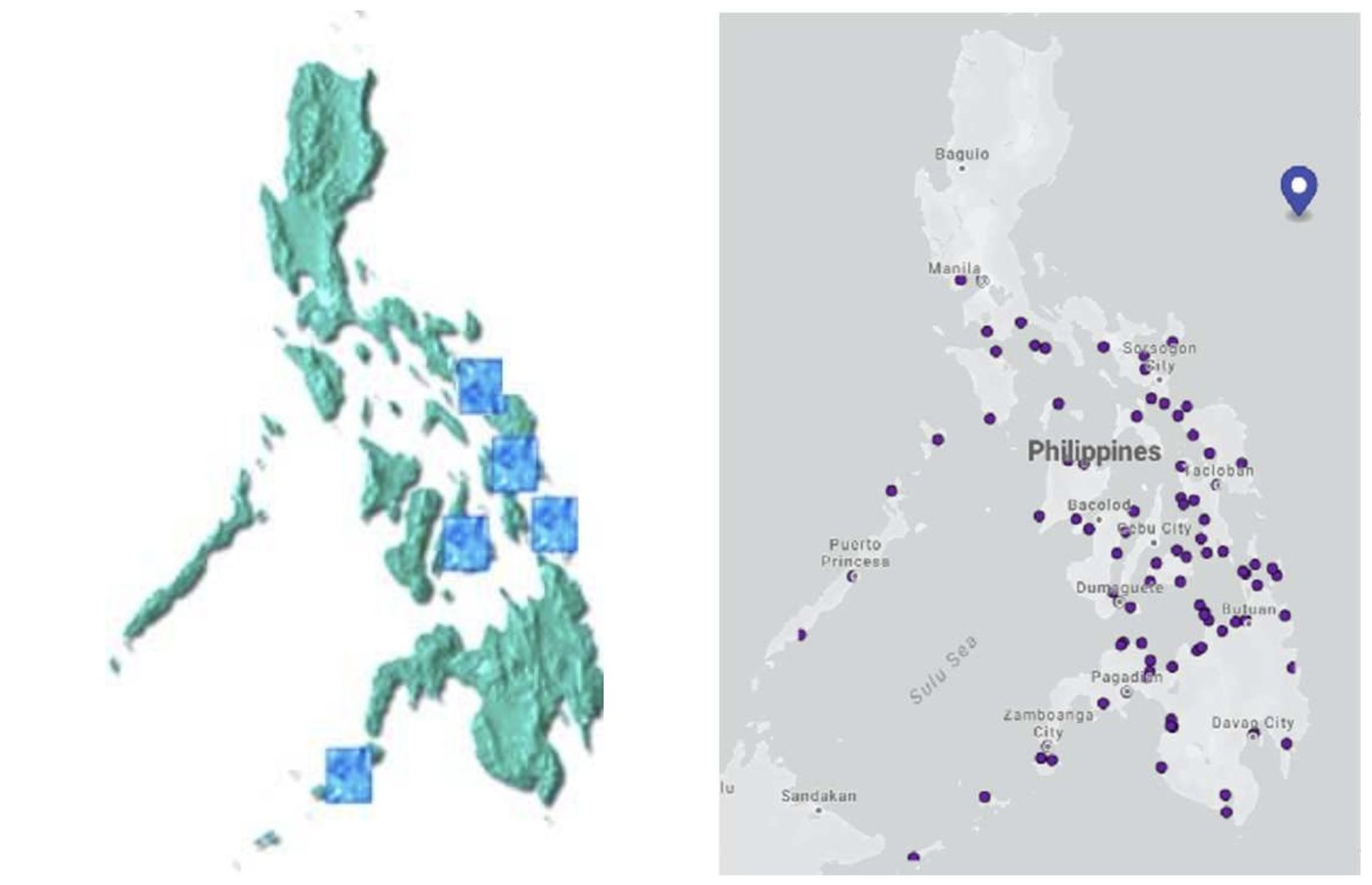
With its vast coastlines, the Philippines is no stranger to the unrelenting power of waves and tides. Being able to tap even just one-fifth of this power would already be equivalent to the nation’s current total energy capacity, say Justin Kyle O. Ricafort and King Harold A. Recto of the Ateneo de Manila University Department of Electronics, Computer, and Communications Engineering.
“According to independent studies, the Philippines’ coastal waters have a total theoretical potential power of as much as 170 gigawatts, compared to the country’s current installed capacity of 32 gigawatts,” explained Ricafort.
“Although not all of the ocean’s power is practically recoverable, harnessing even just 18 to 20 percent of the archipelago’s total tidal energy is theoretically sufficient to cover the Philippines’ current power consumption,” he added.
To do this, Ricafort and Recto are eyeing the use of submerged tidal-stream energy systems—mechanical generators which directly convert the constant movement of tides into electricity.
They identify the San Bernardino Strait, San Juanico Strait, and Cebu Strait as among the most viable sites for tidal-stream energy systems based on water current speeds, proximity to population centers, and access to electrical grids.
Near Capul Island in Northern Samar, a one-megawatt tidal-stream system is already being installed to replace diesel-powered generators supplying the remote community. The researchers say this could serve as a model for expanding marine renewable energy across the country.
A bidirectional tidal turbine system developed by Dutch company Tocardo, the HydroWing harnesses the gravitational pull of the tides and waves to generate clean, predictable renewable energy. Several of these devices are currently being installed near Capul island in San Bernardino Strait in Visayas, Philippines, to replace the diesel generators that currently power the small island town. SOURCE: Tocardo.com
For decades, the Philippines has relied heavily on expensive imported fuels like coal and natural gas, exposing the national grid to global market swings and price shocks. But global energy disruptions and geopolitical tensions have repeatedly exposed how fragile that dependence can be, often driving electricity prices higher for ordinary Filipinos.
Ricafort and Recto argue that tidal energy offers a different path: one rooted in resources already flowing through Philippine waters. Its vast coastlines and powerful marine currents could position the country to become a potential leader in ocean energy development in Southeast Asia and beyond.
But beyond generating electricity, researchers recognize tidal energy as a key opportunity to address the energy trilemma––the challenge of balancing sustainability, energy equity, and energy security.
While the technology remains costly compared to solar and wind setups, the research suggests that long-term investment and larger-scale deployment could eventually lower costs and expand access to reliable electricity, especially in underserved coastal areas.
The Ateneo researchers’ findings lay the groundwork for future investment in ocean energy infrastructure, with the Philippines poised to harness one of its most overlooked natural resources.
In the country, the sea has always been more than geography. It feeds families, carries livelihoods between islands, and shapes the rhythm of everyday life in coastal communities. For generations, Filipinos have lived beside moving water.
Ricafort and Recto believe that the sea is more than just a source of livelihood: in a time of deepening energy uncertainty, the answer to the country’s energy future may have been moving along its shores all along.
Justin Kyle O. Ricafort and King Harold A. Recto first presented their study, Assessing Tidal Energy Potential in the Visayas: Viability of the San Bernardino, San Juanico, and Cebu Straits, at the IEEE Region 10 Conference in October 2025.