Commentary
Unraised: The Attendee Who Never Raised His Hand

by Zeus Bajado
Lezo Integrated School
“Does anyone here, campus journalists, know the relationship between news and a feature?”
That was the question one of the resource speakers, Ms. Chantal Jade V. Tolores, posed to the room. Although someone answered, one student quietly lowered his eyes instead.
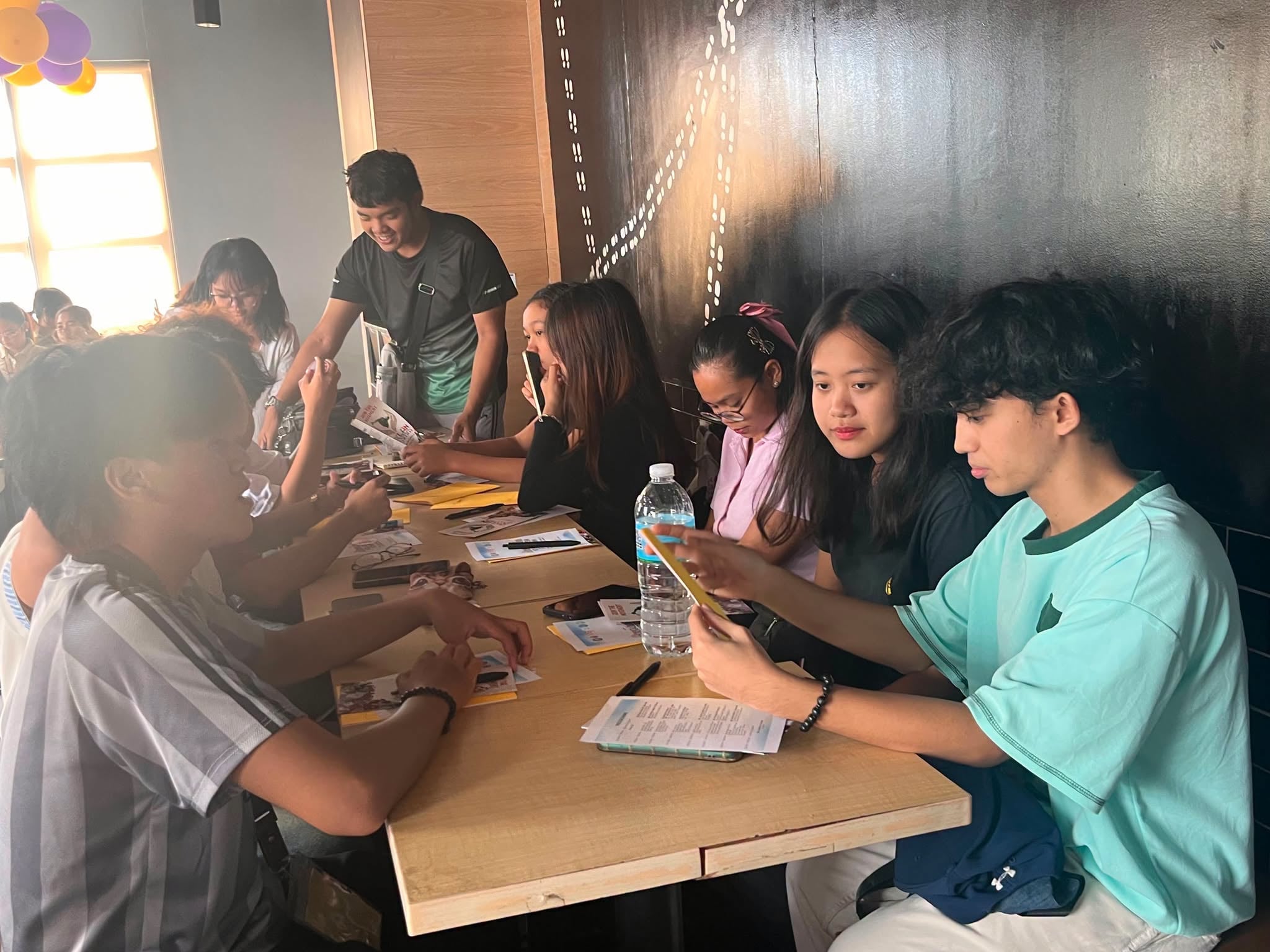
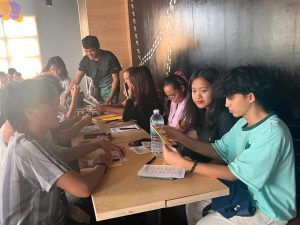
He found a seat in the left row with his friends, laughing with them before the first speaker took the microphone. Only after settling in did he notice the slow drip from a leaking pipe overhead. He simply shifted a little, smiled, and stayed where he was. As the afternoon unfolded, he focused more on following every lesson than on finding the courage to raise his own hand. While hands rose around the room, his pen almost never left the yellow notebook he took before the event started, leaving black smudges across his palm. He listened more than he spoke, carefully gathering ideas before they disappeared from the screen. By then, his notebook held more words than he had spoken all afternoon.
On July 18, students, campus journalists, youth leaders, and aspiring communicators gathered at McDonald’s Estancia Branch in Kalibo for the Movement of Gratitude Journalism and Volunteerism Symposium. The afternoon unfolded through sessions on the fundamentals of news and feature writing, digital storytelling for advocacy, public communication through the Philippine Information Agency, youth engagement with the Kalibo Local Youth Development Office, the power of communication in community building, and volunteerism through the Philippine National Volunteer Service Coordinating Agency’s Bayanihan Media Awards. At first glance, the program appeared to be a training on journalism. By its conclusion, it had quietly become a lesson on service.
He watched as every speaker, from journalists to government communicators and youth leaders, returned to the same idea through different words: communication is never an end in itself. It exists to serve people.
Ms. Prencess Gamboa-Garcia reminded the participants, “You cannot give what you don’t have.” Later in the program, Ms. Maria Solita Zaldivar-Guzman offered another thought that lingered just as deeply: “It’s about sharing not just what we have, but who we are.”
He wrote both sentences in the margin of his notebook.
For years, he believed that volunteering belonged to extroverts, to those who could command attention with effortless confidence. He thought journalism belonged to students who always had the right question, the quickest answer, or the loudest voice. That afternoon quietly argued otherwise. Every carefully copied note, every patiently verified detail, every story faithfully retold was also an offering, even if no one applauded it. Even remaining behind after a session to thank a speaker, organize notes, or help clean the messy table was participation.
He left the venue carrying no award, only his participation certificate and a small raffle rock he had won that afternoon. On its back were four handwritten words that lingered long after the symposium had ended: “Let your light shine.”
Yet the rock was not the heaviest thing he carried home.
Throughout the afternoon, volunteerism had been described as giving time, sharing skills, and serving without expecting recognition. Only later did he realize that journalism asked for the same things. It demanded time to listen, patience to verify, and the willingness to tell another person’s story before telling one’s own.
As the closing program ended, chairs scraped against the floor, conversations spilled toward the exit, and the room slowly emptied.
The student closed his yellow notebook, slipped it into his bag, and left the venue with his friends and with the small raffle rock resting in his palm. Somehow, it felt heavier than when he had won it that afternoon.
That almost became the ending of this story.
Almost.
Perhaps the story had never been searching for its ending. Only its author. The very attendee who never raised his hand.
He never answered the first question that afternoon. Perhaps he didn’t need to.
Because by writing this story, he finally did.
And that is the first lesson journalism taught him that afternoon: not every story begins by finding your voice.
Sometimes, it begins by learning to listen to everyone else’s.