Tech
Aklan Teacher Gives Schools a Free Survival Game as Active -Threat Drill Being Planned Nationwide

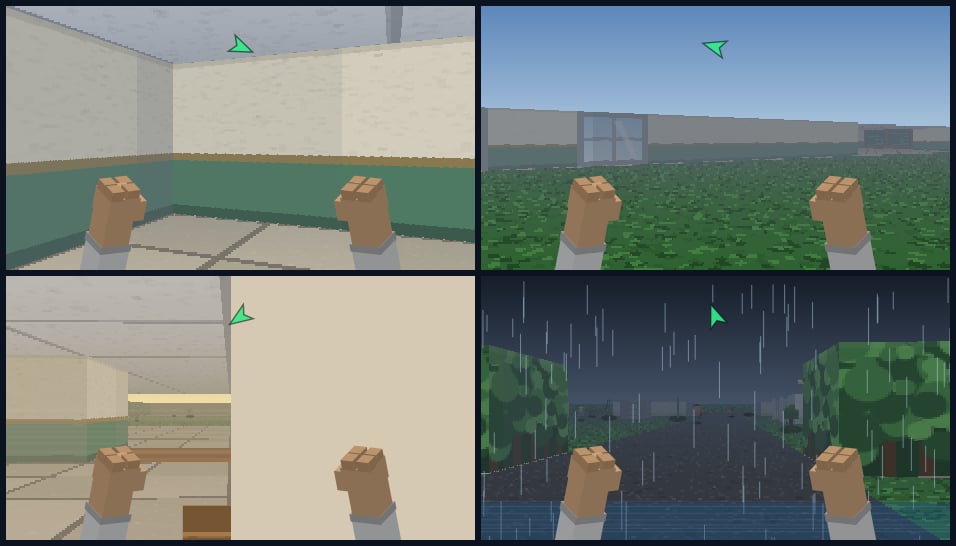
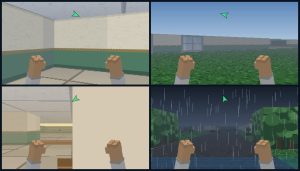
NUMANCIA, Aklan — As public schools across the country carry out simultaneous active-threat drills supposedly this week, a head teacher in this Aklan town has released something the Department of Education does not yet have a budget line for: a free video game that teaches learners exactly what to do when a disaster, or an armed intruder, reaches their campus.
Handa Ka Na Ba? — Survival Academy was built by Antoniño F. Tolentino, Head Teacher I at Camanci Sur Elementary School in the District of Numancia, Schools Division of Aklan. It runs on any phone, tablet or computer, requires no internet connection, and is passed from teacher to learner as a single file over Messenger, Bluetooth or a memory card.
It costs nothing. That, Tolentino said, was the whole design brief.
“Schools in far-flung barangays cannot buy software, and many of our learners have no data,” he said. “So it had to cost nothing and it had to work with the internet switched off. Otherwise the children who need it most are the ones who will never see it.”
The release lands in the middle of the biggest school-safety push in recent memory. DepEd piloted the country’s first active shooter drill at Manila Science High School in July and has since ordered regional offices to conduct simultaneous active-threat drills, with individual schools holding their own on separate dates. The measures are anchored on DepEd Order No. 006, series of 2026.
The drive followed the June 22 shooting at a Tacloban City high school that killed three students and injured 20 others — the second such incident in roughly two months.
DepEd has said it intends to consolidate school safety spending into a line item in its 2027 budget proposal, covering a system of roughly 48,000 public schools. Until that money exists, preparedness materials are largely whatever individual schools and teachers can produce.
Familiar on purpose
The game is deliberately built to look like Roblox — the blocky, first-person online platform that millions of Filipino children already play.
Roblox spent much of this year under Philippine regulatory pressure. The Cybercrime Investigation and Coordinating Center gave the company 30 days in March to answer concerns that predators were using it to target minors, and threatened a nationwide block. The government ruled out a ban in April after Roblox agreed to stricter monitoring, age-based accounts and a direct reporting channel for Philippine authorities.
Tolentino said copying the look was a shortcut into children’s attention.
“Our children already know how to move around a world that looks like this. I did not want them spending the first ten minutes learning the buttons. I wanted them learning where the exit is.”
“I am not here to attack anyone’s platform,” he added. “But if what our children absorb online pulls in one direction, something has to pull the other way. I hope this serves as a counterweight — same look, same fun, but what they take home is how to keep themselves and their classmates alive.”
Researchers have not established that video games cause real-world violence, and the Philippine case against Roblox concerned child sexual abuse and exploitation rather than violent behaviour.
Run, Hide, Tell
Seven missions cover preparation, earthquake, typhoon and flood, fire, lockdown, extreme heat and post-disaster recovery. Each opens with a briefing and closes with a debriefing listing what the learner did right and what they missed.
The lockdown mission teaches Run, Hide, Tell: escape if the route is clear, lock and barricade a room if it is not, kill the lights, silence phones, call 911, and report to a trusted adult once safe — closely mirroring the protocol DepEd demonstrated in its own drills, where participants barricaded doors, switched off lights, silenced devices and stayed low until police secured the area.
The player carries no weapon. Walking toward the intruder ends the mission in failure by design, followed by an explanation that confronting an armed person is never a learner’s job.
Other missions teach the 72-hour go-bag, Duck-Cover-Hold, shutting off the main breaker before evacuating, crawling below smoke, spotting heat stroke, and avoiding leptospirosis and dengue after floods recede. One requires the player to check an official advisory before believing a rumour — a lesson in not forwarding unverified messages.
The game is available in English and Filipino and issues a printable certificate to learners who finish all seven missions.
It credits the Schools Division of Aklan; Schools Division Superintendent Feliciano C. Buenafe, Jr., CESO V; Division DRRM Coordinator Sean Niño Axl T. Morales; and Public Schools District Supervisor Joyce M. Toriaga, PhD. Tolentino is the District of Numancia’s DRRM Coordinator and at the same time, almost 2 decades as a District ICT coordinator in DepEd.