
Commentary
Dispelling the Local Misconception on White Sand Production


By Raymond Sucgang
In our previous discussion, we identified two types of white sand: calcareous, like the sands in Boracay and Bohol, and siliceous, like those in Zambales. Calcareous sand, rich in calcium, tends to retain less heat from the sun compared to siliceous sand, which is rich in silicon. This difference is attributed to their varying specific heat capacities depending on their major element composition. As a result, walking barefoot on calcareous beaches feels cooler, while siliceous beaches can become uncomfortably hot, especially in direct sunlight.
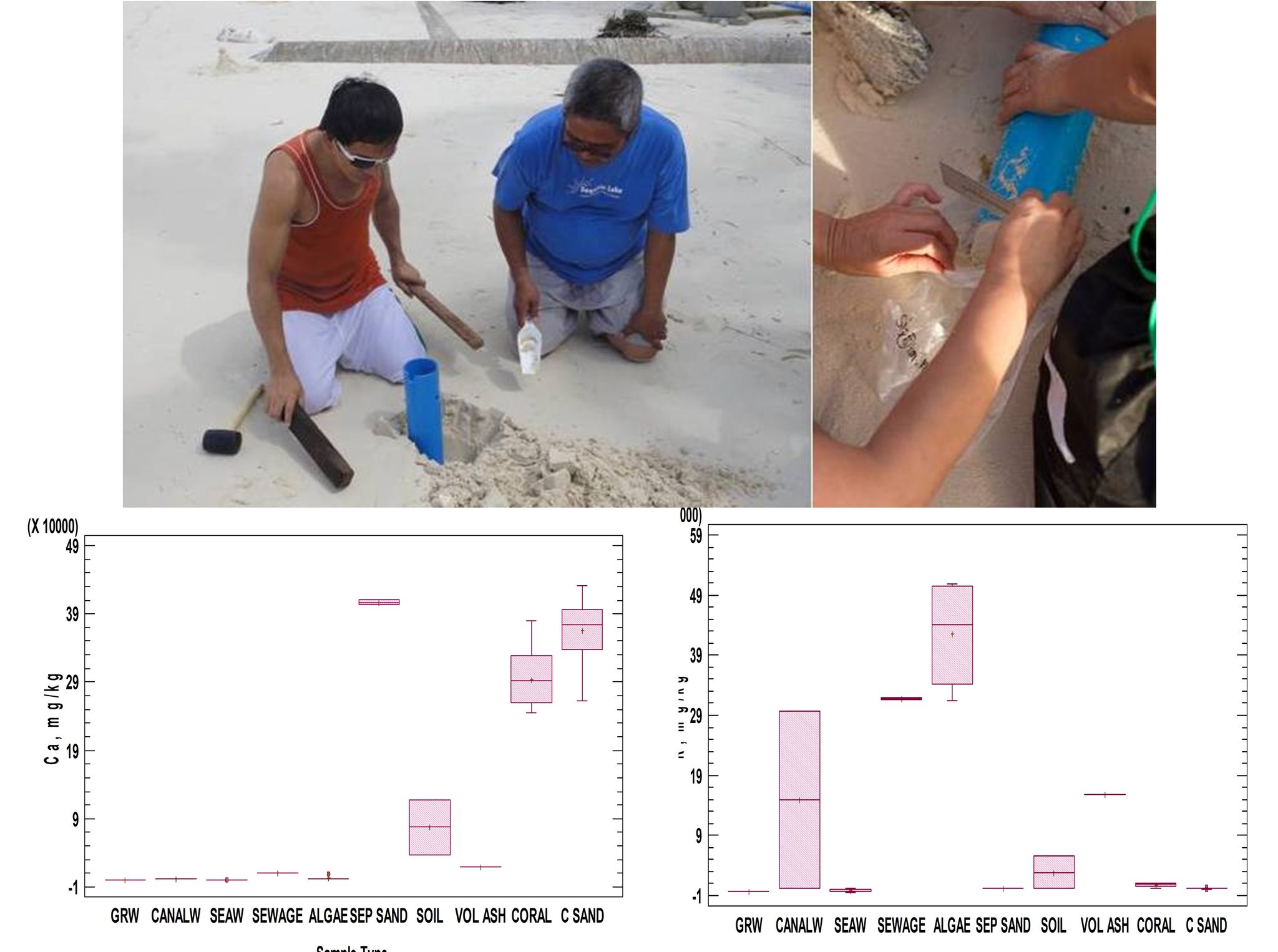
Let’s now delve into the process of white sand production and its contributing factors. Illustrated are box and whiskers plots depicting the major elements present in Boracay’s white sand, algae, terrestrial sand, and volcanic ash from Kanlaon. The box es on the left show the Calcium concentrations of the samples ; the boxes on the right show the Potassium concentrations. The data reveals that Boracay sand primarily consists of calcium, largely attributed to the presence of calcium carbonate found in corals. In contrast, the “lumot,” or algae, predominantly contains potassium, akin to vegetables such as “pechay.” Therefore, based on this data, we can infer that white sand production is facilitated by the abundance of calcium-rich sources like corals and limestone bedrock. Conversely, algae cannot decay into white sand as it lacks calcium—”You cannot give what you do not have,” as the saying goes. This should dispel the local misconception that algae can decompose to form white sand.
“Eh bakit nung nag collect ako ng lumot at binilad ko sa yero ay naging puti?” Talaga pong mamumuti naman yan kasi the chlorophyll in the algae will be destroyed by photodegradation from the sun. It may become like dried vegetable na white, but still that is not sand.
“Pero wala ba talaga na lumot na nagiging white sand? Actually meron po. They are the Halimeda species. They are calcareous (meaning calcium rich type), kaya pwede sila mag decay to become white sand. Pero wala na sila sa neritic zone ng Boracay. Nakakita ako ng halimeda when i was in grade 6. pero nung mag HS na ay wala na akong nakikitang halimeda.
The ones that bloom during summer are the cyanobacterial mats– blue green algae — or greentides– at hindi pwedeng maging white sand.
(Sucgang is a senior researcher of the Philippine Nuclear Research Institute-Department of Science and Technology)













Pingback: Another Line of Evidence Debunking the Belief on the role ofthe ‘Lumot’ to White Sand Production – Boracay Island News