Business
Is AI Making Employees More Productive but Less Mentally Healthy? PVP Raises Workplace Concerns

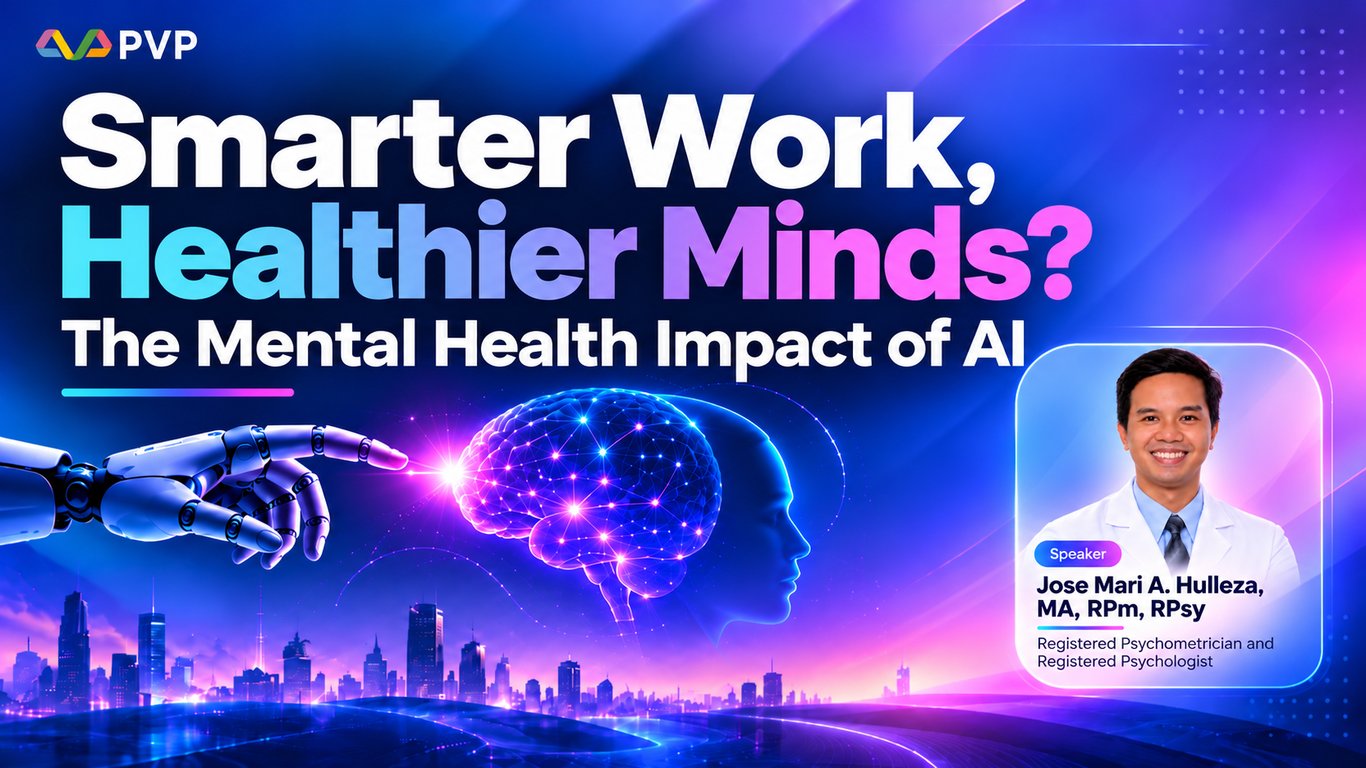
As artificial intelligence reshapes the workplace, a critical question emerges: Is greater productivity coming at the expense of employee well-being? Premier Value Provider, Inc. (PVP), a Philippine-based workforce performance solutions company, explored the mental health risks and benefits of AI during its recent webinar, “Smarter Work, Healthier Minds? The Mental Health Impact of AI,” highlighting why responsible technology adoption, supportive leadership, and human connection remain essential to healthier workplaces.
As artificial intelligence (AI) continues to transform how people work, organizations are embracing its ability to streamline tasks, accelerate decision-making, and improve productivity. But amid the growing enthusiasm for AI, one important question remains: Are workplaces becoming more efficient at the expense of employee well-being?
This question was at the center of Premier Value Provider, Inc. (PVP)’s recently concluded mental health webinar, “Smarter Work, Healthier Minds? The Mental Health Impact of AI,” held on October 28, 2026.
The session is facilitated by Jose Mari A. Hulleza, MA, RPm, RPsy, a Registered Psychometrician and Registered Psychologist, who explored the opportunities and potential psychosocial risks associated with AI adoption, highlighting why technology must support- not replace- human care, critical thinking, and meaningful workplace relationships.
The Hidden Mental Health Risks of AI in the Workplace
While AI offers opportunities to reduce repetitive tasks and simplify increasingly complex workloads, the webinar highlighted how excessive dependence on technology may create new challenges for employee mental health.
Among the concerns discussed were reduced opportunities for independent problem-solving, declining confidence in one’s abilities, and fewer meaningful interpersonal interactions.
Hulleza explained how constantly turning to AI for answers, ideas, and decisions could gradually limit opportunities for employees to exercise their own judgment and critical thinking skills.
The discussion also explored the growing use of conversational AI for emotional support, emphasizing that while these tools may provide accessible information and interaction, they cannot replace genuine empathy, personal relationships, or professional mental health care.
Can AI Really Reduce Employee Burnout?
One of the webinar’s most thought-provoking discussions centered on the relationship between AI, workload, and employee burnout.
Although AI can automate repetitive tasks and reduce administrative burdens, Hulleza emphasized that improving efficiency does not automatically address the organizational conditions contributing to employee stress.
Unrealistic deadlines, excessive performance expectations, unclear priorities, and unhealthy workplace systems may continue to affect employees even after AI tools are introduced.
The discussion challenged organizations to look beyond technological solutions and examine whether their policies, leadership practices, and work environments genuinely support employee well-being.
Putting People at the Center of AI Adoption
Beyond identifying risks, the webinar highlighted how organizations can use AI more responsibly to support healthier workplaces.
These approaches include developing clear workplace AI policies, protecting data privacy, providing continuous employee education, encouraging independent judgment, and evaluating how AI implementation affects workload and psychological safety.
The discussion also emphasized the value of establishing a baseline understanding of employees’ mental health before introducing workplace changes or increasing performance expectations.
As highlighted in the webinar presentation:
“AI and technology can enhance productivity, but protecting mental well-being remains a human responsibility.”
For PVP, the discussion reinforces the importance of evidence-informed workplace strategies that consider both organizational performance and the people behind it.
As The Philippines’ Data-Driven Workforce Performance Partner, PVP continues to promote conversations and solutions that help organizations better understand workforce experiences, strengthen leadership, and create healthier, more sustainable workplaces.
Explore the Full Webinar Insights
For a more detailed discussion of the webinar’s key takeaways, including the mental health risks and benefits of AI and practical considerations for organizations, read PVP’s feature article:
Smarter Work, Healthier Minds? What Organizations Need to Know About AI and Employee Mental Health
READ THE FULL ARTICLE – https://www.pvpi.co/stories
Watch the full webinar: https://youtu.be/Ka3Qxcdubys
To learn more about PVP’s workforce analytics, organizational mental health assessments, training programs, and organizational development services, visit https://www.pvpi.co.
This press release has also been published on VRITIMES