Latest News
𝐏𝐒𝐀, 𝐀𝐒𝐔 𝐭𝐫𝐚𝐢𝐧 𝐋𝐆𝐔𝐬 𝐢𝐧 𝐀𝐤𝐥𝐚𝐧 𝐨𝐧 𝐛𝐚𝐬𝐢𝐜 𝐬𝐭𝐚𝐭𝐢𝐬𝐭𝐢𝐜𝐬 𝐭𝐨 𝐛𝐨𝐨𝐬𝐭 𝐝𝐚𝐭𝐚-𝐝𝐫𝐢𝐯𝐞𝐧 𝐠𝐨𝐯𝐞𝐫𝐧𝐚𝐧𝐜𝐞

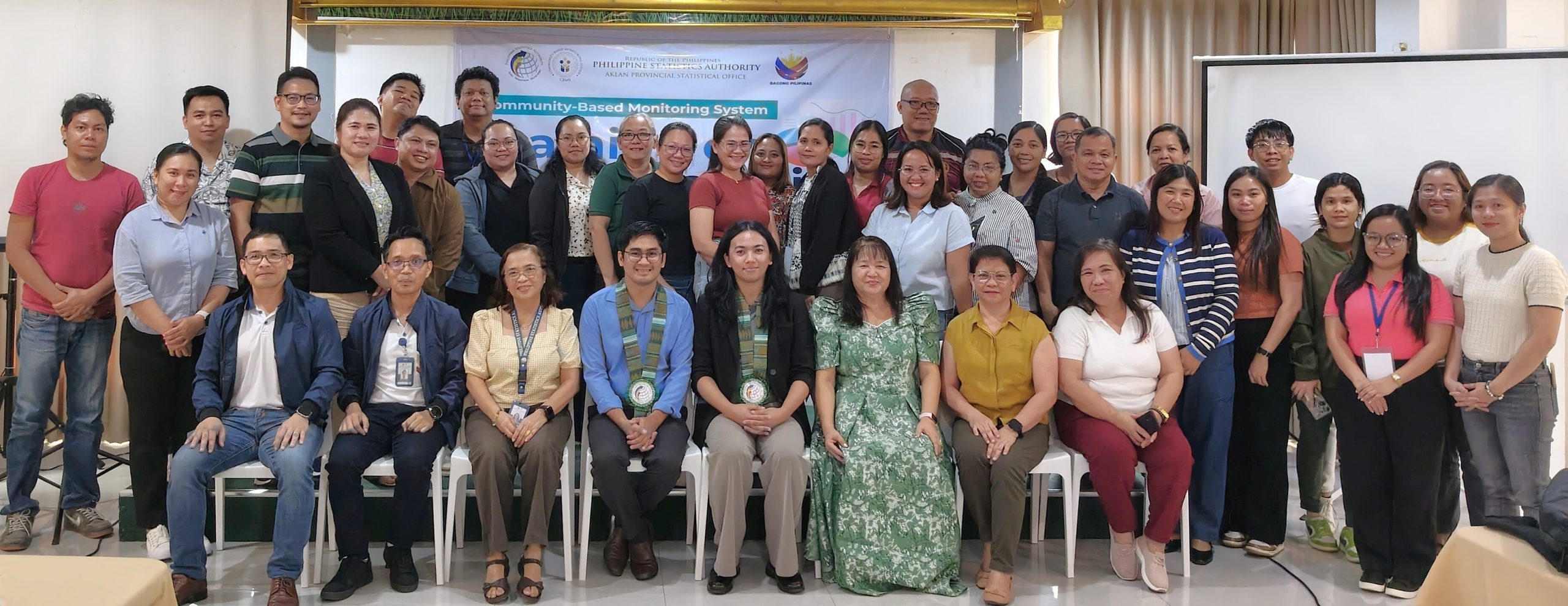
Kalibo, Aklan- In line with efforts to enhance the statistical capacity of local government personnel—particularly those involved in planning and program formulation—the Philippine Statistics Authority (PSA) Aklan Provincial Office, in partnership with the Aklan State University (ASU) College of Arts and Sciences, conducted a three-day training on Basic Statistics last March 11–13, 2026, at Regenio’s Gastropub (Vanyard Hotel) in Kalibo.
The training aims to equip LGU personnel with knowledge and skills in the fundamentals of statistics, promote the effective use of local data—including Community-Based Monitoring System (CBMS) indicators—for evidence-based decision-making, and strengthen the institutionalization of statistics in local governance to improve public service delivery.
ASU instructors Mr. Kasparov I. Repedro, and Mr. Fervin D. Samortin served as resource persons during the training, where they provided insightful discussions on data analysis techniques and emphasized the critical role of statistics in effective governance.
In his sessions, Repedro highlighted the importance of statistics in identifying community needs, measuring the impact of programs and policies, and analyzing trends. He underscored that statistics play a vital role in planning and policy development, resource allocation, monitoring and evaluation, as well as in promoting transparency and accountability in governance.
“By using accurate statistics, LGUs can identify priority sectors, communities, and key development indicators. Otherwise, planning becomes reactive and inefficient,” Repedro said, highlighting how data-driven insights support targeted interventions.
He added that statistical analysis enables local planners to transform raw data into meaningful information that supports sound and evidence-based decision-making.
Meanwhile, Mr. Samortin pointed out in his lectures that statistics go beyond numbers, as they reflect the real conditions of people. He emphasized that data collection alone is not enough to address community concerns, but appropriate actions must be undertaken to make governance effective.
He also reminded participants that while statistics can suggest possible actions, they do not automatically establish causation. Thus, he encouraged LGUs to consult communities, conduct field assessments, and gather stakeholder inputs to ensure that policies and programs are comprehensive and inclusive.
The three-day training covered a comprehensive range of topics discussed, including Introduction to Statistics; Key Concepts and Uses of Statistics in Local Governance; Measures of Central Tendency; Measures of Dispersion; Data Visualization; Introduction to Statistical Tools; Application of Statistics in Local Planning; and Interpretation of Statistical Results.
Mr. Peter S. Mangilog, the Senior Statistical Specialist, also facilitated sessions on types of data sources, data collection, and data quality, and enriched his discussion by sharing PSA data gathering practices and experiences encountered in the conduct of CBMS, and other related surveys and censuses of the agency.
Participants were likewise trained in the use of advanced Microsoft Excel functions to facilitate easy data analysis and the generation of descriptive statistics, which they can apply in report preparation, policy formulation, and program targeting.
To reinforce learning, trainees participated in a workshop in which they analyzed datasets and presented their findings in plenary. This activity enabled facilitators to assess their understanding and application of the concepts discussed.
A total of 35 participants from various municipalities in Aklan, including representatives from the provincial government, attended the training, demonstrating strong commitment among LGUs to strengthening data-driven planning and governance.