Latest News
Fix it or finish it? Manila Calling forum debates SK’s future



Should the Philippines’ youth governance council be completely dismantled, or does it simply need better support to thrive? This was the central question at the latest installment of Manila Calling, titled “Ayusin o Tapusin: The Sangguniang Kabataan Debate,” held last June 19 at Crisostomo, One Ayala.
Organized by the Konrad-Adenauer-Stiftung Philippines, the forum brought together policymakers, leaders, and academics to unpack the growing friction surrounding the Sangguniang Kabataan. The program provided a comprehensive look at both the structural flaws and the untapped potential of the youth council.
The SK has recently come under intense scrutiny. Critics point to systemic issues threatening its credibility such as low attendance at meetings, high resignation rates among inactive officials, and alarming cases of financial mismanagement and lack of accountability.
For many, these issues raise a hard question: Is the SK still serving its original purpose?
Conversely, defenders of youth governance argue that the problem isn’t the youth, but the environment they operate in. Proponents note that despite a lack of formal training and structural support, countless SK councils nationwide continue to successfully lead community programs and demonstrate responsible leadership when given the opportunity.
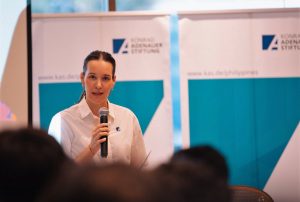
Daniela Braun, Country Director of KAS Philippines, opened the event by emphasizing Manila Calling’s role in delivering timely insights on domestic and regional issues.
Leon Flores III of the Ateneo School of Government delivered a lecture entitled “Between Promise and Problems: Rethinking the Sangguniang Kabataan.” His presentation laid the groundwork for analyzing whether the SK’s weaknesses are terminal or simply growing pains.
A panel of young leaders offered direct reactions to the critique. Keil Custillas, President of the SK Federation of Pasig City, and John Andrian Tejido, Chairperson of Barangay GSIS, San Pedro City, Laguna, shared their real-world experiences, highlighting the lack of adequate training and resources provided to young officials.
Jerome Jogno, Senior Program Manager of KAS Philippines, moderated the open discussion which allowed the participants to brainstorm actionable, practical ways to strengthen youth participation in local governance without resorting to abolition.
Lois Conrad Salumbides, Secretary of the Sangguniang Bayan of Lucban, Quezon Province, concluded the program with his closing remarks which underscored the importance of continuous institutional support.
While the debate over “Ayusin o Tapusin” remains open, the consensus from the Manila Calling forum was clear: The passion of the Filipino youth is undeniable. For the SK to succeed, the national government and local communities must bridge the gap between institutional expectations and the actual support provided to these young leaders.