Environment
Ceremonial Cross Turned Over to Catanduanes as 2027 Host of Laudato Si’ Congress

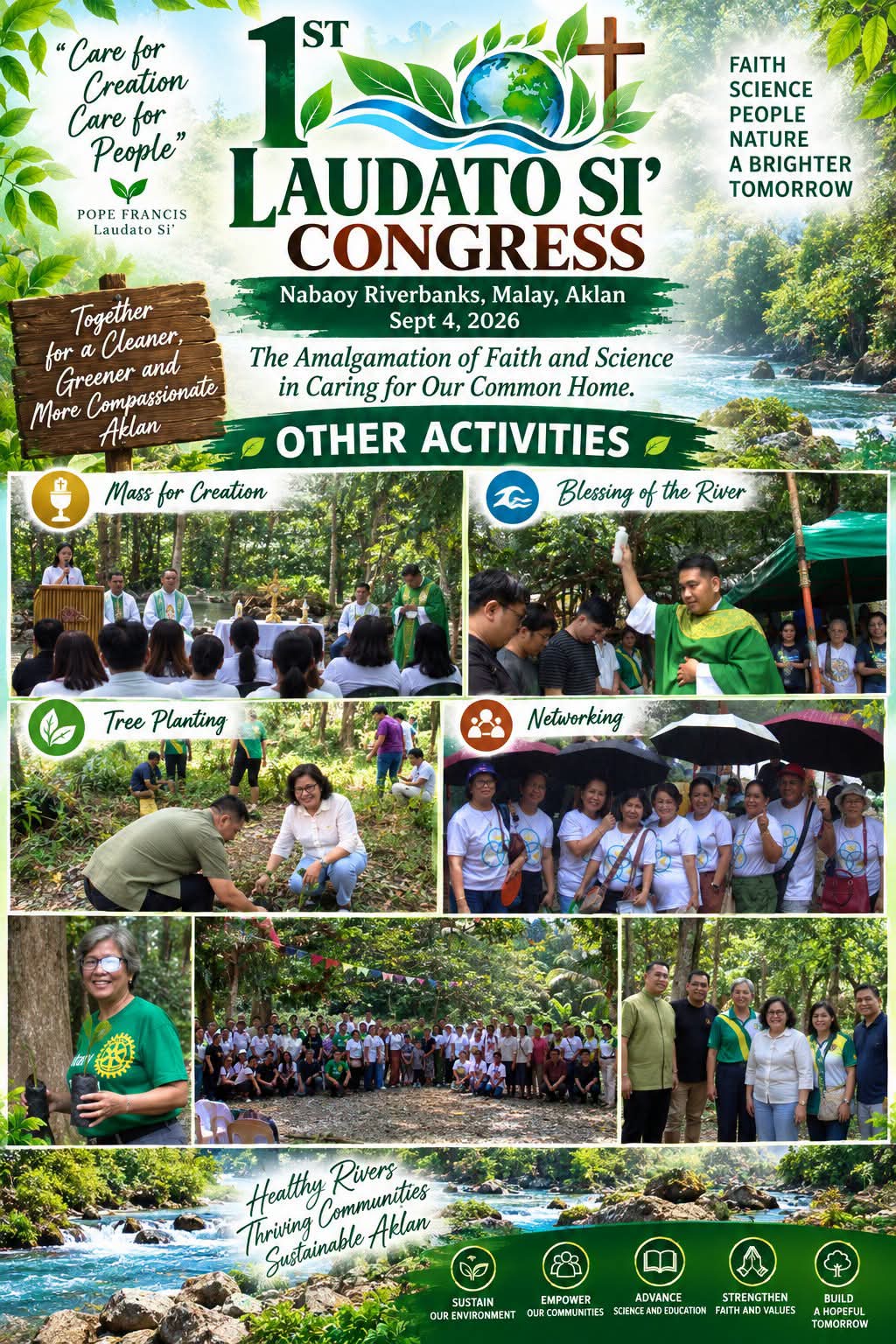
Malay, AKLAN — The ceremonial cross of the Laudato Si’ Congress has been formally turned over from the present host, Laudato Si’ Aklan Core, to Laudato Si’ Catanduanes, which will host the Second Laudato Si’ Congress in 2027.
The turnover marked the continuation of the movement’s advocacy for environmental protection, ecological restoration and the care of the country’s “Common Home.”
The ceremony was witnessed by the Executive Director Rodne R. Galicha of Laudato Si’ Philippines from Romblon, along with members and convenors of the Laudato Si’ movement.
Among those who shared reflections from the congress was Raymond Sucgang of the Philippine Nuclear Research Institute (PNRI-DOST) and one of the convenors of the Laudato Si’ Congress.
Sucgang said one of his deepest realizations from the gathering was that environmental rehabilitation should not be viewed solely from a human perspective.
“Ang environmental rehabilitation ay hindi tungkol sa atin lamang,” Sucgang said, emphasizing that restoration must include the entire ecosystem—from the soil and water to trees, birds, bats, insects and other living creatures that depend on nature.
He pointed out that planting native fruit-bearing trees should not simply be measured by how much food or resources humans can obtain from them. Wildlife must also be considered when planning ecological restoration.
Sucgang explained that replacing a naturally wild area, where native berries and other food sources sustain birds, bats and other animals, with plantations of mangoes, bananas or other crops can unintentionally alter the natural food sources and habitats of wildlife.
He challenged environmental advocates to ask whether their projects are truly restoring an ecosystem or merely replacing it with a landscape that is more convenient for people.
He also recalled a lesson from his childhood, when his family would dry harvested rice along the road. His mother, he said, would not drive away the sparrows that came to feed on the grains.
“Hindi naman daw makakaubos ng isang kilo ang mga ’yun. At hayaan lang, baka wala na silang makain,” he recalled.
For Sucgang, tree planting should therefore go beyond carbon sequestration and the simple counting of trees planted.
He said genuine ecological restoration should include soil regeneration, protection of water resources, habitat restoration, provision of food for wildlife, biodiversity conservation and the restoration of ecological balance.
“Dahil ang kalikasan ay hindi natin pag-aari. Tayo ay bahagi lamang nito,” he emphasized.
He added that caring for the environment means recognizing that humans share the planet with countless other species that also depend on healthy ecosystems for survival.
“Kung talagang mahal natin ang ating Common Home, matuto tayong magtanim hindi lamang para sa ating mga anak at apo, kundi pati para sa mga nilalang na walang boses upang sabihin na, ‘Kasama rin kami rito,’” Sucgang said.
The reflection underscored the central message of the Laudato Si’ movement: restoration means giving nature a chance to heal, rather than simply reshaping nature according to human needs.
With the ceremonial cross now transferred to Catanduanes, the province begins its preparations to welcome participants to the Second Laudato Si’ Congress in 2027, continuing the call to care for the Common Home.
Laudato Si’! Care for our Common Home.
If you want, I can also make this into a �stronger Philippine local-news version with a shorter headline and more Aklan/Catanduanes angle.