Environment
EcoWaste Coalition Appeals to Concerned Communities Not to Burn Post-Typhoon Debris

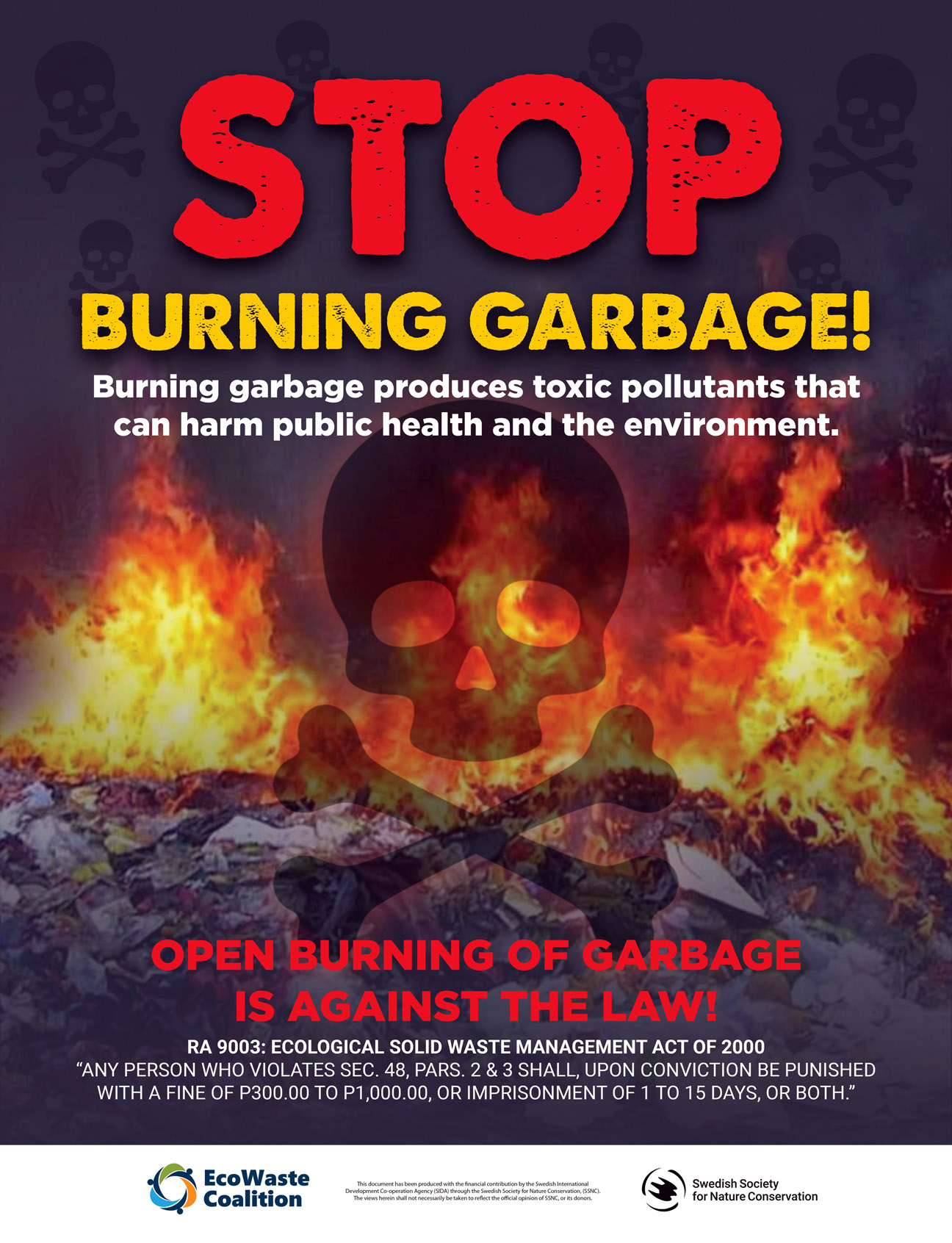
Quezon City- With the exit of super typhoon Tino and as super typhoon Uwan looms, the environmental watchdog group EcoWaste Coalition appealed to all citizens not to set post-disaster debris on fire.
Disaster debris refers to waste and wreckage resulting from typhoons and other destructive events, and may include fallen trees and twigs, wood scraps and other organic matter, parts of homes, flood-soaked furniture, broken appliances, and general trash.
“Our hearts go out to the communities devastated by super typhoon Tino and we hope they are receiving the support from the public and private sectors for their essential needs,” said Aileen Lucero, National Coordinator, EcoWaste Coalition.
“As families pick up the pieces and make every step to bounce back, we appeal to everyone not to burn Tino’s debris as this may further put their health at risk,” she said. “Please work with your local authorities in ensuring the ecological management of post-typhoon waste in your neighborhood.”
The EcoWaste Coalition’s call against the open burning of disaster waste reinforced the timely reminder by the government of Bacolod City, one of the many places hardest hit by super typhoon Tino, against such a hazardous practice.
The local Bureau of Fire Protection had earlier confirmed that the smoke billowing from some areas of the city following the onslaught of the super typhoon was “most likely due to the burning of trees and branches.”
“As the City Government continues with its road clearing and cleanup operations, Mayor Greg G. Gasataya is asking everyone to please avoid burning debris in your backyards. This practice is prohibited by law and can cause health and safety problems for our community,” the Bacolod City Communications Office (BCCO) said through a statement.
Open burning is banned under R.A. 8749, or the Clean Air Act and R.A. 9003, or the Ecological Solid Waste Management Act as this act produces toxic environmental pollutants, while destroying materials that can still be put to good use such as turning organics into compost to enrich and improve soil health.
According to R.A. 8749, “no person shall be allowed to burn any materials in any quantities, which shall cause the emission of toxic and poisonous fumes.” R.A. 9003 lists “the open burning of solid waste” as a prohibited act.
Open burning generates a number of environmental pollutants from the byproduct smoke, residue and ash such as dioxins and furans, particulate matter, heavy metals, polycyclic aromatic hydrocarbons, volatile organic compounds, formaldehyde, and greenhouse gases, the EcoWaste Coalition said.
These pollutants are known to cause a variety of adverse health effects such as eye, throat and skin irritation, headaches, respiratory ailments, asthma, bronchitis, heart attacks, cancers and other diseases, the EcoWaste Coalition said.
Exposure to dioxins and furans in particular “can cause reproductive and developmental problems, damage the immune system, interfere with hormones and cause cancer,” according to the World Health Organization (WHO).
Babies in the womb, children, senior citizens, persons with chemical sensitivities and those with underlying medical conditions are prone to the negative health effects of open burning, the EcoWaste Coalition further warned.
In lieu of open burning, open dumping and other polluting practices, the EcoWaste Coalition appealed to all households and waste generators to apply the best practices in ecological waste management excluding incineration in keeping with the goals of RA 9003 and RA 8749.