Lifestyle
In the Shadow of Panay: The Quiet Magic of Carabao Island

By: Dr. Jimmy Maming/Ms. Graciela G. Crispin|Mr. Mr. John Christian Miguel
Welcome to Carabao Island!
Foundations of Faith and Frontier (1622–1635). While Carabao Island sits today as a serene escape just a stone’s throw from the bustling coast of Panay, its roots are deeply intertwined with the early colonial spiritual map of the Philippines. Long before formal structures appeared, the archipelago of Romblon held ancient, sacred significance. Archaeological evidence from the 13th and 14th centuries- most notably the renowned cave burials in Banton- reveals a pre-colonial culture that was already sophisticated and deeply connected to the sea.
The Spanish era brought a new administrative order. Though explorers had navigated these waters as early as 1572, the formal Christianization of the region was a gradual process. It began in Banton in 1622, eventually reaching the island of Romblon in 1631. A pivotal moment in this history occurred on July 27, 1635, when the Diocese of Cebu officially transferred spiritual jurisdiction to the Province of San Nicolas de Tolentino of the Discalced Augustinians. This transfer marked the beginning of centuries of Augustinian influence, shaping the social and architectural fabric of the islands.
The Great Migration:
A Demographic Mosaic (1818–1853). The mid-19th century served as a catalyst for Romblon’s transformation from a remote outpost into a vibrant cultural crossroads. Originally annexed to Capiz in 1818, the archipelago’s growing strategic importance led to its elevation to a comandancia politico-militar in 1853. While this administrative shift was designed to bolster Spanish oversight, the true story of this era lay on its people.
A dramatic surge in population reshaped the landscape. The indigenous Ati of Panay and the Mangyan of Mindoro soon shared the islands with waves of migrants. Unhan and Nayon Visayans arrived from northern Panay, bringing new agricultural traditions to Tablas Island.
Meanwhile, Bantoanons expanded their reach across the smaller isles, and by the late 1800s, Tagalog settlers from Batangas introduced a northern influence to the demographic mix. This melting pot of Visayan, Tagalog, and indigenous cultures created the unique linguistic and social identity that Romblon, and by extension Carabao Island, celebrates today.
Revolution and the Dawn of Sovereignty (1898).
As the 19th century drew to a close, the winds of the Philippine Revolution reached the shores of the archipelago. In 1898, General Emilio Aguinaldo sought to consolidate the nascent revolutionary government by dispatching his most capable leaders to the Visayas. While General Ananias Diocno and Leandro Fullon waged their campaigns on the larger island of Panay, the Caviteño General Mariano Riego de Dios directed the liberation of Romblon.
The climax of the colonial era came on July 25, 1898,when Riego de Dios’s forces successfully seized the provincial capital, capturing key Spanish officials in a swift maneuver that signaled the inevitable collapse of colonial authority.
The transition was made official on July 29, when the Spanish politico-military governor, Don Carlos Mendoza y Cerrada, signed the act of surrender. With a few strokes of a pen, over three centuries of Spanish ruleevaporated, and Romblon situated between the giants of Mindoro and Panay stepped proudly into the fold of the burgeoning Philippine Republic.
Today, Carabao Island remains a testament to this history: a quiet sanctuary whose peace was earned through centuries of migration, faith, and revolution.
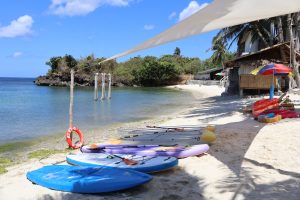
The New Tourism Frontier.
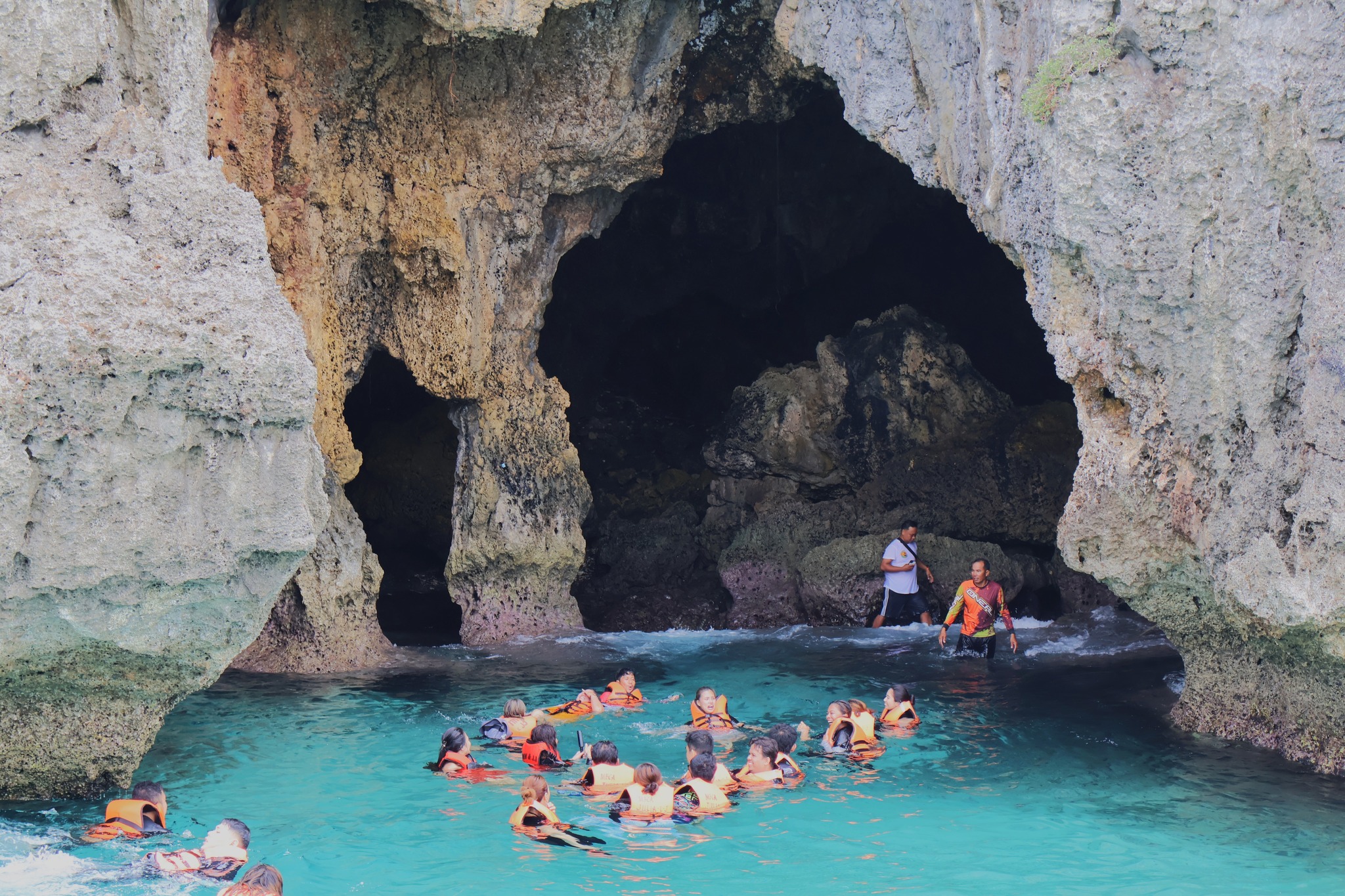
The burgeoning tourism landscape of Carabao Island is currently defined by its delicate transition from a “satellite” attraction of Boracay into a destination with a distinct identity of its own. For years, the island functioned primarily as a brief escape for travelers seeking to flee the crowds of White Beach, offering rugged cliff-diving spots like Cathedral Cave and Kuding-Kuding as day-trip novelties. However, recent discussions among local stakeholders and provincial planners in Romblon have shifted toward establishing San Jose as a primary hub. This movement is fueled by the island’s expansive 2,890-hectare landscape three times the size of Boracay which offers the space and geographical diversity that its more famous neighbor can no longer provide, including the potential for high-end eco-resorts and specialized heritage sites.
Central to this emerging narrative is the concept of “The Anti-Boracay” appeal. Travelers and developers alike are increasingly valuing the “quiet magic” of Lanas and Said Beaches, where the absence of massive commercial malls and loud nightlife is the primary draw. There is a concerted effort to promote community-based tourism, ensuring that the local motorcycle tour industry and family-owned homestays remain the backbone of the economy. By prioritizing this “barefoot luxury” and slow-travel vibe, Carabao Island aims to attract a demographic of travelers who seek authenticity over urbanization, effectively positioning itself as a sanctuary for those who remember what the region felt like thirty years ago.
However, this growth is not without its complexities, as the debate over infrastructure versus preservation intensifies. Proponents of the “Grand Leisure Resort” vision argue for modernized piers and more consistent power to support large-scale development, while environmentalists and local residents express concern over the island’s limited freshwater lens and ecological carrying capacity. Furthermore, there is a growing interest in diversifying the island’s portfolio through “dark tourism” and historical preservation, specifically centered on the 1944 sinking of the Japanese battleship Musashi nearby. By weaving together its pristine natural assets with these deep historical roots, Carabao Island is navigating a path toward a tourism model that balances modern economic necessity with the quiet, ancestral charm that makes it unique.