Environment
Local governments to lead the renewable energy transition in the Philippines, ASEAN


Local government units in the Philippines are leading their respective energy transition efforts by adopting renewable energy (RE) – this is the highlight of the second installment of the Philippine Energy Transition Dialogue 2025, held December 3-4, in Quezon City.
With the theme “Localizing the Energy Transition: Ensuring Energy Security and Resilience through Renewable Development,” over 120 representatives from national government agencies, local government units (LGUs), and civil society organizations gathered to discuss the potentials and urgency of localized energy transition efforts, emphasizing how deploying RE is equitable, resilient, and economically beneficial for communities across the Philippines.
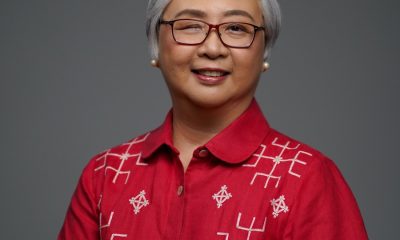
“Renewable energy is not only the path to a cleaner and more resilient energy system — it is the way forward for inclusive economic development, community empowerment, and a sustainable future. Together, we can ensure that the energy transition delivers clean, affordable, and secure energy for every Filipino, across every community, and for generations to come,” said Undersecretary Mylene Capongcol of the Department of Energy (DOE).
Local chief executives and officials from the provincial governments of Iloilo, Leyte, Eastern Samar, and Ilocos Norte; city governments of Butuan and Quezon City; and municipal governments of Guiuan, Eastern Samar and Paranas, Samar shared their first-hand experiences in adopting RE and strengthening local energy planning in their respective localities.
Undersecretary Capongcol also affirmed the DOE’s commitment to support LGUs’ energy transition efforts through the implementation of the Department’s key programs, such as the Green Energy Auction Program (GEAP) and deployment of mobile energy systems (MES).
“At the heart of this transformation are strong local leaders and champions. Across the Philippines, we see communities stepping up and driving initiatives that protect their constituents,” said Angelo Kairos dela Cruz, Executive Director of the Institute for Climate and Sustainable Cities (ICSC).
“These localities prove that when communities actively shape their energy systems, renewable energy becomes a tool for climate resilience, inclusive development, and social equity. Indeed, the future of energy is local,” he added.

Panel discussions were held on international cooperation, local governance, and streamlined permitting processes for RE on December 3. Breakout sessions on December 4 focused on opportunities to accelerate RE deployment, including through technological innovation, financing, sectoral approaches such as agriculture and industry, microgrids, competitive procurement, and community empowerment.
“The shift towards greener energy and self-sufficiency can reduce reliance on international fuel markets and help protect Filipino households from external price shocks. We must continue to streamline permitting and regulatory processes, enhance grid resilience, and secure the substantial financial transition as required for RE projects,” said Palawan Second District Representative Jose Alvarez through a video message.
With the Philippines serving as chair of the Association of Southeast Asian Nations (ASEAN) in 2026, the country is in a position to champion renewable energy as a driver of resilience, energy security, and shared prosperity, said Secretary Robert Borje of the Climate Change Commission (CCC).
“This moment calls for decisive action. The technologies are advancing, investment needs are clear, and the benefits of cooperation across the region are stronger than ever. It is time to take calculated risks — smart, forward-looking decisions that will pay off not just for today’s consumers, but for generations to come,” added Frederic Tesfay, GIZ Philippines’ Team Lead for Energy Projects.
On the sidelines of the Dialogue, local chief executives from select provinces and municipalities of Eastern Visayas pledged to support the advancement of a just energy transition through crafting and adopting energy transition plans and local RE ordinances in their localities.
“We aim to build our resilience and address the climate crisis by accelerating just energy transition,” the declaration stated, which was signed by Mayor Lovell Ann M. Yu of Alang-alang, Leyte; Mayor Roy C. Ador and Vice Mayor Adolfo Mugas of Oras, Eastern Samar; Mayor Annaliza Gonzales-Kwan of Guiuan, Eastern Samar; Vice Mayor Eunice Babalcon of Paranas, Samar; and Eastern Samar Governor Ralph Vincent Evardone.