Environment
Quezon City and Iloilo City recognized at Southeast Asia Mobility Awards 2025


KUALA LUMPUR, MALAYSIA— Quezon City and Iloilo City were recognized as among Southeast Asia’s Most Promising Bicycle-Friendly Cities at the Southeast Asia Mobility Awards (SEAMA) 2025, held on 19 September in Kuala Lumpur, Malaysia.
SEAMA is a regional recognition platform that highlights local governments and citizens who are taking steps to improve everyday mobility in their respective cities. The inaugural awards honored cities and commuters across six ASEAN countries: the Philippines, Indonesia, Malaysia, Singapore, Thailand, and Vietnam. The awards highlight Southeast Asian efforts to make transport systems safer, more inclusive, and more sustainable.
“The SEAMA are more than recognition; they’re a powerful reminder that it is the voices of the people, who every day move around the cities and communities, that are our ultimate litmus test as to how I am making cities livable, enjoyable, and accessible for everyone,” said Golda Hilario, Southeast Asia Coordinator of the Clean Mobility Collective and ICSC’s Director for Urban Development.
Quezon City, together with Jakarta and Singapore, was recognized in the Most Promising Bicycle-Friendly Metropolitan Cities category. The city was praised for its increasing investment in protected bike lanes, progress in bike-inclusive planning, and early efforts to mainstream active transport in government programs.
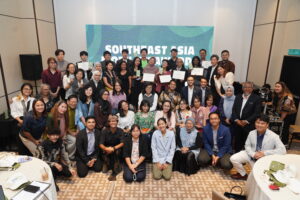
“This recognition belongs not only to the city government, but to every cyclist, commuter, planner, and partner who embraces the vision of a safer, greener, and more inclusive city,” said Hon. Joy Belmonte, Quezon City Mayor.
Iloilo City, known as the Bike Capital of the Philippines, was also named one of the Most Promising Bicycle-Friendly Component Cities, together with George Town, Malaysia, and Bandung, Indonesia. Iloilo City was recognized for its ongoing investment in bike infrastructure and for integrating cycling into its urban planning.
Hon. Raisa Treñas, Iloilo City Mayor emphasized that, “Together, we prove that we can work hand-in-hand and we can build a city where sustainable transport and vibrant public spaces are not only possible but celebrated. May our story inspire our cities to create safer, greener, and more peaceful, people-centered mobility.”
These awards recognize cities that are making progress and improvements in governance, infrastructure, and public engagement.
SEAMA also featured the Daily Journey Challenge, which called on citizens across Southeast Asia to share short videos about their daily commutes using public transport or bicycles. Over 150 entries were submitted from six countries.
The campaign focused on making commuter experiences visible and valued. While no Filipino commuter placed in the top three, many entries stood out for showing real challenges and solutions faced by everyday commuters.
Both SEAMA and the campaign are led by the Clean Mobility Collective Southeast Asia (CMC-SEA), a network of 24 organizations across Southeast Asia working to advance inclusive and sustainable transport. It was inspired by the Philippines’ own Mobility Awards, which began in 2020.