Lifestyle
Sunscreen use in Boracay encouraged amid El Niño, with reef protection in mind

By: Raymond Sucgang, PNRI-DOST
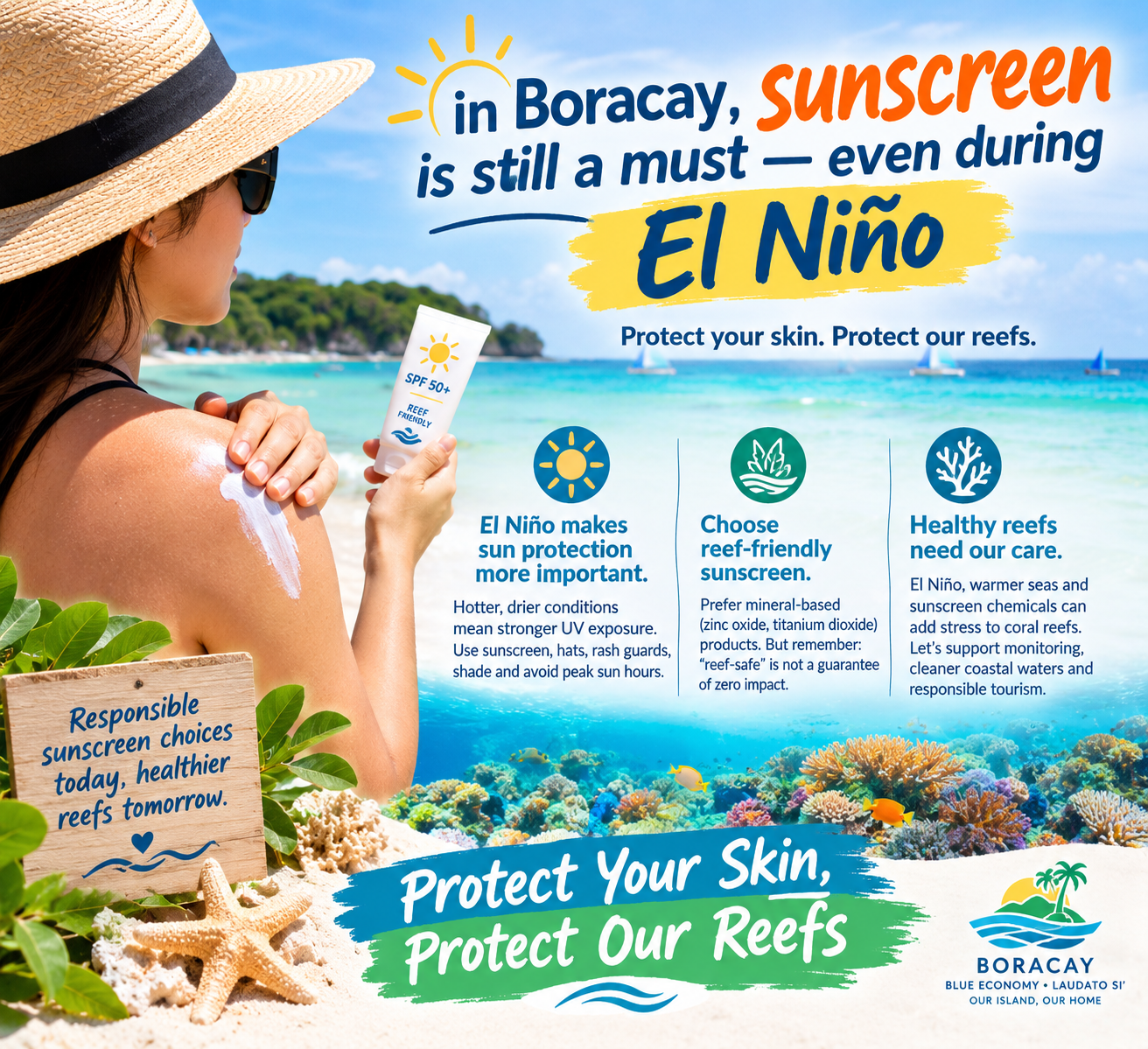
The use of sunscreen in Boracay should be encouraged even during El Niño, but with greater emphasis on choosing reef-friendlier products and protecting the island’s marine ecosystem.
There are actually two environmental concerns here: the effects of El Niño on the island’s coastal environment and the potential effects of sunscreen ingredients on marine organisms.
My take on sunscreen use in Boracay
1. El Niño makes sun protection more important, not less.
During El Niño, Boracay may experience hotter and drier conditions, depending on the strength of the event and local weather patterns. Beachgoers are exposed to ultraviolet (UV) radiation, which can cause sunburn, premature skin aging, and skin cancer. Sunscreen remains important, alongside hats, rash guards, shade, and avoiding prolonged exposure during peak sunlight hours.
2. Not all sunscreens have the same environmental impact.
Mineral-based sunscreen
Products using zinc oxide or titanium dioxide are worth considering, particularly formulations designed to minimize aquatic exposure. However, the particle size, coating, formulation, and other ingredients also matter. “Mineral” or “reef-safe” on a label does not automatically mean harmless to marine life.
Some chemical sunscreen formulations
Ingredients such as oxybenzone and octinoxate have raised concerns because of reported effects on some marine organisms, including corals, under certain exposure conditions. Their actual environmental effects depend on concentrations, exposure, and local conditions.
3. El Niño and sunscreen pollution may compound existing stress on coral reefs.
High sea temperatures can cause coral bleaching, while sunscreen-derived chemicals may add another stressor. However, we should not automatically attribute coral bleaching in Boracay to sunscreen or assume El Niño is currently causing severe bleaching without local monitoring data. NOAA identifies warming, pollution, and runoff as important interacting pressures on coral reefs.
For tourists: Use broad-spectrum SPF 30–50 sunscreen, preferably a well-formulated mineral product, and wear rash guards and hats.
For resorts and dive operators: Educate guests about sunscreen ingredients and encourage sun-protective clothing, especially during snorkeling and diving.
For the LGU: Consider evidence-based sunscreen guidance alongside wastewater management, beach-water monitoring, and coral reef assessments.
For scientists: Monitor coral health, seawater temperature, and selected UV-filter contaminants at popular swimming areas to establish whether sunscreen pollution is a significant local concern.
One important qualification: “Reef-safe” is not a guarantee of zero environmental impact. Mineral sunscreens also require careful assessment of their formulations and particles.
My bottom line, sir: We should not discourage sunscreen use during El Niño. Instead, Boracay can promote a “Protect Your Skin, Protect Our Reefs” campaign, combining responsible sunscreen selection with shade, protective clothing, and better coastal pollution management.
This could even become a practical environmental initiative for Boracay under the Blue Economy and Laudato Si’ frameworks: protecting human health while caring for our common home.