Latest News
PSA Aklan Launches Survey in Informal Workers to Quantify Economic Contribution

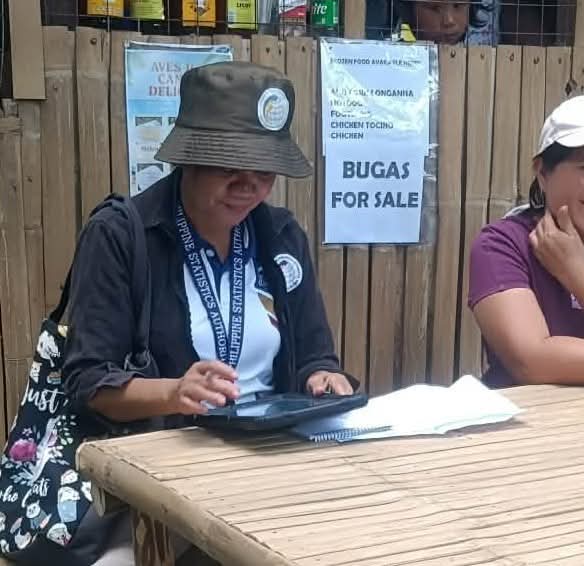
To quantify the number of informal workers and measure their contribution to the country’s economic development, the Philippine Statistics Authority (PSA) Aklan is currently conducting a survey on the informal sector in selected barangays and identified sample households in the province, as a rider to the April 2026 Labor Force Survey (LFS).
The survey on the informal sector covers economic activities performed by persons engaged in producing goods or providing services for pay or profit that are not covered by commercial laws, reporting requirements for economic activities, income taxation, labor legislation, and social security regulations that provide protection against economic and personal risks.
It consists of units that typically operate at a low level of organization, with little or no distinction between labor and capital as factors of production. Labor relations, where they exist, are often based on casual employment, kinship, or personal and social relations.
Likewise, workers in this sector are economically vulnerable, lack job security, and often do not have access to social protection such as pensions, insurance, or paid leave, making them more susceptible to economic and personal risks.
According to Engr. Antonet Catubuan, this first-ever survey also aims to generate data that will serve as inputs for government-targeted interventions to improve workers’ working conditions, reduce poverty, and enable policymakers to design programs that address the challenges of informality.
“By quantifying their number and identifying their economic characteristics, the government can develop programs and policies aligned with their needs, enabling them to enhance their welfare and general well-being,” Engr. Catubuan said.
She added that statistics on informal workers are also crucial in tracking progress toward the Sustainable Development Goals (SDGs), particularly on the proportion of informal employment in total employment, disaggregated by sector and sex.
Among the data to be gathered in this survey, aside from demographic information, is the type of institution where they are working.
For paid workers, this includes whether there is a written contract or oral agreement with the institution they are working for; whether the establishment is registered with the National Business Register such as DTI, SEC, or CDA; the types of accounts or records maintained; whether the employer contributes to SSS or GSIS; and whether workers receive paid annual and sick leave.
For the self-employed or those working in their own-account business, data will include where the main source of income is derived; whether customers are obtained through another company, intermediary, platform, or individual; and the degree of control over their work.
A total of 384 households have been sampled across 28 enumeration areas and will be visited and interviewed by eight hired statistical researchers.
All data collected will be treated with strict confidentiality and will not be used for legal or taxation purposes, as provided by law.
The PSA urges all selected households to provide truthful and honest responses to interviewers to ensure that the statistics generated are reliable, accurate, and reflective of the current condition of the informal sector in the country.