Tech
Breaking Boundaries: Why President Marcos’s 2027 Space Vision is a Smart Bet for Tech Investors

By John dela Cruz
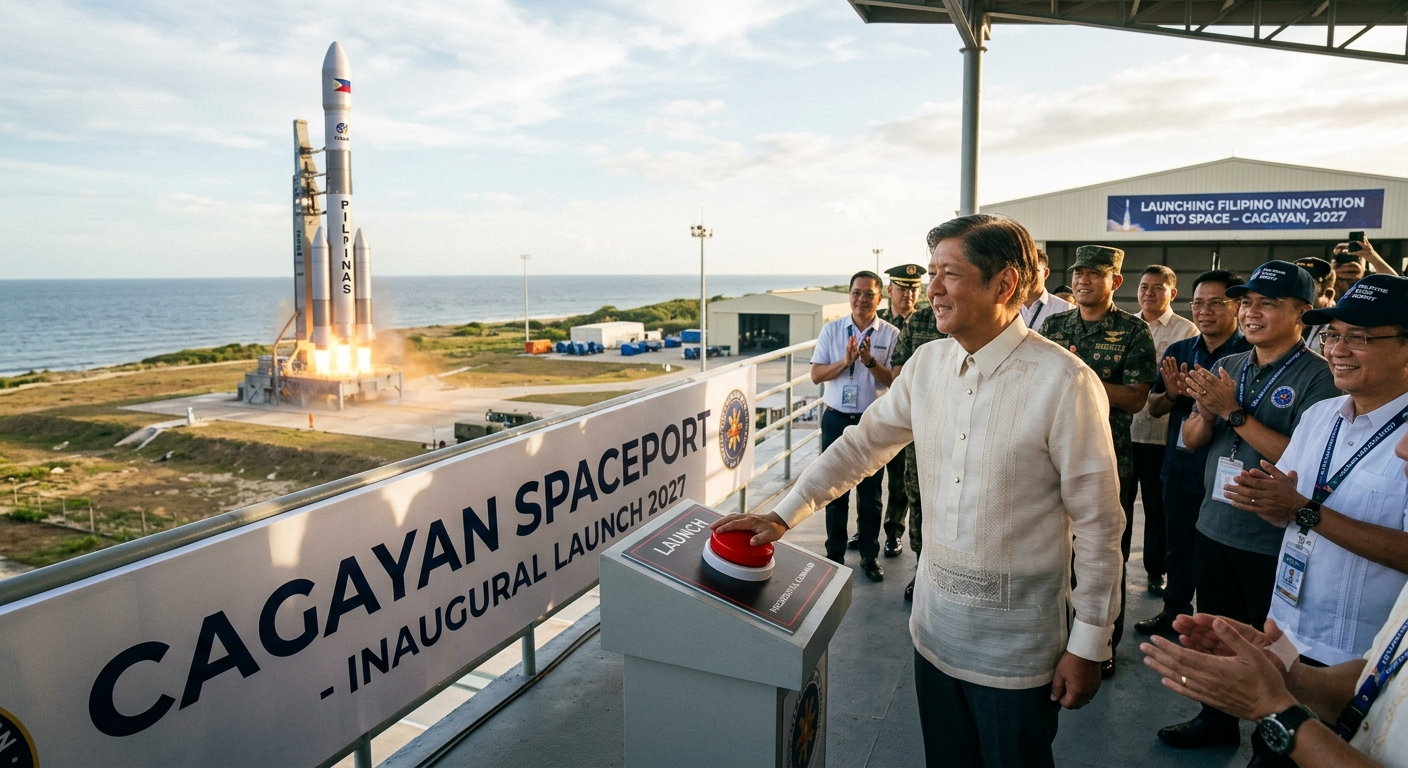
When President Ferdinand Marcos Jr. announced that Cagayan will host the nation’s first spaceport—highlighted by a liquid-fueled sounding rocket test launch in 2027—the initial reaction from critics was predictable. Skeptics rolled their eyes, quick to dismiss the ambitious endeavor as premature for a developing nation.
History, however, consistently rewards those who look past immediate cynicism to spot tomorrow’s infrastructure. For forward-thinking investors and tech pioneers, the Marcos administration’s push into aerospace is not a distraction from earthly matters; it is a calculated masterclass in geography, physics, and future-proofing.
The Physics of Profit: Why Cagayan?
The blueprint backed by the Philippine Space Agency (PhilSA) is rooted in undeniable logistical science. Situated at roughly 18° N, Cagayan places the Philippines significantly closer to the equator than legacy global spaceports like Cape Canaveral.
Because Earth’s rotational velocity peaks near the equator, a low-latitude launch site gives rockets an automatic speed boost. This translates directly to lower fuel consumption, heavier payload thresholds, and slashed operational overhead for commercial operators.
Add to this a clear eastward trajectory opening directly onto the vast, unpopulated Pacific Ocean, and you get a natural safety corridor that congested global spaceports can only envy.
Ground-Floor Capital for the New Space Age
Global demand for satellite deployment and low-Earth orbit logistics is breaking records. As traditional international launch sites near maximum capacity, the market desperately needs efficient alternatives.
Rather than waiting from the sidelines, the Philippines is moving early. Through robust frameworks established by the Cagayan Economic Zone Authority (CEZA) and high-stakes international alliances—such as PhilSA’s partnership with South Korea’s Perigee Aerospace—the commercial foundation is actively being built.
The 2027 test launch is just the opening bell. While skeptics stay anchored to the status quo, visionary investors are already positioning themselves on the ground floor of Southeast Asia’s aerospace frontier.