Commentary
Bridging Paradise or Paving Over It? The ₱7.8B Gamble to Connect Boracay

By Dr. Jimmy B. Maming
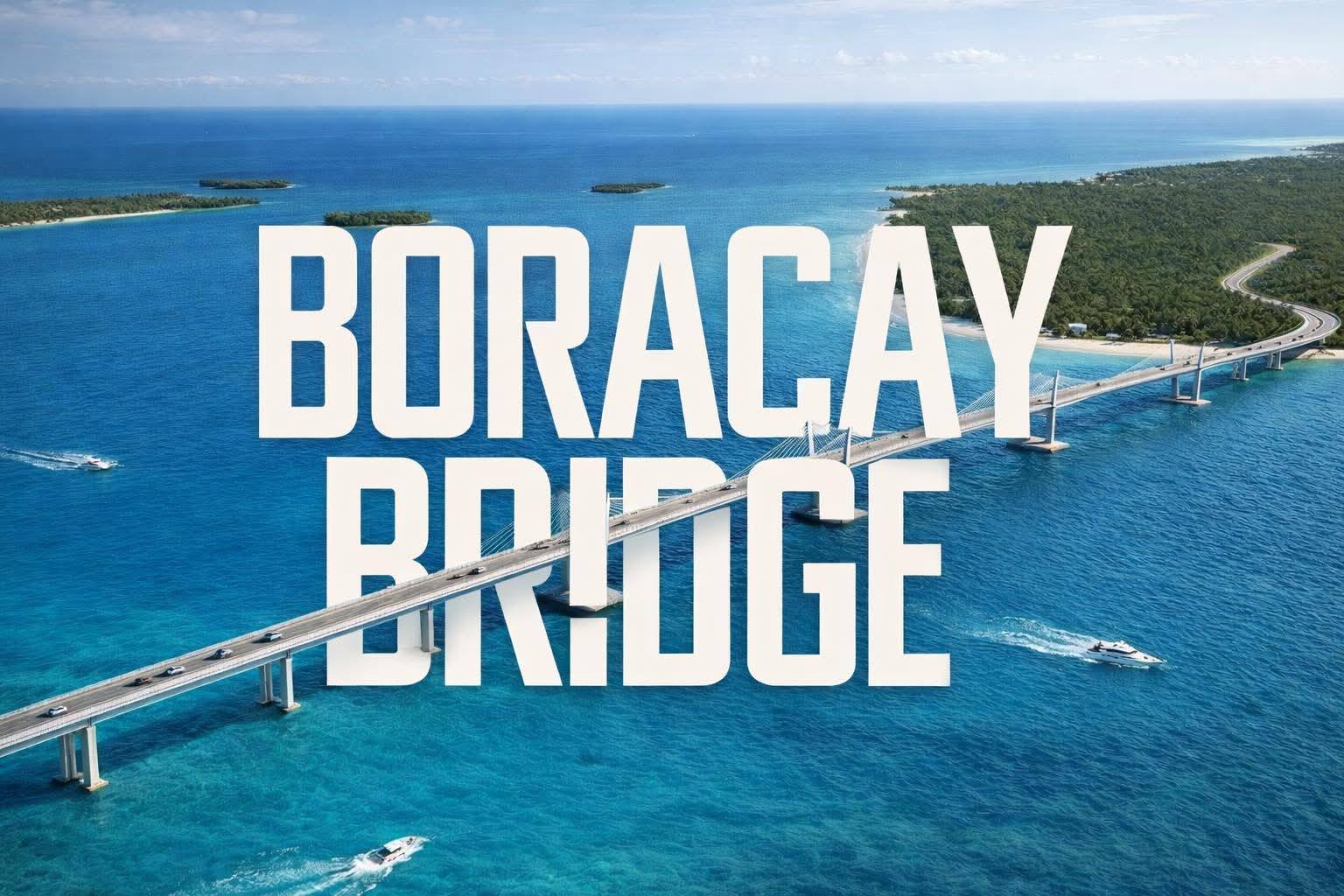
The announcement that San Miguel Holdings Corp. (SMHC) has been awarded the ₱7.78-billion
Boracay Bridge Project (as of March/April 2026) marks a massive shift for the municipality of
Malay. The 2.54-kilometer bridge will connect Caticlan (mainland Panay) to Boracay Island.
While the project promises “all-weather” connectivity, it is one of the most polarizing
infrastructure projects in the region. Below is an evaluation of the possible issues, challenges, and
opportunities this project brings to Malay.
1. Opportunities (Potential Gains)
• Infrastructure for Sustainability. The bridge is designed as a “utility bridge” rather than
a high-traffic highway. It will house essential pipelines for sewage, fresh water, and power,
and provide a stable route for solid waste disposal potentially ending the island’s reliance
on barges for garbage hauling, which is often disrupted by weather.
• Decongestion of the Island. By making the mainland (Caticlan) just a few minutes away,
workers and day-trippers can live or stay in Caticlan and Nabas. This could reduce the
“staying population” on Boracay, lowering the strain on the island’s fragile ecosystem and
reducing the need for more staff housing on the island. Therefore, increasing the carrying
capacity for tourists.
• Economic Diversification for Malay Mainland. Caticlan and surrounding areas in Malay
could see a “real estate boom.” With the bridge, Caticlan can transform from a mere transit
point into a secondary tourism hub with its own hotels and commercial centers.
• Enhanced Logistics & Emergency Services. Currently, medical emergencies or fire
responses are limited by sea conditions. A bridge ensures 24/7 access for ambulances, fire
trucks, and the delivery of fresh produce/goods, lowering logistics costs for businesses.
2. Challenges (Operational Hurdles)
• Controlling “Car-mageddon”: One of the biggest fears is that the bridge will lead to a
flood of private vehicles on an island with narrow, already congested roads. SMC has
proposed limited vehicular access, but managing who gets to cross (and preventing illegal
vehicle entry) will be a significant enforcement challenge for the local government unit
(LGU).
• The “Swiss Challenge” and Transparency. Though SMC won the project as the original
proponent after no other bidders joined the Swiss Challenge, the LGU and residents have
historically called for more transparency regarding the environmental impact assessments
(EIA) and the exact “concession” terms of the 30-year deal.
• Transitioning the Workforce. Moving hundreds of boat operators into new roles requires
a robust “Just Transition” plan. If the LGU and SMC fail to provide immediate alternative
livelihoods, it could lead to social unrest in the community.
3. Potential Issues (Significant Risks)
• Livelihood Displacement. This is the most immediate social issue. Approximately 500
boatmen and dozens of boat owners under the Caticlan Boracay Transport Multi-Purpose
Cooperative face the total loss of their primary income. The “romance” of the boat ride, a
signature Boracay experience, would also disappear.
• Environmental Degradation
o Marine Ecosystem: Construction involves dredging and pile-driving that could
disturb coral reefs and seagrasses in the Tabon Strait.
o Carbon Footprint: Technical reports estimate the project could produce
significant annual CO2 emissions during both construction and operation.
• Cultural & Aesthetic Impact. Many locals, including the Ati Indigenous community,
argue the bridge disrupts the island’s “island feel” and threatens ancestral waters. There is
a fear that Boracay will lose its unique identity as an “isolated paradise” and become just
another “connected” urban beach.
• Revenue Loss for the LGU. The Aklan provincial government has previously raised
concerns about losing significant annual revenue currently generated from boat terminal
fees and porterage, which fund local services.

In short, the project is a logistical masterstroke but a social and environmental gamble.
However, If managed well, It solves Boracay’s “back-end” problems (waste, water, sewage) and
turns Caticlan into a thriving city.
If managed poorly, It could lead to the over-urbanization of the island, the death of the
local maritime culture, and permanent damage to the marine biodiversity that makes Boracay
famous in the first place. For the residents of Malay, the success of this ₱7.8-billion project depends
less on the engineering of the bridge and more on the social safety nets created for the displaced
workers and the strictness of the environmental regulations enforced during its construction.