Commentary
The Doubting Thomas and Scientific Inquiry

By: Raymond Sucgang
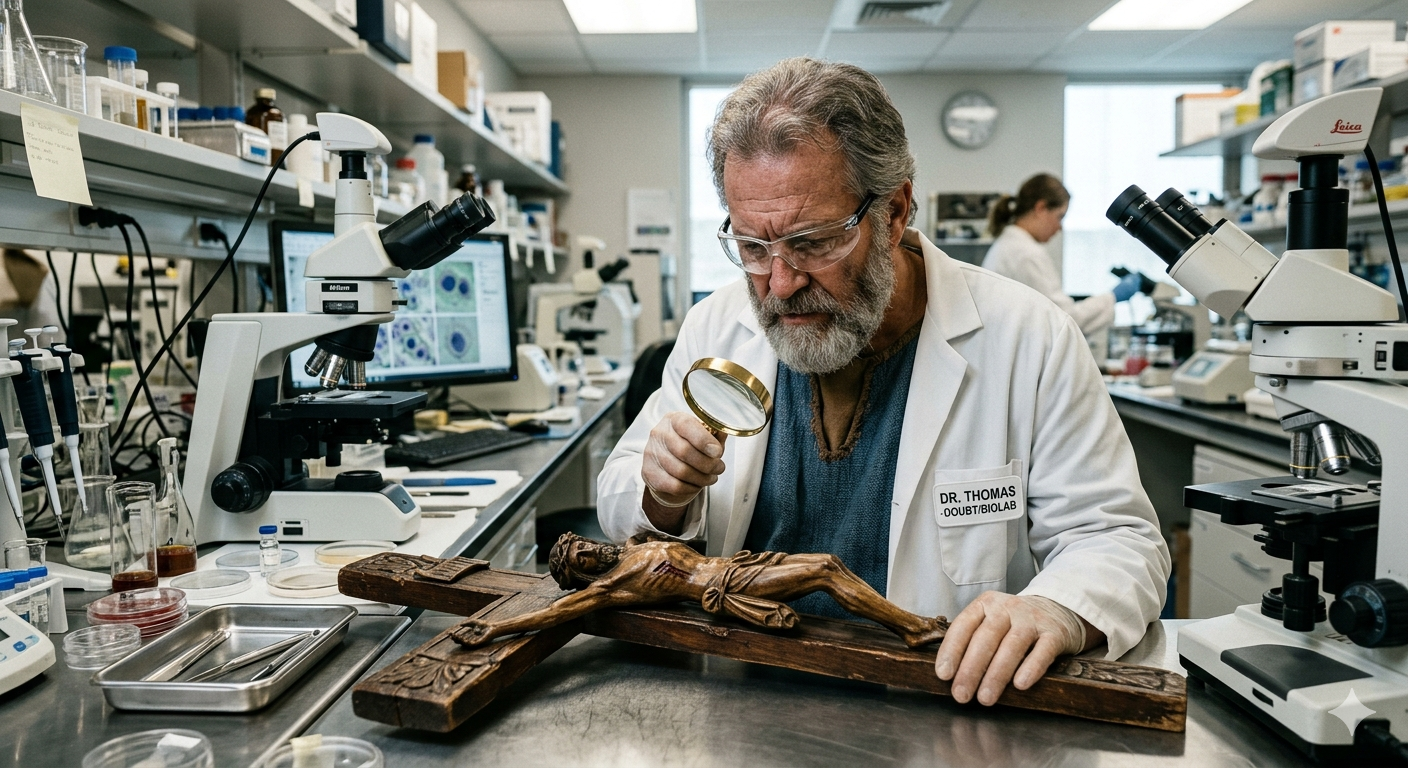
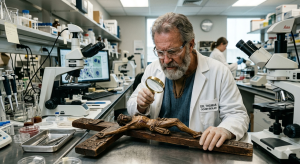
There is something deeply familiar in the story of Doubting Thomas. As someone trained in science, I have been shaped by the principle that to see is to believe. Evidence, observation, and verification are the pillars of how we understand truth. We are taught to question, to test, and to doubt, not out of stubbornness, but out of a sincere desire to arrive at what is real.
In this light, Thomas does not feel like a distant biblical figure. He feels human. He feels like one of us.
When Thomas said he would not believe unless he saw and touched the wounds of Jesus, he was not rejecting faith; he was expressing the same rigor that drives scientific inquiry. He wanted certainty. He wanted evidence. And perhaps, he simply did not want to be misled by hope alone.
What strikes me most is that Jesus did not condemn him.
There was no rebuke, no rejection. Instead, Jesus met Thomas where he was. He invited him to see, to touch, to examine. It is as if Christ acknowledged that the desire for evidence is not a weakness, but part of the human condition. In that moment, faith and reason were not enemies ; they were in dialogue.
This is comforting for someone like me. It reminds me that my scientific mindset, my need to question and verify, is not a barrier to faith. Rather, it can be a path toward a deeper, more grounded belief. Jesus did not demand blind faith from Thomas; He offered understanding.
And yet, the story does not end with proof alone. After seeing, Thomas makes one of the most profound declarations of faith: “My Lord and my God.” It shows that while evidence can lead us to belief, faith ultimately invites us to go beyond what we can measure and fully grasp.
In my journey as a scientist, I continue to value evidence and observation. But the story of Thomas reminds me that not everything meaningful can be confined within what is seen. There is space for mystery, for trust, and for a kind of knowing that transcends data.
Perhaps true faith is not the absence of doubt, but the willingness to seek truth, even when it leads us beyond what we can prove.