Environment
DENR Chief Pushes for Rainwater Harvesting To Ease Urban Flooding

Iloilo City- Amidst the recurring challenge of severe urban flooding in all parts of the Philippines, the Secretary of the Department of Environment and Natural Resources (DENR) is advocating for a shift in strategy.
Rather than relying solely on massive, long-term infrastructure projects, DENR Secretary Raphael P.M. Lotilla is calling on citizens to adopt rainwater harvesting as a practical “home remedy” to help manage excess water.
Secretary Lotilla emphasized that while large-scale flood control projects are necessary, they often take years to complete and can be overwhelmed by the sheer volume of modern storms.
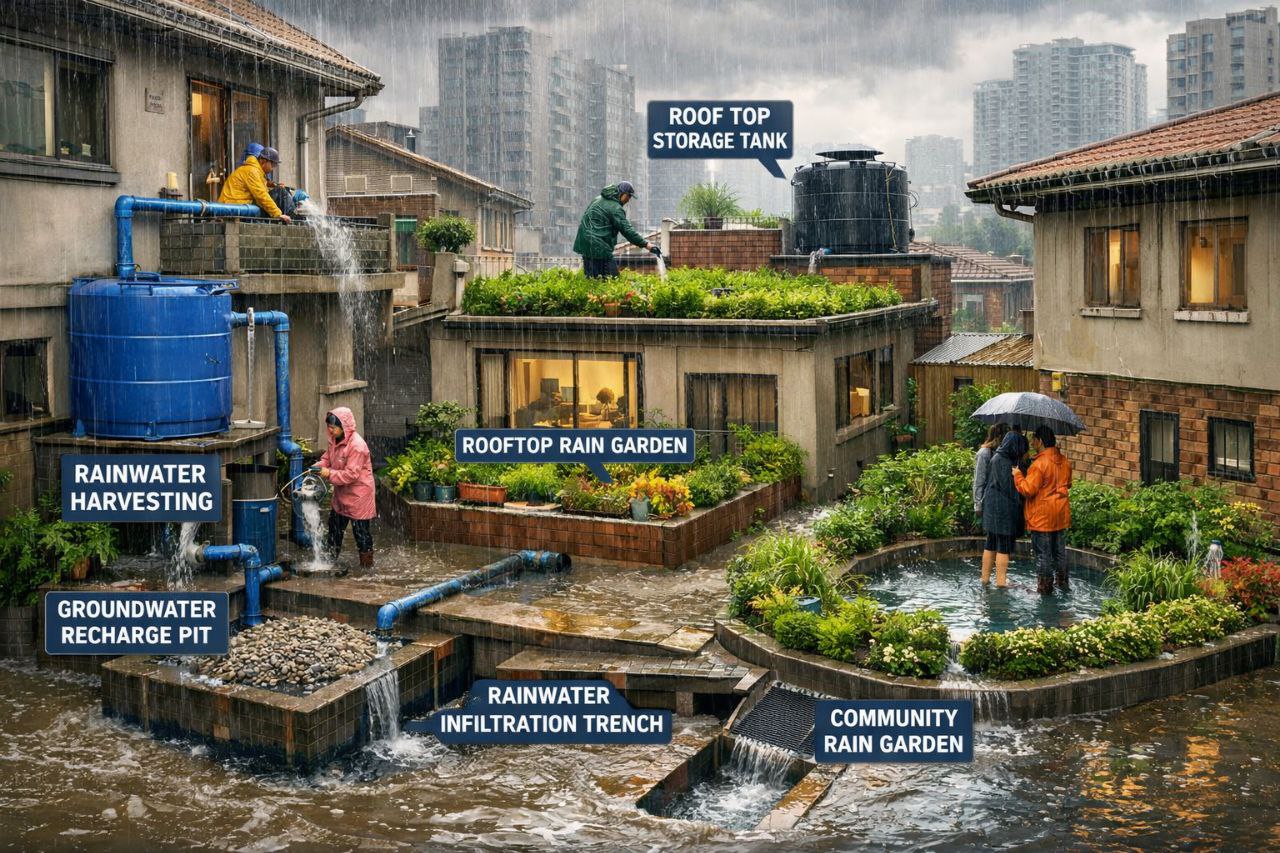
“Harvesting rainwater at the household and community level provides an immediate way to reduce the pressure on clogged city drains. Every volume helps. By capturing rain from rooftops before it hits the ground, the total volume of water entering the streets is reduced, and the moment when drainage pipes are most likely to burst or overflow—is significantly delayed,” Secretary Lotilla said.
Instead of waiting for the next big dike or pumping station, the Secretary suggested that simple setups like rain barrels and storage tanks can make a collective difference. The DENR is highlighting several “home remedy” steps that can be implemented with minimal cost to help citizens get start the project.

To begin a basic home harvesting setup, residents should first inspect and clean their gutter systems to ensure water flows freely without debris. The next step is to install a diverter or downspout bypass on existing pipes, which directs water into a storage container rather than letting it flow directly into the street.
For the storage itself, a standard 200-liter drum or a specialized rain barrel can be placed on a sturdy, level base. It is crucial to cover the container with a fine mesh screen to prevent mosquitoes from breeding and to keep out leaves. Finally, residents can connect a simple garden hose to the bottom of the tank, allowing them to use the stored water for watering plants, cleaning driveways, or flushing toilets.
This simple cycle not only conserves water during dry spells but actively keeps hundreds of liters of water out of the drainage system during every heavy downpour.
“Rainwater harvesting or in simple terms, rainwater collection, is one way to prevent the downpour of heavy rainwaters onto our streets. It also helps us conserve our water for better utilization. It may not be best for drinking but it can surely help in chores, such as watering plants, and washing vehicles,” DENR VI Regional Executive Director Raul L. Lorilla stated as he agreed to the statement of DENR Secretary.
“Climate change and the intensity of sun rays have a big impact in our day-to-day activities especially in our water resources. Let us practice rainwater collection not just during El Niño but all year round,” RED Lorilla added.