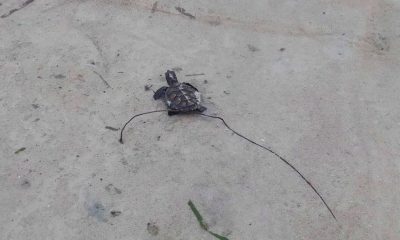
Environment
Climate Change a challenge for the SMPC

Jun N. Aguirre
Semirara Antique – Climate Change continues to be a challenge to the operation of the Semirara Mining and Power Corporation especially in the recent years.
In a 2020 annual report of the SMPC, it mentioned the concern on climate change as the Philippines is considered among the countries vulnerable to effects brought by the Climate Change.
According to the SMPC report, it has already been a part of the SMPC board meetings on the impact of climate change. For several years, the SMPC reported experienced impact on climate change includes: increased frequency and severity of extreme weather events with impacts on company infrastructure projects, supply chain, safety and production national policy changes, that seek to control emissions and gradually transmission to a low carbon economy.
Also, Divestment of the financial inadequate market from coal energy investments, among others. To combat climate change, according to the SMPC they had introduced Capacity Building on Environmental, Social and Governance (ESG) at different levels of the organization, embedding climate-related risks and opportunities in our business process through integrated management systems and communication of key climate-related material information to stakeholders.
“Our climate change program focuses on managing climate related risk and opportunity; strengthening our policy, reporting, and communication; and collaborating with stakeholders.,” the SMPC said. Also, they said carbon performances measured by our carbon emissions and intensity, and the monitoring of set internal emission reduction targets aimed towards integrating into decisionmaking.
The SMPC is the largest coal producer, accounting for 99% of the country’s coal production.
Their 2020 report mentioned that they supply coal to other countries such as China, Taiwan, India, Thailand, South Korea and Cambodia. In the country, they also supply coal to cement plants and other small boiler users in the food, textile and canning industries.
Semirara island was declared a coal mining reservation by then President Manuel L. Quezon through Proclamation No. 649 on November 20, 1940. The increasing cost of imported crude oil imposed a heavy demand on the country’s international reserves, propelling the government to actively pursue the exploration and development of indigenous energy resources.
To minimize the country’s dependence on imported fuel and secure affordable energy, President Ferdinand E. Marcos issued Presidential Decree No. 972, otherwise known as the “Coal Development Act of 1976”. This was signed on July 28, 1976.
It declared Semirara Island as one of the coal regions of the Philippines, allowing the issuance of Coal Operation Contracts (COCs) for the area. The Department of Energy has granted the extension of SMPC’s COC until July 14, 2027.
(Disclaimer: This story is supported by the Ateneo De Manila University, the Internews and the Earth Journalism Network.)