Business
GSIS, PSALM, NPC ink ₱1B premium arrears settlement deal

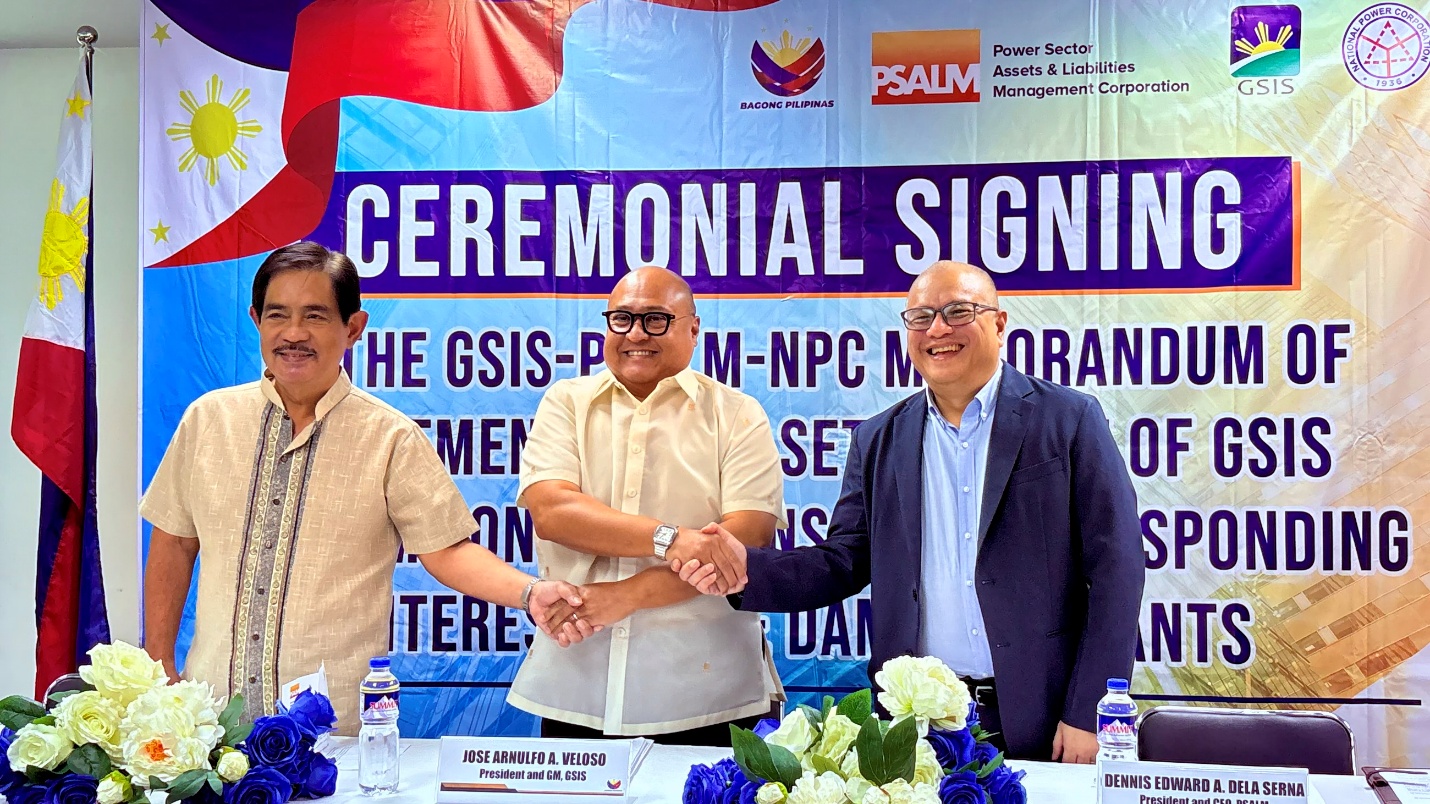
The Government Service Insurance System (GSIS), the Power Sector Assets and Liabilities Management Corporation (PSALM), and the National Power Corporation (NPC) today (July 8) signed a tripartite Memorandum of Agreement (MOA) at the PSALM Office in Vertis North, Quezon City, finalizing the settlement of over ₱1 billion in unremitted premium contributions arising from NPC’s 2003 restructuring.
The MOA signing follows the ceremonial turnover of the check held earlier on June 17 at the GSIS Head Office in Pasay City. The settlement covers the full restructured obligation for qualified former NPC employees, whose service periods have been validated by the Commission on Audit (COA). GSIS also granted a 60% condonation on accrued interest in accordance with board-approved guidelines.
GSIS President and General Manager Wick Veloso hailed the agreement as a landmark step toward justice and benefit delivery.
“Ang ginawa natin ngayon ay hindi lamang nagbibigay ng pag-asa sa mga tao mula sa PSALM at NPC, kundi nagpapahayag din ng mensahe sa lahat ng nagsisilbi sa gobyerno: Gagawin natin ang lahat upang masuklian ang kanilang tapat na serbisyo sa bayan.”
PSALM President and Chief Executive Officer (PCEO) Dennis Edward Dela Serna noted the importance of fiscal responsibility and transparency: “Together we made it happen–the shared responsibility of PSALM, NPC and GSIS manifested in this ceremonial signing reflects the common commitment to fiscal responsibility, legal prudence and social justice.
NPC PCEO Fernando Martin Roxas emphasized the human impact of the agreement: “This is a significant day for the former 1,233 employees and their families who have lost their jobs in the course of privatization. Now, we are able to restore the benefits that the law granted to them with the cooperation of PSALM and GSIS. We commit to disbursing the benefits to the qualified beneficiaries in the most expedient and efficient way.”
With the MOA signed and payment completed, GSIS will proceed with the recomputation and crediting of service periods, allowing eligible claimants to finally receive their corresponding retirement and insurance benefits.