Commentary
The Sto. Niño Ati-atihan Festival Remains the Ever-Inspiring Mother

By: Fr. Justy F. More, S.Th.L.,M.A.
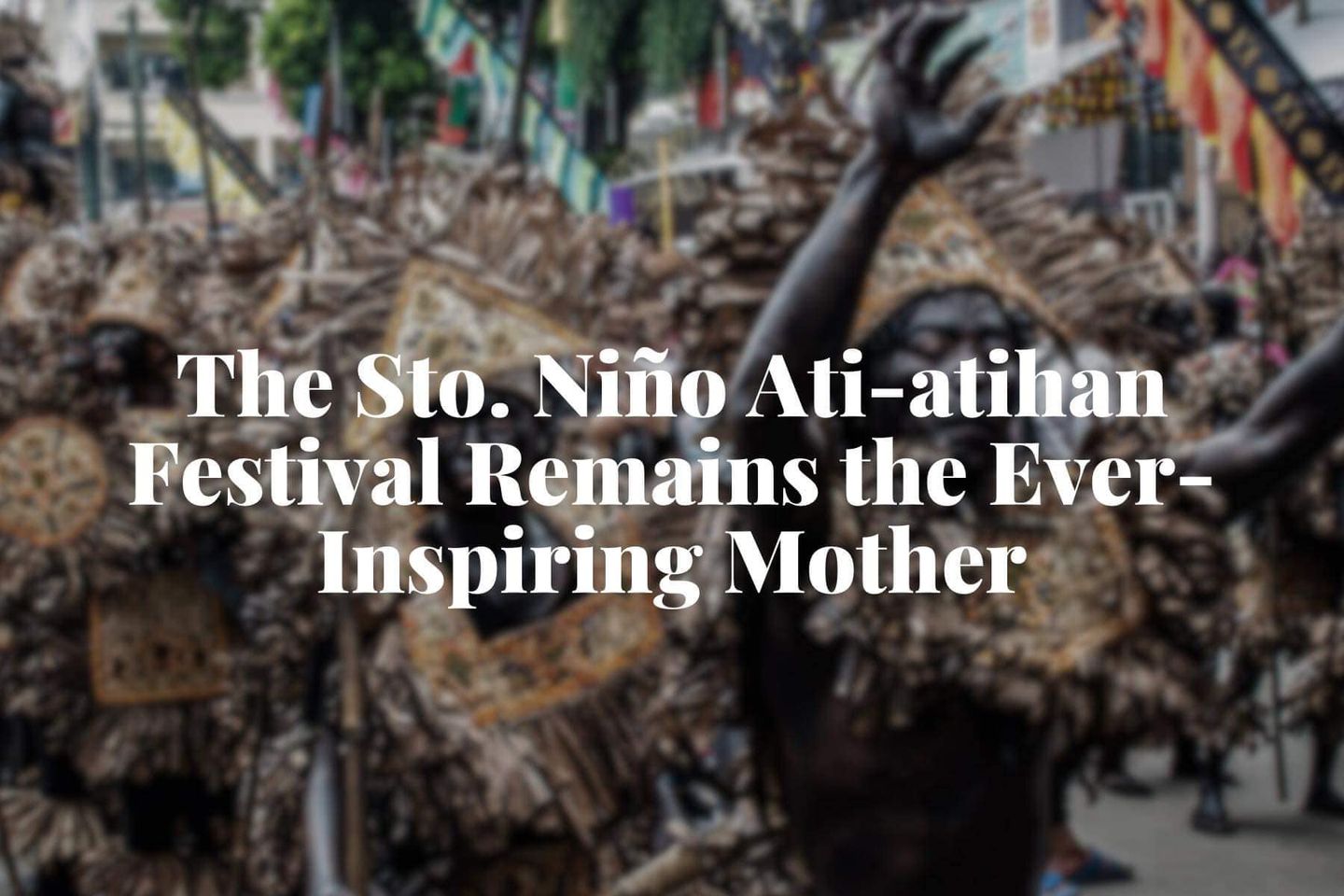
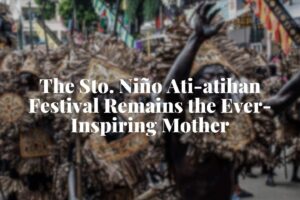
A festival is a lively celebration featuring music, dance, visual spectacles, and colorful attire, often including body art and face paint. It encompasses a wide range of cultural and artistic expressions, encapsulating the joyous spirit known as “Kasiyahan” in Tagalog. Amidst the colorful celebrations in the country, one festival stands out as the beacon that has inspired many others – the Sto. Niño Ati-Atihan Festival.
As a nurturing matriarch of cultural traditions, the festival has sown the seeds of communal celebration and spiritual reverence. Its influence extends far beyond the province of Aklan. It has inspired similar celebrations with echoes of the Ati-Atihan resonating in the dances, costumes, and fervent devotion that define these festivities.
Moreover, the festival’s impact is evident in the evolution of other festivals across the Visayas, if not the Philippines, as several have undergone name changes to assert their unique identities. For example, the Iloilo Ati-Atihan evolved into the Dinagyang Festival (1967), the Cadiz Ati-Atihan transformed into the Cadiz Dinagsa Festival (1972), and the Tondo Ati-Atihan became the Lakbayaw Festival (?), among others. Other festivals with the same theme include the Buling-Buling Festival (1970) of Pandacan, Binirayan Festival in Antique (1974), the Halad Festival (1988) in Midsayap, Cotabato, and the Biniray Festival (?) in Romblon. Various festivals, mostly in honor of the Sto. Niño, have been patterned after or inspired by the Ati-Atihan festival. This is akin to the concept of “Theme and Variations” in music, where the original theme is followed by variations 1, 2, 3, 4, and so on. In this analogy, the Ati-Atihan festival represents the theme, while many other festivals in the country are its variations. This metamorphosis reflects the influence of the Sto. Niño Ati-Atihan Festival, reinforcing its status as a cultural touchstone that continues to shape Filipino celebrations.
In the 1960s, the celebration formerly known as Sto. Niño Fiesta or Ati-Ati was renamed to Ati-atihan, in part due to the suggestion of Alejandro Roces, who, as the Secretary of Education at the time, recommended the change. This renaming aimed to make the festival more inclusive and appealing to a broader audience, including tourists. During the mayoral tenure of Dr. Federico Icamina in Kalibo, the festival underwent a transformation, becoming not only commercialized but also institutionalized. The shift meant that the festival gained a more formal recognition and support from the local government not only as a purely religious occasion but as a vital cultural and civic event while also being structured to drive economic activity and attract tourism.
On January 21, 1974, the Ati-Atihan revelers comprising professionals and students from Aklan made a monumental inaugural procession through Manila’s tourist area, captivating an estimated 500,000 people and garnering widespread acclaim from publications such as “The Times Journal” and “Philippines Daily Express.” This event, known as the “Ati-atihan Parade” and organized by D’Aklan, was brought to Manila by the Department of Tourism. The success of the “Ati-atihan parade” led to President Ferdinand Marcos and First Lady Imelda Marcos visiting Kalibo in 1975 to witness the Ati-Atihan firsthand, inspiring the Marcos administration to mandate the creation of festivals and celebrations across the Philippines in 1977 to promote tourism and regional development.
In a significant revelation, Cebu Governor Gwendolyn Garcia clarified in a post on her official Facebook page that the origin of the Sinulog sa Carmen festival predates the well-known Grand Sinulog Festival of Cebu City (1980). According to her explanation, the Sinulog sa Carmen was initiated in 1974 by a parish priest, Fr. Jose Motus from Kalibo, Aklan. With the support of the late “Benyong” Villamor, who was serving as the Mayor at the time, the festival was inaugurated as ‘Ati-Atihan sa Carmen’ in 1974, only to be rechristened as the Sinulog Festival the following year.
Just as a mother gives life to and nurtures her children, the Sto. Niño Ati-Atihan festival stands as a matriarch that has birthed and fostered numerous festivals across the nation, serving as an enduring source of inspiration and cultural vitality.
The festival’s branding as the mother of Philippine festivals is not because it is the first festival in the country or the oldest. Its significance surpasses mere chronological precedence. The test facing the Aklanons lies in redefining the festival as the mother, not in reference to the debunked Barter of Panay, but rather from the perspective of its evolving role as a wellspring of inspiration and creativity.
Challenging the Crown: Is Sto. Niño Ati-atihan truly the Mother of All Philippine Festivals?
Perhaps we should ponder: If our festival isn’t deemed the Mother of All Philippine Festivals, what title can the Aklanon boldly and assuredly lay claim to? Shall we proudly declare it as the Mother of Philippine Sto. Niño Festivals, or perhaps as the Mother of Philippine Civic Festivals? Our deepest values will unveil our decision.
(I’m grateful to Mr. Paul Icamina, the Ro Akeanon FB Page, Prof. Xiao Chua, Prof. Tony Hila, Fr. Joebert Villasis, Dr. Jhoie Jimenez, and UST Graduate School friends for sharing Sto. Niño Ati-atihan-related materials and insights, which greatly contributed to this article.)